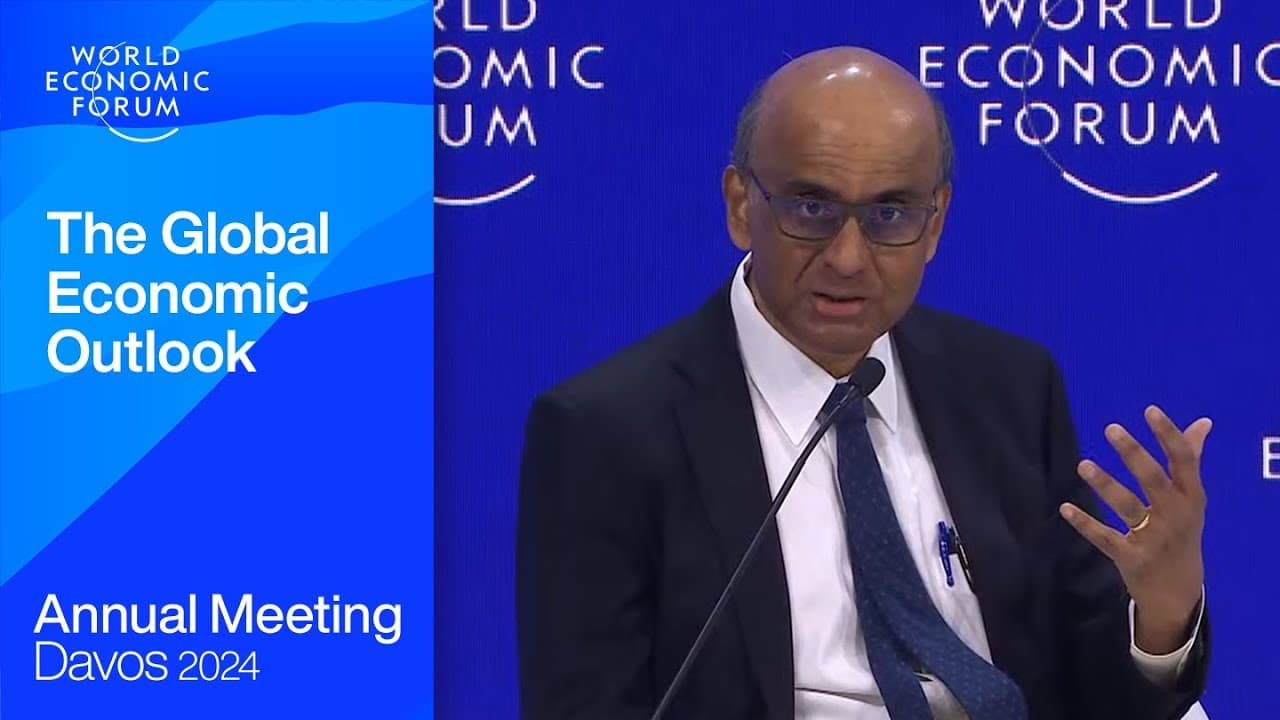
The Global Economic Outlook | Davos 2024 | World Economic Forum
TL;DR
Despite challenges such as inflation and geopolitical tensions, the global economy has shown resilience in the post-pandemic recovery. However, growth rates are slower than previous decades, and there is a need for addressing pressure points and building growth foundations for the future.
Transcript
e e e I mean it's so hi hi everyone and welcome really to our panel on the global economic Outlook now the global economy was certainly tested in 2023 as it rarely has been before inflation and the most aggressive monetary tightening campaign in decades Wars in Europe and in the Middle East the festering real estate crisis in China and the deepenin... Read More
Key Insights
- 🛀 The global economy has shown resilience in the post-pandemic recovery, driven by the US and China.
- ☠️ Slower growth rates and high interest rates are weighing down the post-pandemic rebound.
- 🤕 Slow-moving changes, such as ecological balance, aging societies, and polarization, are the real threats to resilience.
Install to Summarize YouTube Videos and Get Transcripts
Explore YouTube Video Summarizer or Get YouTube Transcript Extractor
Questions & Answers
Q: How has the global economy shown resilience in the post-pandemic recovery?
Despite challenges, such as inflation and geopolitical tensions, the post-pandemic recovery has continued. The US and China have played key roles in driving economic growth, with consumers meeting expectations and fiscal stimulus supporting growth targets.
Q: What are the main pressure points for the global economy in 2024?
Some of the main pressure points for the global economy in 2024 include slower growth rates compared to previous decades, high interest rates weighing down the post-pandemic rebound, and trade tensions and geopolitical conflicts that will impact developing countries the hardest.
Q: How can countries prepare for future resilience in the face of slow-moving changes?
Countries need to address slow-moving changes, such as ecological balance, aging societies, and polarization, through structural reforms and investment in green technologies. By strengthening social security systems, healthcare financing, and labor markets, countries can better prepare for future challenges.
Q: What policies can be put in place to foster longer sustainable growth?
Policies such as fiscal reforms, carbon pricing, and investment in green technologies are crucial for fostering longer sustainable growth. Redirecting subsidies, developing carbon markets, and focusing on productivity through structural reforms can also contribute to sustainable growth.
Summary & Key Takeaways
-
The global economy faced challenges in 2023, including inflation, monetary tightening, wars, and the real estate crisis in China. However, the post-pandemic recovery has continued, with the US and China driving growth.
-
The global economy is experiencing slower growth rates than previous decades, hindered by high interest rates. Trade tensions and geopolitical conflicts will hit developing countries the hardest.
-
The panelists highlighted the importance of addressing slow-moving changes, such as ecological balance, aging societies, and polarization, as the real threats to resilience. They also emphasized the need for fiscal reforms, carbon pricing, and investment in green technologies.
Read in Other Languages (beta)
Share This Summary 📚
Summarize YouTube Videos and Get Video Transcripts with 1-Click
Try YouTube Summary with ChatGPT & Claude or YouTube Transcript Generator
Explore More Summaries from World Economic Forum 📚
Summarize YouTube Videos and Get Video Transcripts with 1-Click
Try YouTube Summary with ChatGPT & Claude or YouTube Transcript Generator