The Battle Of Uhud
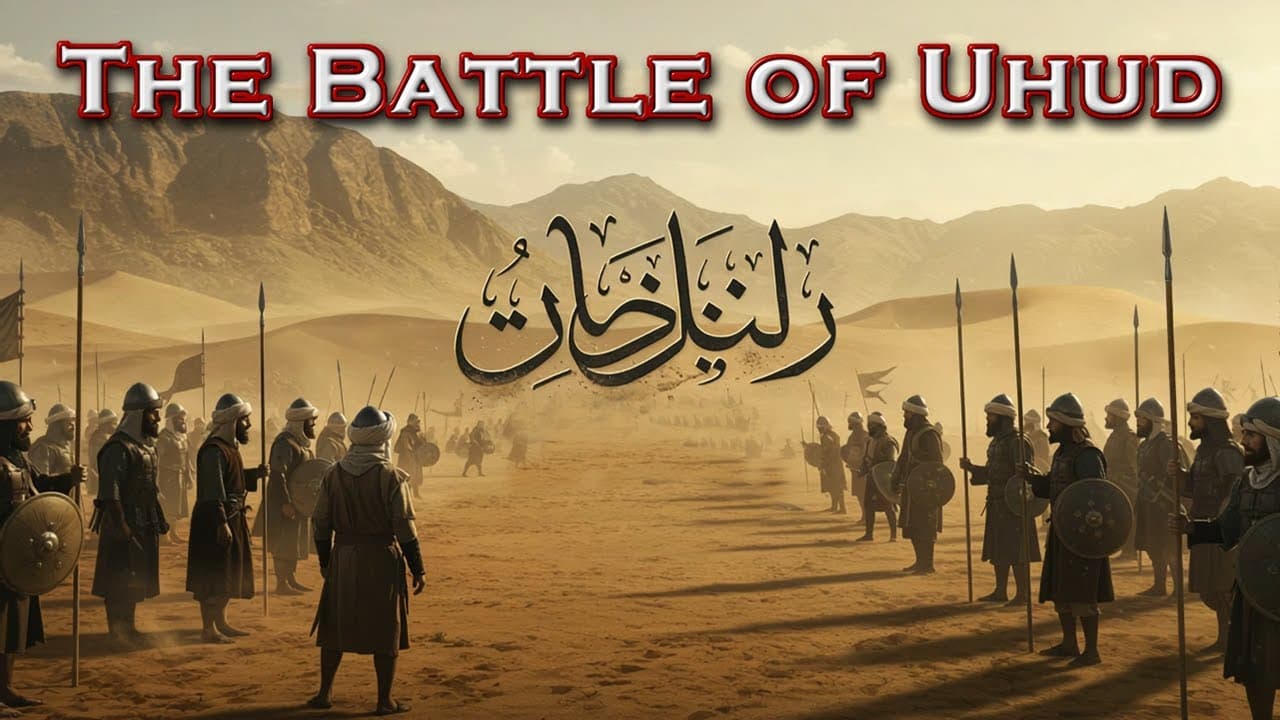
TL;DR
The Battle of Uhud was a significant conflict between Muslims and Quraysh.
Transcript
Read and summarize the transcript of this video on Glasp Reader (beta).
Key Insights
- The Quraysh sought revenge after their defeat at Badr, organizing a military campaign led by Abu Sufyan, raising significant funds for the effort.
- Prophet Muhammad initially advocated for a defensive strategy in Medina, but young Muslims eager for battle persuaded him to confront the Quraysh outside the city.
- The Muslim army faced a setback when Abdullah ibn Ubayy withdrew his support, taking 300 soldiers with him, weakening their forces.
- The battle saw intense combat, with notable figures like Hamza and Abu Dujana playing key roles, but the Muslim army eventually faced a critical turning point.
- Miscommunication and disobedience among the Muslim archers led to a strategic disadvantage, allowing Khalid ibn Walid to exploit the situation and attack from the rear.
- Prophet Muhammad was injured in the battle, leading to a moment of crisis where his survival was in question, causing confusion and retreat among Muslim forces.
- The Quraysh, led by Abu Sufyan, eventually withdrew, not pursuing further attacks on Medina, marking a tactical victory despite heavy losses on both sides.
- The aftermath of the battle raised questions about leadership and divine support, with Prophet Muhammad addressing the losses and attributing them to a test of faith.
Install to Summarize YouTube Videos and Get Transcripts
Explore YouTube Video Summarizer or Get YouTube Transcript Extractor
Questions & Answers
Q: What prompted the Quraysh to launch a military campaign against the Muslims?
The Quraysh launched a military campaign against the Muslims as a response to their defeat at the Battle of Badr. Seeking revenge and to change their fortunes, the Quraysh, led by Abu Sufyan, organized a campaign by raising significant funds and rallying support from neighboring tribes. This effort was aimed at confronting the growing influence of Prophet Muhammad and his followers.
Q: How did Prophet Muhammad initially plan to defend against the Quraysh attack?
Prophet Muhammad initially advocated for a defensive strategy, suggesting that the Muslims remain in Medina to confront the Quraysh army. He believed that fighting within the city would provide strategic advantages, allowing the Muslims to leverage their knowledge of the terrain and use defensive positions effectively. However, this plan was met with opposition from younger Muslims eager for battle, leading to a change in strategy.
Q: What was the impact of Abdullah ibn Ubayy's decision during the battle?
Abdullah ibn Ubayy's decision to withdraw his support during the Battle of Uhud had a significant impact, as he took 300 soldiers with him, weakening the Muslim forces. This withdrawal not only reduced the number of fighters but also affected the morale and strategic positioning of the Muslim army. His actions were seen as a betrayal, highlighting internal divisions and complicating the Muslim's battle efforts.
Q: What strategic error did the Muslim archers make during the battle?
The Muslim archers made a critical strategic error by abandoning their positions on Anayan Hill to collect spoils of war, despite Prophet Muhammad's explicit instructions to hold their ground. This lapse allowed Khalid ibn Walid to exploit the situation, leading a cavalry charge that attacked the Muslim army from the rear. This maneuver played a pivotal role in turning the tide of the battle against the Muslims.
Q: How did the injury of Prophet Muhammad affect the course of the battle?
Prophet Muhammad's injury during the battle caused a moment of crisis among the Muslim forces. The false rumor of his death led to confusion and disarray, with many soldiers retreating in panic. This incident highlighted the vulnerability of the Muslim army and underscored the importance of leadership and communication in maintaining morale and cohesion during combat.
Q: Why did the Quraysh not pursue further attacks on Medina after the battle?
After the Battle of Uhud, the Quraysh, led by Abu Sufyan, chose not to pursue further attacks on Medina, despite their tactical victory. This decision may have been influenced by their own losses, logistical considerations, and the strategic advantage of consolidating their position rather than risking further conflict. Abu Sufyan's declaration of victory and subsequent withdrawal marked the end of the immediate threat to Medina.
Q: What were the theological implications of the battle's outcome for Muslims?
The outcome of the Battle of Uhud had significant theological implications for Muslims, as it raised questions about divine support and leadership. Prophet Muhammad addressed these concerns by framing the defeat as a test of faith, emphasizing the importance of perseverance and adherence to divine guidance. The battle served as a reminder of the challenges in upholding religious principles and the need for unity and discipline among the faithful.
Q: How did Prophet Muhammad address the losses and morale after the battle?
In the aftermath of the Battle of Uhud, Prophet Muhammad addressed the losses and morale by emphasizing the concept of martyrdom and the promise of divine reward for those who died in battle. He reassured the Muslim community by framing the defeat as a test from Allah, intended to purify and strengthen their faith. This narrative aimed to restore confidence and unity among the Muslims, reinforcing their commitment to the cause.
Summary & Key Takeaways
-
The Battle of Uhud was a pivotal conflict following the earlier Battle of Badr, where the Quraysh sought revenge against the Muslims. Despite initial plans to defend Medina, young Muslims pushed for an offensive strategy, leading to a confrontation outside the city.
-
The Muslim army faced challenges with internal dissent, notably when Abdullah ibn Ubayy withdrew his support, weakening their numbers. During the battle, strategic errors, particularly by the archers, allowed the Quraysh to exploit their position.
-
The battle resulted in significant casualties for the Muslims, including the death of Hamza. Prophet Muhammad's injury and the false rumor of his death led to confusion and retreat. Despite the setback, the Quraysh did not pursue further attacks, and Prophet Muhammad addressed the losses as a test of faith.
Read in Other Languages (beta)
Share This Summary 📚
Summarize YouTube Videos and Get Video Transcripts with 1-Click
Try YouTube Summary with ChatGPT & Claude or YouTube Transcript Generator
Explore More Summaries from Nabi Asli 📚

Summarize YouTube Videos and Get Video Transcripts with 1-Click
Try YouTube Summary with ChatGPT & Claude or YouTube Transcript Generator