Fiona Hill on history of Donbas region in Ukraine | Lex Fridman Podcast Clips
TL;DR
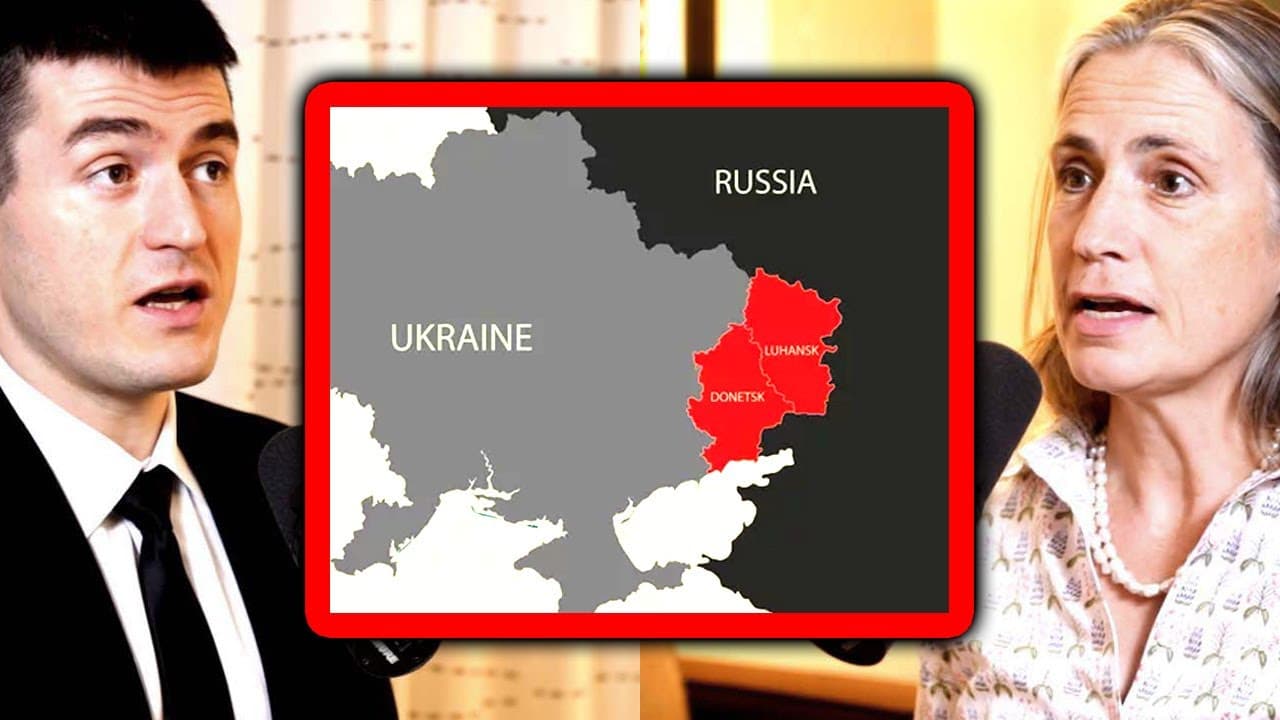
The speaker discusses the connections between the mining communities in North-East England and Donbass region in Russia, including the impact on his personal journey to study Russian.
Transcript
like many other people I'd read you know Russian literature in Translation I'd read War and Peace and you know I'd love the book actually I mean particularly the you know the story parts of it I wasn't one really at that at that time when I was a teenager I thought Telstra went on a bit you know in terms of his theories of the great man and of hist... Read More
Key Insights
- 💖 Russian literature, particularly War and Peace, sparked an interest in the Russian language for the speaker.
- 🥺 The mining communities of North-East England and Donbass had historical and economic connections, leading to solidarity during the miners' strike in 1984.
- 🖐️ Community support, such as funding from the miners' association, played a crucial role in the speaker's ability to study Russian.
- 💦 The speaker's background in a working-class community shaped their perspective on identity, emphasizing the importance of recognizing local history and culture.
- 🇰🇵 North-East England and Donbass share similarities in being industrial regions with a mix of diverse backgrounds.
- 💦 The speaker's experience in the Soviet Union highlighted the similarities between the working-class cultures of North-East England and Russia.
- 🔇 Learning Russian provided the speaker with a unique advantage and understanding of both English and Russian cultures.
Install to Summarize YouTube Videos and Get Transcripts
Explore YouTube Video Summarizer or Get YouTube Transcript Extractor
Questions & Answers
Q: How did reading War and Peace inspire the speaker to study Russian?
Reading War and Peace sparked the speaker's interest in Russian literature, but their focus shifted to studying the Russian language due to the limited opportunities in their region. The book's length and theoretical parts led them to desire a more streamlined narrative.
Q: How did the mining communities of North-East England and Donbass demonstrate solidarity?
The mining communities of North-East England and Donbass had historical ties and exchanges dating back to the 1920s. During the 1984 miners' strike in England, Donbass and other mining regions sent support and financial aid to the miners of County Durham.
Q: How did the speaker obtain funding for studying Russian?
The speaker's great uncle informed them about scholarships for children of miners. They visited the miners' hall and easily applied for a grant. The verification process included checking the speaker's father's employment record, and they received funding for their studies.
Q: How did the speaker's background shape their perspective on identity and place?
The speaker grew up in a working-class community with a rich industrial heritage, much like Donbass. They understand the complexities of identity in an industrial region, where various cultures and backgrounds merge. Imposing an external identity can result in conflict.
Summary & Key Takeaways
-
The speaker was initially drawn to Russian literature but found Dostoevsky's work too lengthy. However, this sparked an interest in studying Russian.
-
The mining communities in North-East England and Donbass had historical ties and solidarity, including exchanges and support during the 1984 miners' strike.
-
The speaker discovered scholarships from the miners' association and received funding to study Russian, highlighting the importance of community support.
Read in Other Languages (beta)
Share This Summary 📚
Summarize YouTube Videos and Get Video Transcripts with 1-Click
Try YouTube Summary with ChatGPT & Claude or YouTube Transcript Generator
Explore More Summaries from Lex Clips 📚



Summarize YouTube Videos and Get Video Transcripts with 1-Click
Try YouTube Summary with ChatGPT & Claude or YouTube Transcript Generator