Oh No...Is Nature Going to Make Climate Change WORSE?! | SciShow News
TL;DR
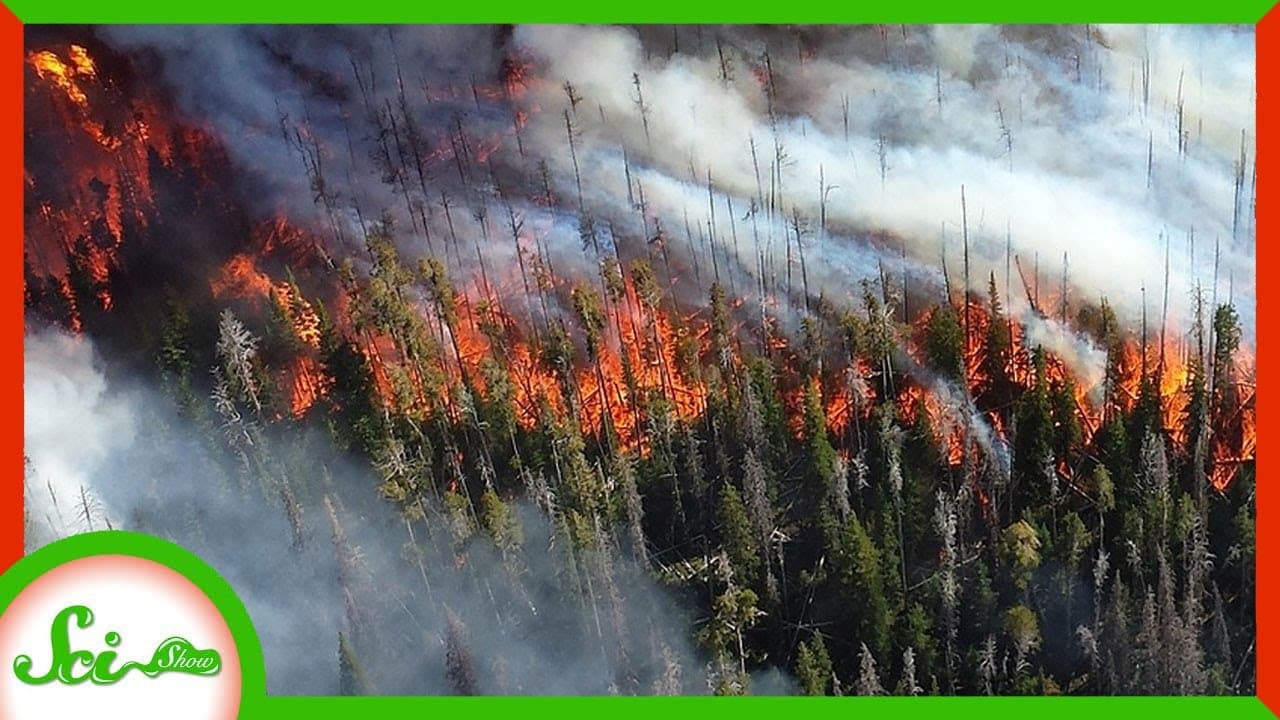
Ecosystems on land that currently absorb carbon dioxide could end up accelerating climate change as global temperatures increase.
Transcript
thanks to brilliant for supporting this episode of scishow go to brilliant.org scishow to learn how you can take your stem skills to the next level this year you might not be able to see this but the earth is breathing every day living things take up carbon dioxide and release oxygen as a part of the processes that keep them alive and that is great... Read More
Key Insights
- 🏝️ Ecosystems on land currently absorb about one-third of human-made carbon emissions.
- ☠️ Photosynthesis and respiration rates in ecosystems are influenced by temperature, with different enzymes having different optimum temperatures.
- ☠️ Respiration rates continue to increase as temperatures rise, while photosynthesis rates eventually plateau.
- 😥 By 2100, over half of all land ecosystems could reach a tipping point, where more carbon is released than absorbed.
- 🐯 The Amazon rainforest and tiger forests are particularly at risk, contributing significantly to carbon absorption.
- 😅 It is unlikely that plants will have enough time to evolve and adapt their cellular processes to tolerate hotter temperatures.
- 🇮🇴 Ocean ecosystems may have the capacity to absorb carbon dioxide, but it is not a guaranteed solution.
Install to Summarize YouTube Videos and Get Transcripts
Explore YouTube Video Summarizer or Get YouTube Transcript Extractor
Questions & Answers
Q: How do ecosystems on land play a role in combating climate change?
Ecosystems on land absorb about a third of human-made carbon emissions by converting carbon dioxide into sugar molecules and oxygen through photosynthesis.
Q: What happens when respiration rates exceed photosynthesis rates in ecosystems?
When respiration rates exceed photosynthesis rates, more carbon dioxide is released into the atmosphere than absorbed, thus increasing carbon emissions and accelerating climate change.
Q: What are the implications of the tipping point in ecosystems?
If global temperatures continue to rise as expected and no changes are made to carbon emissions, by 2100, over half of all land ecosystems could exceed the tipping point and release more carbon into the atmosphere than they absorb.
Q: Are there any positive findings in regards to carbon absorption?
Ocean ecosystems may be improving at absorbing carbon dioxide, but it is not a fail-safe solution. It is crucial to reduce carbon emissions and limit the global temperature rise to less than 2 degrees Celsius.
Summary & Key Takeaways
-
Ecosystems on land currently absorb about a third of human-made carbon emissions.
-
Photosynthesis in plants helps to convert carbon dioxide into sugar molecules and oxygen, while respiration releases carbon dioxide back into the atmosphere.
-
As global temperatures rise, respiration rates increase, tipping the balance towards more carbon being released into the atmosphere than absorbed by ecosystems.
Read in Other Languages (beta)
Share This Summary 📚
Summarize YouTube Videos and Get Video Transcripts with 1-Click
Try YouTube Summary with ChatGPT & Claude or YouTube Transcript Generator
Explore More Summaries from SciShow 📚

Summarize YouTube Videos and Get Video Transcripts with 1-Click
Try YouTube Summary with ChatGPT & Claude or YouTube Transcript Generator