What Is Parthenogenesis and How Do Animals Use It?
TL;DR
Parthenogenesis is a reproductive process allowing female animals to reproduce without males, often seen in species like Komodo dragons and aphids. It offers benefits like rapid colonization and reduced energy in finding partners, yet remains rare in the animal kingdom, illustrating the evolutionary paradox of why sexual reproduction persists despite its inefficiencies.
Transcript
Hello. This is 6 Minute English from BBC Learning English. I'm Neil. And I'm Rob. Do you think there are big differences between men and women, Neil? - apart from the old stereotypes we sometimes hear, like - that men can't express emotions... I suppose biologically there are differences, Rob. I mean, men and women's bodies are different. Right, an... Read More
Key Insights
- Parthenogenesis allows female animals to reproduce without a male, bypassing the need for a sexual partner.
- This method of reproduction provides advantages like rapid colonization and reduced energy expenditure in finding mates.
- Despite these advantages, less than one percent of animal species are entirely celibate, creating an evolutionary puzzle.
- The 'paradox of sex' questions why sexual reproduction is common despite its inefficiency compared to parthenogenesis.
- Aphids exemplify a strategy that combines both asexual and sexual reproduction, maximizing survival chances.
- In spring, aphids reproduce asexually, while in late summer, they switch to sexual reproduction, hedging their bets.
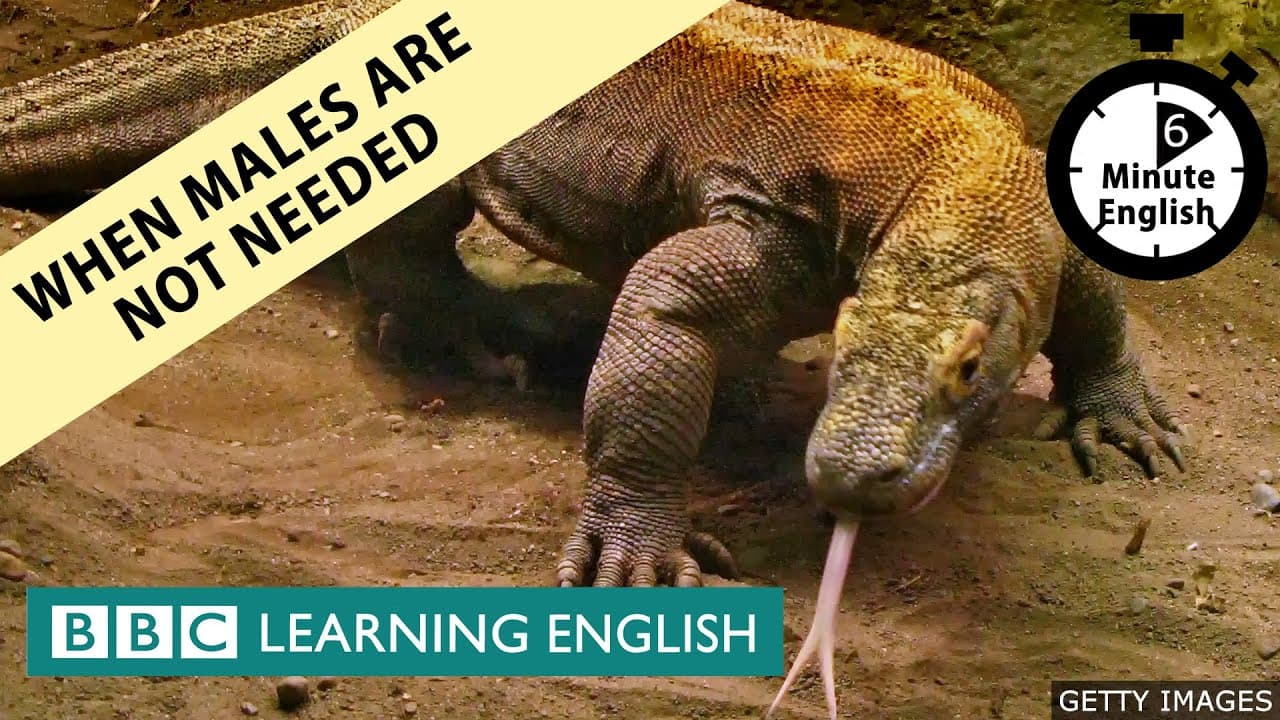
- Flora, a Komodo dragon, laid eggs without a male, demonstrating parthenogenesis in reptiles.
- Key vocabulary includes 'mate', 'celibate', 'paradox', 'hatch', 'the best of both worlds', and 'hedge your bets'.
Install to Summarize YouTube Videos and Get Transcripts
Explore YouTube Video Summarizer or Get YouTube Transcript Extractor
Questions & Answers
Q: What is parthenogenesis and how does it benefit some animal species?
Parthenogenesis is a form of asexual reproduction where females can reproduce without a male. It benefits species by allowing rapid colonization of areas, as females don't need to spend time and energy finding mates. It also eliminates the risk of sexually transmitted diseases, offering a more efficient way to reproduce.
Q: What is the 'paradox of sex' mentioned in the content?
The 'paradox of sex' refers to the puzzling question of why sexual reproduction is so common among animals when it seems less efficient than asexual reproduction like parthenogenesis. Despite the advantages of reproducing without a mate, less than one percent of species are entirely celibate, suggesting there are benefits to sexual reproduction that are not yet fully understood.
Q: How do aphids utilize both asexual and sexual reproduction?
Aphids employ a strategy that combines asexual and sexual reproduction to maximize their survival. In spring, they reproduce asexually, producing all-female offspring that rapidly colonize areas. At the end of summer, they switch to sexual reproduction, producing both males and females, which allows for genetic diversity and adaptability.
Q: What role does the concept of 'hedging bets' play in aphid reproduction?
The concept of 'hedging bets' in aphid reproduction involves using both asexual and sexual reproduction strategies. By reproducing asexually, aphids quickly spread and establish populations, while sexual reproduction introduces genetic diversity. This dual approach ensures that aphids are well-prepared for varying environmental conditions and challenges.
Q: How did Flora, the Komodo dragon, demonstrate parthenogenesis?
Flora, a Komodo dragon at Chester Zoo, demonstrated parthenogenesis by laying eleven eggs that developed into healthy babies without ever having been near a male. This surprised zookeepers and highlighted the ability of some reptiles to reproduce asexually, adding to the understanding of reproductive strategies in the animal kingdom.
Q: Why might sexual reproduction still be prevalent despite its inefficiencies?
Sexual reproduction might remain prevalent because it offers genetic diversity, which is crucial for adapting to changing environments and resisting diseases. While asexual reproduction is efficient, it can lead to genetic homogeneity, making populations vulnerable to extinction if conditions change. Thus, the genetic variation from sexual reproduction may provide long-term survival benefits.
Q: What vocabulary terms are introduced in the content?
The content introduces several vocabulary terms including 'mate' (an animal's sexual partner), 'celibate' (living without sex), 'paradox' (a situation containing contradictory facts), 'hatch' (when an egg breaks open to release a young animal), 'the best of both worlds' (enjoying advantages of different things simultaneously), and 'hedge your bets' (pursuing multiple strategies to avoid loss).
Q: What is the significance of the vocabulary term 'the best of both worlds' in the context of the video?
In the context of the video, 'the best of both worlds' refers to the reproductive strategy of aphids, which combines the advantages of both asexual and sexual reproduction. By doing so, aphids can quickly colonize areas through cloning and enhance genetic diversity through sexual reproduction, ensuring their adaptability and long-term survival.
Summary & Key Takeaways
-
Parthenogenesis is a fascinating reproductive process where female animals can reproduce without a male, as seen in species like Komodo dragons and aphids. This method offers advantages like rapid colonization and avoiding sexually transmitted diseases, yet remains rare among animals.
-
The 'paradox of sex' highlights the puzzling prevalence of sexual reproduction despite its inefficiencies. Aphids provide an example of balancing asexual and sexual reproduction, using cloning for rapid spread and sexual reproduction for genetic diversity.
-
Flora, a Komodo dragon, showcased parthenogenesis by laying eggs without a male. This phenomenon raises questions about the evolutionary role of males, with some species benefiting from both reproductive strategies for survival.
Read in Other Languages (beta)
Share This Summary 📚
Summarize YouTube Videos and Get Video Transcripts with 1-Click
Try YouTube Summary with ChatGPT & Claude or YouTube Transcript Generator
Explore More Summaries from BBC Learning English 📚

Summarize YouTube Videos and Get Video Transcripts with 1-Click
Try YouTube Summary with ChatGPT & Claude or YouTube Transcript Generator