Trends in and the Future of Infrastructure
TL;DR
Infrastructure is entering a larger, startup-friendly transformation rather than dying, driven by the moves from hardware to software, software to services, and the rise of developers. Martin Casado says cloud and SaaS represent roughly $220–$240 billion of a $4 trillion market, putting the shift at only about 6%. Read on to see why software-defined delivery and changing purchasing decisions favor new entrants.
Transcript
this is Martine casado a General Partner here at Andreessen Horowitz and I'm going to be talking about the future of infrastructure so unfortunately this has the potential to be a very short talk I mean what is there to talk about IT probably hasn't grown or is flat stood down even in the last few years you know there's a lot of talk about cloud no... Read More
Key Insights
- 🧑🌾 The infrastructure market is far from fully disrupted, with only 6% transformation so far.
- 👶 With each transformation, the market size increases, creating opportunities for new entrants.
- 💢 Startups have an advantage in the current era of infrastructure as they can focus on software development and leverage the buying power of developers.
- 👻 The shift towards software-defined infrastructure allows for easier distribution and adoption of new technologies.
- 🤗 Open source and community-driven approaches are gaining traction in the infrastructure market, enabling startups to attract developers and create network effects.
- 🥶 The old go-to-market strategies of incumbents are being disrupted by the influence of developers on purchasing decisions.
- 🏛️ Startups still need to build direct enterprise sales forces to monetize their traction among developers.
Install to Summarize YouTube Videos and Get Transcripts
Explore YouTube Video Summarizer or Get YouTube Transcript Extractor
Questions & Answers
Q: What is the future of infrastructure?
Martin Casado argues that infrastructure is undergoing a renaissance rather than dying. He expects the market to expand as cloud, mobile, and the Internet of Things connect more people and endpoints, while startups emerging today become new incumbents.
Q: How much of the infrastructure market has shifted to cloud technology?
Casado estimates that SaaS and public cloud represent about $220–$240 billion within a $4 trillion infrastructure market. On that comparison, the transformation is only about 6% complete.
Q: What three trends are transforming infrastructure?
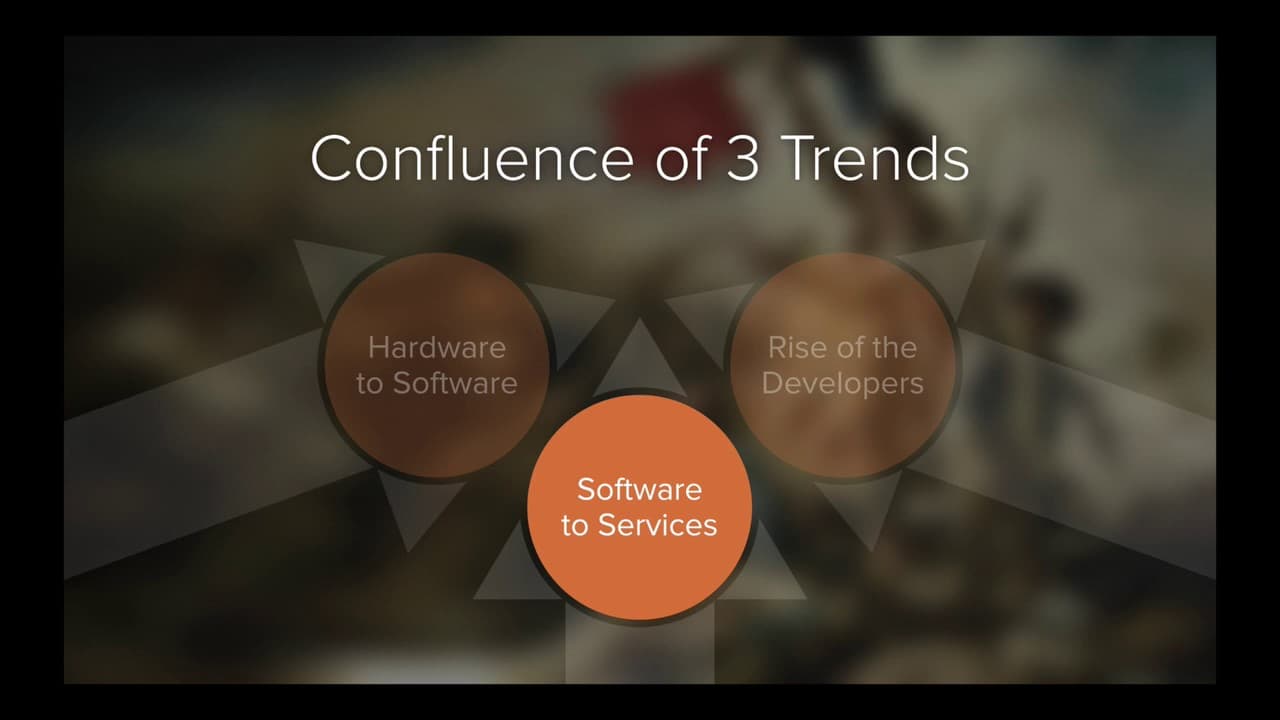
The three trends are the move from hardware to software, the move from software to services, and the rise of developers. Casado presents them as forces creating disruption and making it easier for small technical startups to gain a foothold.
Q: What does software-defined infrastructure mean?
Casado defines functionality as software-defined when it can be implemented and delivered entirely in software. It is not encased in sheet metal or bound to an ASIC.
Q: Why does software-defined infrastructure benefit startups?
Startups can concentrate on developing software instead of investing heavily in hardware supply chains. Software can also be distributed and adopted more easily, helping small technical companies enter the infrastructure market.
Q: Why could the infrastructure market grow during this transformation?
Casado says each major computing transition expands the number of reachable users or endpoints. Computing moved from a few companies with mainframes to desktops, then to mobile devices and potentially trillions of Internet of Things endpoints.
Q: What happens to incumbent companies during major computing transitions?
According to Casado, incumbents from one computing era rarely remain the leading companies in the next. He expects companies that are only getting started today to have an opportunity to become the new infrastructure incumbents.
Q: How are developers changing infrastructure purchasing and sales?
Developers increasingly influence purchasing decisions, disrupting older go-to-market strategies used by incumbents. Open-source and community-driven approaches can help startups attract developers and build network effects, though startups still need direct enterprise sales forces to monetize that traction.
Summary
In this video, Martine Casado, a General Partner at Andreessen Horowitz, discusses the future of infrastructure. He argues against the perception that infrastructure is dying and explains how it is actually transforming into a bigger and more exciting era. He highlights three key trends driving this transformation: the move from hardware to software, the shift from software to services, and the rise of developers as a buying center. Casado explains the advantages these trends offer to startups and emphasizes the potential for disruption and growth in the infrastructure space.
Questions & Answers
Q: What is the current perception of the infrastructure industry and why does Casado disagree with it?
The current perception is that infrastructure is dying, with the rise of cloud computing and the dominance of a few large players. However, Casado believes this is incorrect, and instead argues that infrastructure is undergoing a transformation into a new era filled with opportunities.
Q: How does Casado define the Software Defined movement?
Casado defines the Software Defined movement as the implementation and delivery of functionality entirely in software. It means moving away from hardware-based solutions and utilizing software-based approaches instead.
Q: How has the consumer devices industry been disrupted by the shift to software?
Consumer devices, such as GPS devices, used to be fixed-function hardware. However, with the rise of smartphones and software applications like Waze, the industry has shifted towards software-based solutions. This has allowed for greater innovation, faster development, and the creation of significant value.
Q: How is infrastructure following a similar pattern to consumer devices?
Just as consumer devices have moved from hardware to software, infrastructure is undergoing a similar transformation. With the maturation of software stacks and the availability of insertion points in various infrastructure layers, functionality can now be delivered in software rather than physical hardware.
Q: What advantages does delivering infrastructure in software offer for startups?
Delivering infrastructure in software reduces the need for a costly hardware supply chain and allows startups to focus on their core competency of software development. It also enables faster distribution, lower costs, and easier implementation of new features or updates.
Q: How is infrastructure transitioning from software to services?
Infrastructure is moving towards being provided as services, similar to how enterprise applications have become Software as a Service (SaaS). This transition allows startups to deliver core infrastructure components as services, reducing the complexity of installation, upgrading, and support.
Q: Why is the rise of developers as a buying center significant?
Developers now have more influence over infrastructure purchasing decisions. They prioritize factors like technical elegance, community, open source, and low-friction adoption. This shift in the buying center disrupts the traditional go-to-market strategies of incumbents and creates opportunities for startups that can cater to developers' preferences.
Q: How can startups leverage developer influence to their advantage?
Startups can gain traction and credibility by attracting developers through open source projects and engaging their community. However, it is important to note that attracting developers does not necessarily lead to direct sales. Startups still need to build out an enterprise sales force to monetize their products effectively.
Q: Are the old go-to-market strategies of incumbents becoming obsolete?
Yes, the traditional go-to-market strategies of incumbents are becoming less effective in the face of developer-driven purchasing decisions. Startups have an advantage in this new landscape, as they can focus on delivering innovative software solutions and leverage the preferences of developers.
Q: Is the infrastructure industry undergoing a significant disruption?
According to Casado, the infrastructure industry is experiencing a major disruption. He believes that the entire infrastructure space is shifting towards new paradigms, such as software, services, and developer-centric approaches. This disruption is expected to impact trillions of dollars in market cap and create new opportunities for companies providing innovative technologies and services.
Takeaways
Casado's talk highlights the future of infrastructure as a transformation rather than a decline. He discusses three key trends driving this transformation: the shift from hardware to software, the move towards delivering infrastructure as services, and the rise of developers as a buying center. He emphasizes the advantages that these trends offer to startups, such as reduced costs, faster distribution, and alignment with developer preferences. Casado believes that the infrastructure industry is undergoing a significant disruption, creating opportunities for new entrants to redefine the market.
Summary & Key Takeaways
-
The infrastructure market is currently being disrupted by the shift to cloud technology, but this disruption is just the beginning, as the market is only about 6% transformed.
-
With each transformation in the history of computer science, the market size has increased, and new incumbents have emerged while old ones faded away.
-
The current transformation from hardware to software-defined infrastructure is allowing startups to enter the market with innovative solutions that can be delivered more easily and efficiently through software.
Read in Other Languages (beta)
Share This Summary 📚
Summarize YouTube Videos and Get Video Transcripts with 1-Click
Try YouTube Summary with ChatGPT & Claude or YouTube Transcript Generator
Explore More Summaries from a16z 📚





Summarize YouTube Videos and Get Video Transcripts with 1-Click
Try YouTube Summary with ChatGPT & Claude or YouTube Transcript Generator