How to calculate inbreeding from a pedigree chart
TL;DR
Learn manual inbreeding calculations using pedigree charts.
Transcript
Read and summarize the transcript of this video on Glasp Reader (beta).
Key Insights
- Inbreeding coefficients measure genetic similarity in pedigrees, crucial for understanding genetic diversity and potential health risks.
- Pedigree charts use symbols like circles for females and squares for males to represent familial relationships and ancestry.
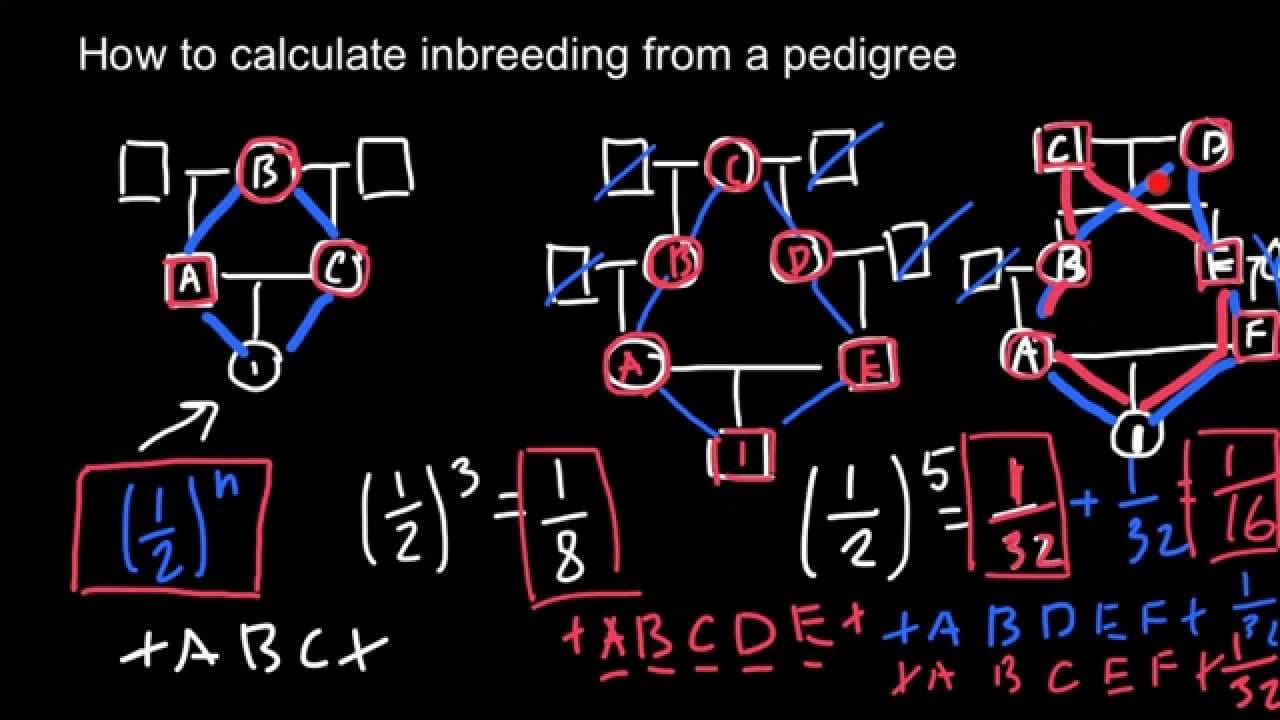
- The path coefficient method involves identifying common ancestors and calculating the inbreeding coefficient using node pathways.
- Inbreeding coefficients are calculated by determining the number of nodes in the path between related individuals and applying a specific formula.
- Different pedigree scenarios, such as half-siblings or full cousins, require distinct approaches to calculate inbreeding coefficients accurately.
- Multiple pathways in a pedigree can affect the inbreeding coefficient, necessitating the use of addition rules for accurate calculations.
- Understanding genetic relationships in pedigrees helps identify potential genetic health issues and informs breeding decisions.
- Manual calculation of inbreeding coefficients remains valuable despite the availability of automated software, especially for simpler pedigrees.
Install to Summarize YouTube Videos and Get Transcripts
Explore YouTube Video Summarizer or Get YouTube Transcript Extractor
Questions & Answers
Q: How is the inbreeding coefficient calculated using a pedigree chart?
The inbreeding coefficient is calculated using the path coefficient method, which involves identifying common ancestors in a pedigree chart. By determining the number of nodes in the pathway between related individuals and applying a specific formula, the inbreeding coefficient can be accurately calculated. This method helps assess genetic similarity and potential health risks.
Q: What symbols are used in pedigree charts to represent individuals?
Pedigree charts use circles to represent females and squares to represent males. These symbols help visually map out familial relationships and ancestry, allowing for easier identification of common ancestors and pathways necessary for calculating inbreeding coefficients.
Q: Why is it important to calculate inbreeding coefficients manually?
Manual calculation of inbreeding coefficients is important despite the existence of automated software because it enhances understanding of genetic relationships in simpler pedigrees. This knowledge is crucial for identifying potential genetic health issues, making informed breeding decisions, and ensuring genetic diversity within populations.
Q: How do different pedigree scenarios affect inbreeding calculations?
Different pedigree scenarios, such as half-siblings, full cousins, or half-cousins, require distinct approaches to calculate inbreeding coefficients. Each scenario has unique pathways and node counts, affecting the application of the path coefficient method and necessitating careful consideration of multiple pathways and addition rules for accurate calculations.
Q: What role do common ancestors play in calculating inbreeding coefficients?
Common ancestors are central to calculating inbreeding coefficients as they provide the genetic link between related individuals in a pedigree. Identifying these ancestors and the pathways connecting them allows for the application of the path coefficient method, essential for determining the inbreeding coefficient and understanding genetic similarity.
Q: How do multiple pathways in a pedigree affect inbreeding calculations?
Multiple pathways in a pedigree can affect inbreeding calculations by providing alternative routes between related individuals. This requires the use of addition rules to account for all possible pathways, ensuring an accurate calculation of the inbreeding coefficient. Properly identifying and calculating these pathways is crucial for precise genetic assessments.
Q: What is the significance of node counts in inbreeding calculations?
Node counts in inbreeding calculations represent the number of individuals in the pathway between related individuals. The path coefficient method uses these counts in a formula to calculate the inbreeding coefficient, highlighting the genetic similarity and potential health risks associated with inbreeding. Accurate node counting is essential for reliable results.
Q: How can understanding inbreeding coefficients inform breeding decisions?
Understanding inbreeding coefficients helps inform breeding decisions by identifying genetic similarity and potential health risks within a population. By calculating these coefficients, breeders can make informed choices to maintain genetic diversity, reduce the risk of genetic disorders, and ensure the overall health and viability of future generations.
Summary & Key Takeaways
-
The video explains how to calculate inbreeding coefficients manually using pedigree charts, focusing on identifying common ancestors and using the path coefficient method. Different pedigree scenarios, such as half-siblings and full cousins, are explored to illustrate calculation variations.
-
Inbreeding coefficients are calculated by determining the number of nodes in a path between related individuals in a pedigree. The video demonstrates how to apply a specific formula to find the inbreeding coefficient, considering multiple pathways and addition rules.
-
Despite the availability of automated software, manual calculation of inbreeding coefficients remains useful for simpler pedigrees. Understanding genetic relationships through these calculations can inform breeding decisions and identify potential genetic health risks.
Read in Other Languages (beta)
Share This Summary 📚
Summarize YouTube Videos and Get Video Transcripts with 1-Click
Try YouTube Summary with ChatGPT & Claude or YouTube Transcript Generator