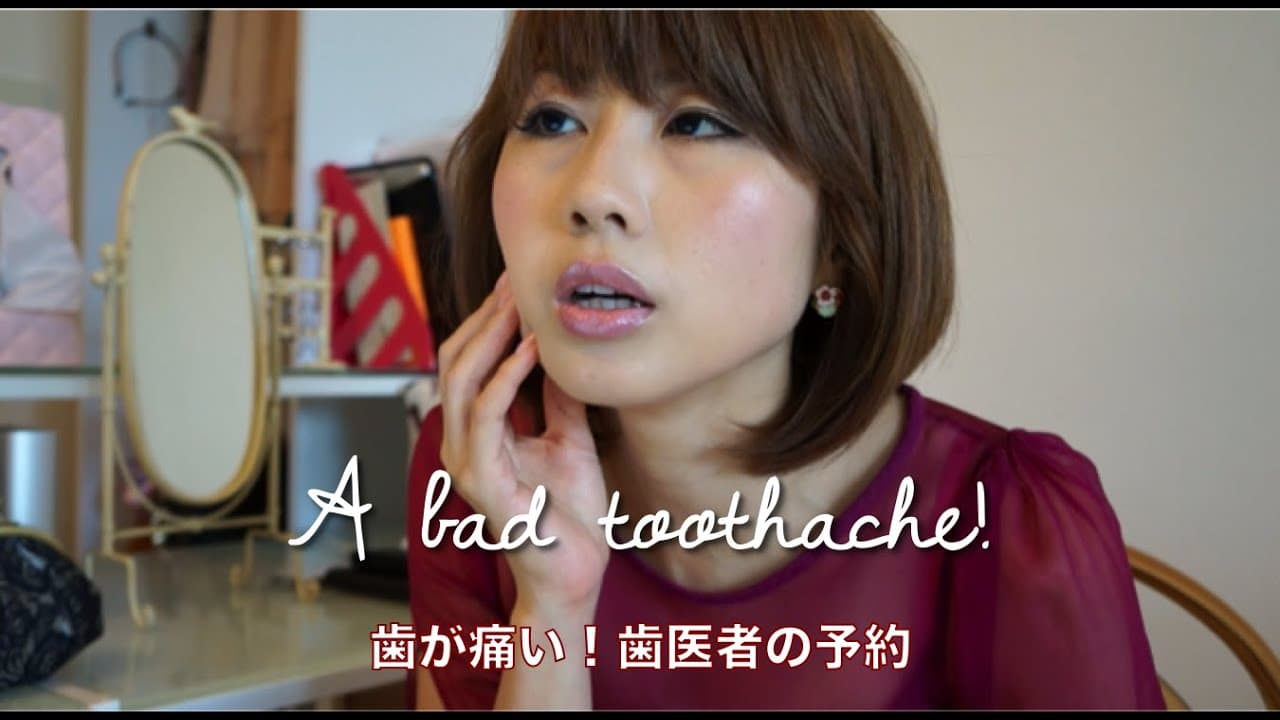
歯医者の予約の取り方!// Making a dentist appointment.〔# 113〕
TL;DR
Discusses making dentist appointments in Japan and shares personal toothache experience.
Transcript
good morning everyone I am not having a very good morning this morning but I hope you're having a good morning why am I not having a very good morning well I woke up with the worst toothache ever I'm on painkillers right now I've taken like six tablets painkillers so I'm okay to Vlog now it's actually not my tooth it's like the gums around my tooth... Read More
Key Insights
- The speaker woke up with severe toothache and took painkillers to manage the pain, indicating a potential wisdom tooth issue.
- In Japan, dentists operate on a first-come, first-served basis during specified hours, unlike the appointment-based system in the US.
- Finding a dentist with English-speaking staff in Japan is crucial for effective communication, especially in emergencies.
- The speaker emphasizes the importance of knowing basic Japanese phrases related to pain and body parts for non-Japanese speakers.
- Japanese clinics and gyms tend to open later in the morning, with the earliest opening around 9:30 AM.
- The speaker shares a personal experience of disappointment with a previous dentist who misjudged the need for wisdom tooth extraction.
- Emergency care in Japan is accessible, especially in Tokyo, where many hospitals and clinics have English-speaking staff.
- The speaker provides resources for learning useful phrases for making dental appointments in Japanese.
Install to Summarize YouTube Videos and Get Transcripts
Explore YouTube Video Summarizer or Get YouTube Transcript Extractor
Questions & Answers
Q: What dental issue is the speaker experiencing?
The speaker is experiencing a severe toothache, suspecting it to be related to their wisdom teeth. They mention that the pain is primarily in the gums around the tooth, and they have had wisdom tooth issues in the past, which were not painful but caused misalignment.
Q: How do dental appointments in Japan differ from the US?
In Japan, dental clinics often operate on a first-come, first-served basis during specified hours, allowing patients to visit without an appointment. This contrasts with the US, where appointments are typically required, and patients must call ahead to schedule a visit, even in emergency situations.
Q: What advice does the speaker give for non-Japanese speakers needing dental care in Japan?
The speaker advises finding a dentist with English-speaking staff to ensure effective communication of medical conditions. They also suggest learning basic Japanese phrases related to pain and body parts, which can be helpful in explaining symptoms to healthcare providers.
Q: What challenges does the speaker mention about healthcare services in Japan?
The speaker mentions that clinics and gyms in Japan tend to open later in the morning, with many opening around 10:00 or 11:00 AM. This can be inconvenient for those needing early morning appointments or services. They also express frustration about past experiences with misjudged dental advice.
Q: What resources does the speaker provide for learning dental-related phrases in Japanese?
The speaker provides a link to a website with useful phrases for making dental appointments in Japanese. They also mention their YouTube playlist and other social media platforms where they share language lessons and tips, which can be beneficial for those learning Japanese.
Q: Why is it important to find an English-speaking dentist in Japan?
Finding an English-speaking dentist in Japan is crucial for non-Japanese speakers to ensure clear communication of their medical issues and symptoms. This is especially important in emergency situations where accurate and timely communication can impact the quality and effectiveness of the care received.
Q: How does the speaker feel about their previous dental experiences?
The speaker expresses disappointment and frustration with a previous dentist who advised that their wisdom teeth did not need extraction, only for them to experience severe pain later. This experience highlights the importance of accurate dental assessments and the potential consequences of misjudgment.
Q: What are the speaker's plans for addressing their toothache?
The speaker plans to visit a nearby dentist without an appointment, taking advantage of Japan's first-come, first-served system during clinic hours. They hope to avoid further pain and potential overdose on painkillers by seeking timely medical attention for their toothache.
Summary & Key Takeaways
-
The speaker describes waking up with a severe toothache and taking painkillers to manage the pain. They suspect a wisdom tooth issue and plan to visit a nearby dentist without an appointment, as is common in Japan.
-
In Japan, dental clinics operate on a first-come, first-served basis during specific hours, unlike the appointment system in the US. The speaker advises finding English-speaking dentists for effective communication.
-
The speaker shares their frustration with the late opening hours of clinics and gyms in Japan and provides resources for learning useful Japanese phrases for making dental appointments.
Read in Other Languages (beta)
Share This Summary 📚
Summarize YouTube Videos and Get Video Transcripts with 1-Click
Try YouTube Summary with ChatGPT & Claude or YouTube Transcript Generator
Explore More Summaries from バイリンガール英会話 | Bilingirl Chika 📚


Summarize YouTube Videos and Get Video Transcripts with 1-Click
Try YouTube Summary with ChatGPT & Claude or YouTube Transcript Generator