How Do You Practice Breath and Third Eye Meditation, and Can You Grow Up Without a Dharma?
TL;DR
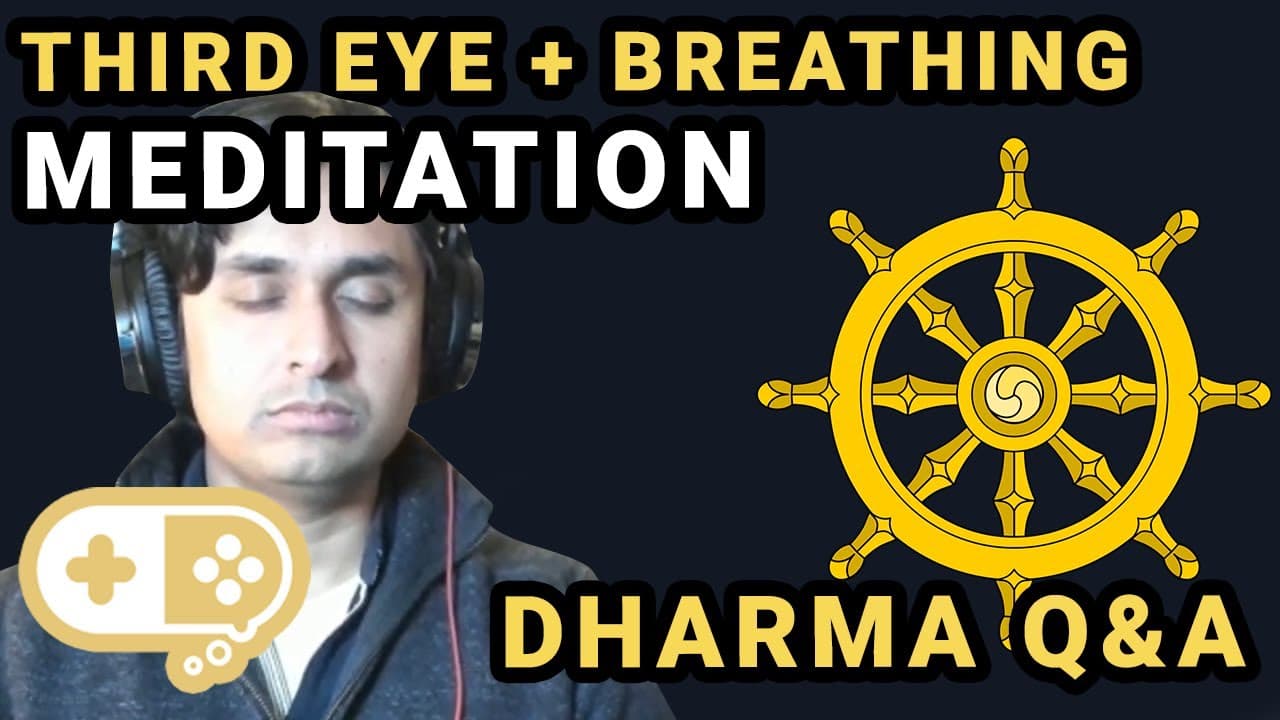
Breath and third eye meditation is practiced by tracking the breath’s temperature through the nose, throat, chest, belly, and eyebrow center without forcing a particular sensation. The speaker recommends practicing for about five minutes every day for one week and observing where temperature changes can be felt. The Q&A also explains that people can grow up without a Dharma and should prepare for future opportunities, making the full discussion worth reading.
Transcript
okay so we're gonna do a brass third eye meditation so I'm gonna teach you guys start integrating stuff okay so it's kind of weird but we're gonna do it okay so sit up straight your back should be straight okay good okay then I want y'all to close your eyes so we're gonna ring the bell to start to signal the start of the practice and end of the pra... Read More
Key Insights
- ♂️ Meditation technique: The provided content includes instructions for a meditation technique that involves focusing on the temperature of the breath in different areas of the body, such as the nose and throat.
- 📚 Homework assignment: The viewers are assigned a homework task of practicing this meditation technique for one week and observing where they feel the temperature change within their body.
- 🤔 Discovering one's Dharma: The content discusses the concept of Dharma and suggests that individuals should spend their early years learning about themselves and finding their purpose.
- 😔 Depression and unhappiness: The streamer distinguishes between clinical depression and unhappiness, explaining that depression can sometimes arise without a specific triggering event. Finding one's Dharma can help address feelings of emptiness and lack of fulfillment.
- 🧠 Personal growth and preparation: Individuals are encouraged to pursue personal growth in various areas, such as physical fitness and knowledge acquisition, in preparation for their future Dharma.
- 🎮 Missed opportunities: The content emphasizes that missing a chance doesn't mean there won't be more opportunities in the future. It encourages individuals to continuously prepare and be ready for the next opportunity.
- 📝 Exploring creativity: The content addresses a viewer's question about finding a specific creative pursuit, emphasizing the importance of studying and learning in preparation for discovering one's creative Dharma.
- 📅 Time-sensitive opportunities: The content highlights the notion that certain opportunities, like the popularity of a game or trend, may seem time-sensitive, but it's crucial to recognize that more chances will arise in the future.
Install to Summarize YouTube Videos and Get Transcripts
Explore YouTube Video Summarizer or Get YouTube Transcript Extractor
Questions & Answers
Q: How do you practice breath and third eye meditation?
Sit with your back straight, close your eyes, and notice how the temperature of inhalation differs from exhalation. Move your attention from the tip, middle, and top of the nose to the throat, chest, belly, and eyebrow center, using separate breaths to examine each area.
Q: How long should you practice the breath and third eye meditation?
The assigned practice is about five minutes every day for one week. During each session, observe where within your body you can feel a temperature change from the breath.
Q: What should you do if you cannot feel the breath at the eyebrow center?
Do not treat that as a problem or force the sensation. Follow the breath wherever you can feel it, even if it reaches only the nose, throat, or chest.
Q: What is the main focus of this meditation technique?
The technique centers on feeling the temperature of the breath and noticing where that temperature travels within the body. You place your attention on one location at a time and observe what you can feel there.
Q: How is attention moved through the nose during the meditation?
Focus on the tip of the nose for the first breath, the middle of the nose for the second, and the top or bridge of the nose for the third. Afterward, continue toward the back and bottom of the throat, chest, and belly.
Q: How is the eyebrow center used in the meditation?
Place your attention on the eyebrow center or forehead and try to feel cool air travel upward as you inhale. The guided practice asks you to try this area for five breaths, while accepting it if the sensation does not reach there.
Q: Is it possible to grow up without a Dharma?
Yes; the speaker says that most people grow up without a Dharma. While growing up, a person may instead have a role such as being a student or a child.
Q: Can missing an opportunity prevent someone from fulfilling their Dharma?
No; the existing discussion emphasizes that missing one chance does not mean there will be no future opportunities. The advice is to keep developing physical fitness, knowledge, and other forms of personal preparation so you are ready when another opportunity appears.
Summary & Key Takeaways
-
The video begins with a guided meditation, instructing viewers to sit up straight, close their eyes, and focus on the temperature of their breath.
-
The speaker guides viewers to notice the sensations in different areas of their body, starting with the tip of the nose and moving down to the throat, chest, belly, and eyebrow center.
-
The video ends with homework for viewers to practice this meditation technique for a week and observe where they feel the temperature change in their body.
Read in Other Languages (beta)
Share This Summary 📚
Summarize YouTube Videos and Get Video Transcripts with 1-Click
Try YouTube Summary with ChatGPT & Claude or YouTube Transcript Generator
Explore More Summaries from HealthyGamerGG 📚


Summarize YouTube Videos and Get Video Transcripts with 1-Click
Try YouTube Summary with ChatGPT & Claude or YouTube Transcript Generator