How Can Soothing Soundscapes Support Healing? | Rishi Janardhanan | TEDxThe Pupil International School Youth
TL;DR
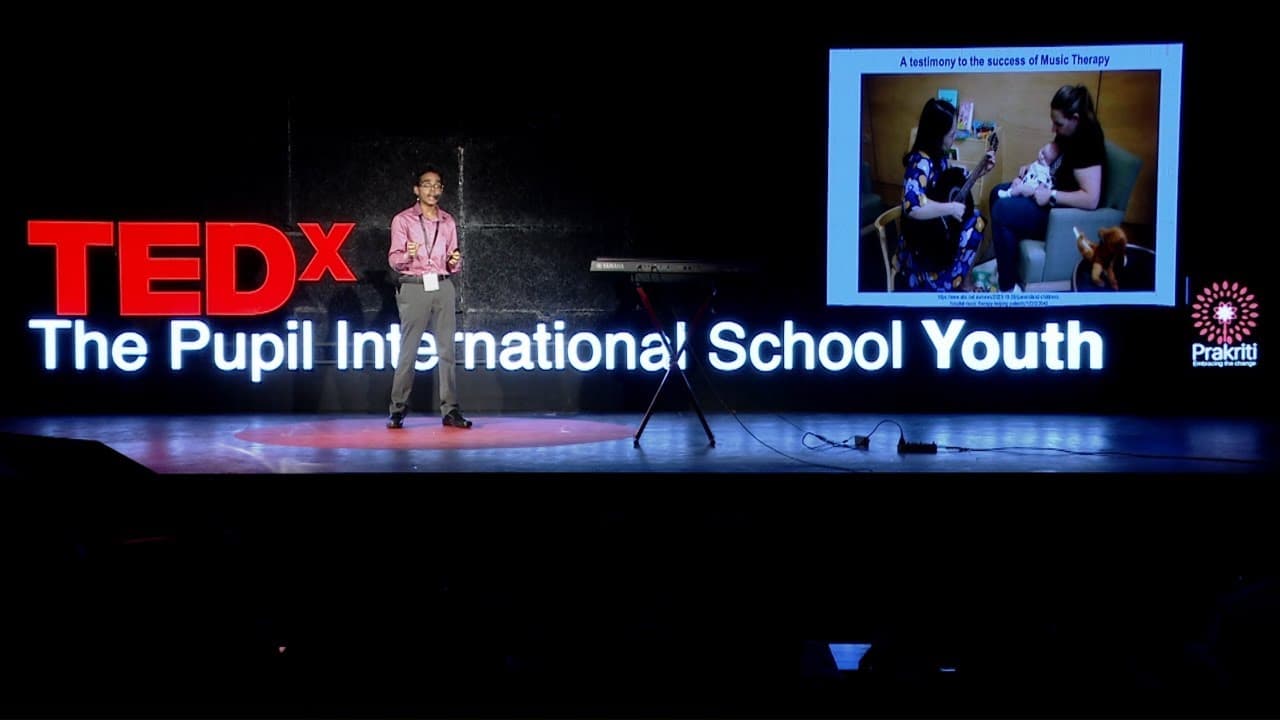
Music therapy can support mental and physical well-being by activating brain regions involved in hearing, movement, vision, memory, emotion, and sensory processing. Rishi Janardhanan explains its clinical role through his own musical transformation and Ruby, one of 750 Queensland Children’s Hospital patients benefiting from music therapy. Read on to understand the underlying brain processes, historical uses, and potential role in recovery.
Transcript
over 10.7% of our world's population suffers from their own mental and emotional battles despite the several steps taken to free themselves from these burdensome chains of stress well there might be one simple yet effective solution to this huge problem I want to ask all of you a question do you think that everybody around us goes to a doctor and t... Read More
Key Insights
- 💉 Only a small percentage of adults receive mental health treatment, highlighting the need for alternative therapies like music therapy.
- 🥳 Music therapy activates various parts of the brain and the peripheral and central nervous systems.
- 🫚 Music therapy has historical roots and has been used as a healing method for centuries.
- 🛀 It has shown significant benefits in patient recovery, relaxation, and overall well-being.
- 🎼 The case of Ruby and the Queensland Children's Hospital music therapy program demonstrates the effectiveness of music therapy in improving patient outcomes.
- 💓 Binaural beats offer a unique therapeutic approach to harnessing the healing power of music.
- 😪 Different brain waves produced by binaural beats have specific benefits, including promoting deep sleep, relaxation, and learning.
Install to Summarize YouTube Videos and Get Transcripts
Explore YouTube Video Summarizer or Get YouTube Transcript Extractor
Questions & Answers
Q: What is music therapy?
Music therapy is the clinical and evidence-based use of music interventions within a therapeutic relationship to achieve individualized goals. The talk presents it as a potentially simple and effective response to mental and emotional struggles.
Q: How does music activate different parts of the brain?
Music enters the ears as waves and triggers neurons that help transcribe pitch, rhythm, and tone in different parts of the brain. Listening or playing can activate emotional and sensory outputs as well as the auditory cortex, motor cortex, visual cortex, and memory system.
Q: Which brain regions respond when people listen to or play music?
The auditory cortex decodes pitch and tone, while the motor cortex becomes active when people clap or dance to a rhythm. Reading musical notes activates the visual cortex, and the hippocampus, described as the mind’s memory system, helps people recollect lyrics.
Q: How did playing guitar affect Rishi Janardhanan during the COVID-19 pandemic?
During 2020, Rishi says the pandemic left him bored and introverted. After picking up his dusty guitar to play a few chords, he became a musician, performed in an online concert within one year, and grew into a more enthusiastic young learner.
Q: How did music therapy help Ruby recover?
Ruby, who was diagnosed with a severe heart condition and underwent open-heart surgery at birth, used music therapy to relax and sleep. The talk says a reduced heart rate can increase oxygen intake and nutrient absorption, supporting her weight gain and recovery before future surgeries.
Q: How many Queensland Children’s Hospital patients benefited from its music therapy program?
Ruby was described as one of 750 patients benefiting from the Queensland Children’s Hospital music therapy program. Her therapist played guitar and sang a lullaby to help her relax and sleep.
Q: When did music therapy begin to be practiced clinically?
The talk says music had been used medicinally across cultures for ages but was not clinically practiced until 1806. It also identifies remedial evidence from 1804 and 1806 and an earlier published article dating to 1798.
Q: How was music used to help soldiers during the world wars?
Music therapy was practiced extensively during the First and Second World Wars for troops and veterans returning with post-traumatic stress disorders and physical disabilities. Musicians worked in hospitals, while community musicians volunteered to help relieve trauma and support recuperation.
Summary & Key Takeaways
-
Only one in eight adults receives actual mental health treatment, with a small percentage receiving medication or psychological therapy.
-
Music therapy is a clinical and evidence-based approach that activates important parts of the brain, leading to the activation of the peripheral and central nervous systems.
-
Music therapy has been historically used for healing purposes and has shown significant benefits in patient recovery and relaxation, as demonstrated by the case of Ruby and the Queensland Children's Hospital music therapy program.
Read in Other Languages (beta)
Share This Summary 📚
Summarize YouTube Videos and Get Video Transcripts with 1-Click
Try YouTube Summary with ChatGPT & Claude or YouTube Transcript Generator
Explore More Summaries from TEDx Talks 📚

Summarize YouTube Videos and Get Video Transcripts with 1-Click
Try YouTube Summary with ChatGPT & Claude or YouTube Transcript Generator