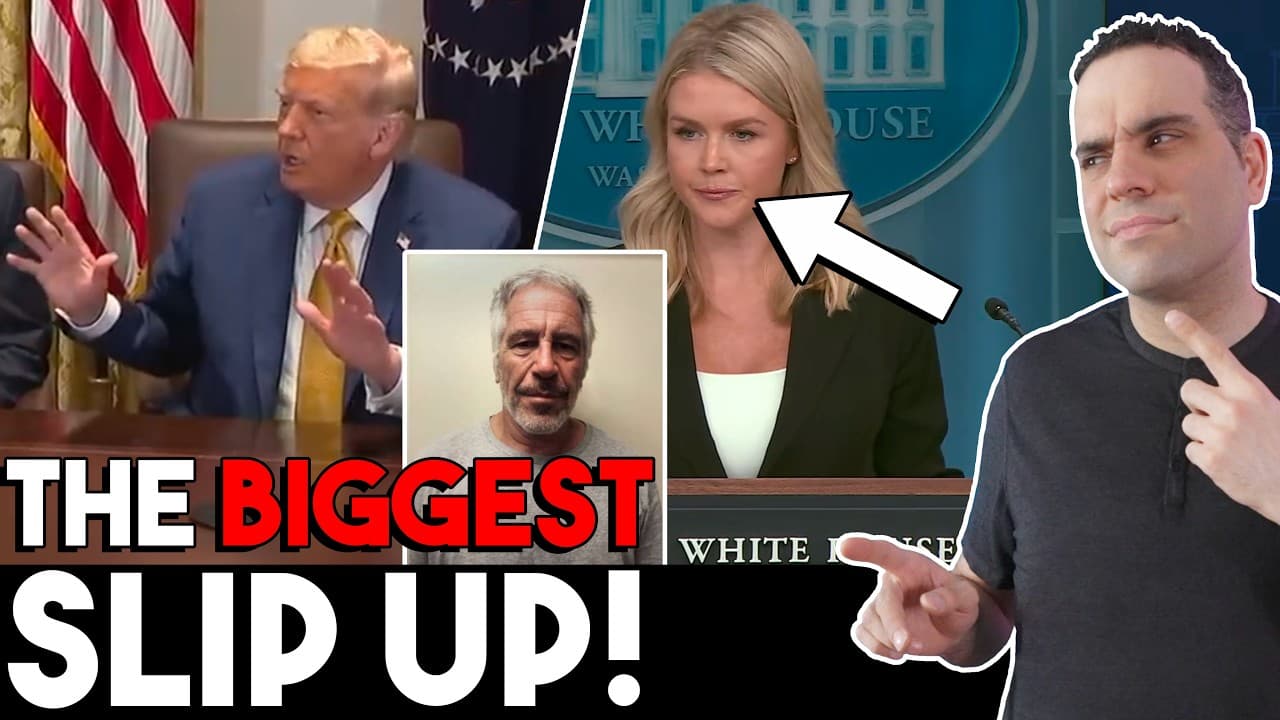
White House CAUGHT LYING About Epstein! Body Language Analyst Reacts to Trump, Leavitt & Bondi
TL;DR
White House faces scrutiny over Epstein report's lack of transparency.
Transcript
Read and summarize the transcript of this video on Glasp Reader (beta).
Key Insights
- The video analyzes the body language and verbal cues of Trump, Leavitt, and Bondi, suggesting possible deception or stress.
- Caroline Leavitt's elevated blink rate and verbal hesitations indicate stress or cognitive overload during her responses.
- Leavitt's word choice subtly separates Epstein's associates from criminals, possibly deflecting accountability.
- Non-verbal cues like shifting weight and mouth shrug suggest Leavitt's discomfort with the topic of Epstein.
- Trump's emotional response appears performative, as it lacks initial reaction to the stimulus of the question.
- Pam Bondi's use of finger quotes around 'client list' indicates a shift in narrative from her previous statement.
- The analysis suggests a coordinated effort to deflect and shut down questions about Epstein's affiliations.
- The video questions the transparency and credibility of the responses from the White House officials.
Install to Summarize YouTube Videos and Get Transcripts
Explore YouTube Video Summarizer or Get YouTube Transcript Extractor
Questions & Answers
Q: What does the video suggest about Caroline Leavitt's response to the Epstein report?
The video suggests that Caroline Leavitt's response to the Epstein report showed signs of stress and possible deception. Her elevated blink rate, verbal hesitations, and non-verbal cues like shifting weight and mouth shrug indicate discomfort and cognitive overload, especially when discussing sensitive topics related to Epstein.
Q: How does the video analyze Donald Trump's reaction to questions about Epstein?
The video analyzes Donald Trump's reaction as performative, noting that his emotional response seemed associated with the presentation rather than the stimulus of the question. His lack of initial reaction to the mention of Epstein and subsequent generic statements suggest a possible premeditated attempt to shut down the topic.
Q: What does the video reveal about Pam Bondi's statements regarding the Epstein client list?
The video reveals that Pam Bondi's statements about the Epstein client list have shifted over time. Initially, she mentioned the list was on her desk, but later used finger quotes around 'client list,' indicating a change in narrative. This shift, along with her passionate delivery, suggests an attempt to override logical inconsistencies with certainty.
Q: What are the key non-verbal cues identified in the video?
The key non-verbal cues identified include Caroline Leavitt's elevated blink rate, shifting weight, and mouth shrug, indicating stress and discomfort. Trump's lack of initial emotional response and subsequent performative gestures suggest a premeditated reaction. Bondi's use of finger quotes and aggressive illustrators highlight a change in narrative.
Q: How does the video critique the White House's handling of the Epstein report?
The video critiques the White House's handling of the Epstein report by highlighting the lack of transparency and credibility in their responses. The officials' non-verbal cues and deflective language suggest a coordinated effort to shut down questions about Epstein, raising concerns about the truthfulness of their statements.
Q: What does the video suggest about the likelihood of deception in the officials' responses?
The video suggests a higher likelihood of deception in the officials' responses due to the presence of stress indicators and non-verbal cues consistent with cognitive overload. However, it acknowledges that these behaviors could also result from knowing the narrative is hard to believe, rather than intentional deception.
Q: What alternative explanations does the video offer for the officials' behavior?
The video offers alternative explanations for the officials' behavior, such as the possibility that they fear not being believed, or that they are conveying information they themselves doubt. It also considers that their behaviors could stem from the narrative being inherently hard to believe, rather than deliberate deception.
Q: What does the video conclude about the overall truthfulness of the White House's statements?
The video concludes that there is a significant likelihood that the White House's statements are not entirely truthful. The consistent non-verbal cues of stress and deflection across multiple officials suggest that important information may be withheld, although it acknowledges the possibility of other explanations for their behavior.
Summary & Key Takeaways
-
The video dissects the body language and verbal responses of White House officials to the Epstein report, suggesting possible deception.
-
Caroline Leavitt's stress indicators, such as increased blink rate and verbal hesitations, are analyzed in context of her responses.
-
Trump's and Bondi's responses are critiqued for deflecting questions about Epstein, raising concerns about transparency.
Read in Other Languages (beta)
Share This Summary 📚
Summarize YouTube Videos and Get Video Transcripts with 1-Click
Try YouTube Summary with ChatGPT & Claude or YouTube Transcript Generator
Explore More Summaries from The Behavioral Arts 📚
Summarize YouTube Videos and Get Video Transcripts with 1-Click
Try YouTube Summary with ChatGPT & Claude or YouTube Transcript Generator