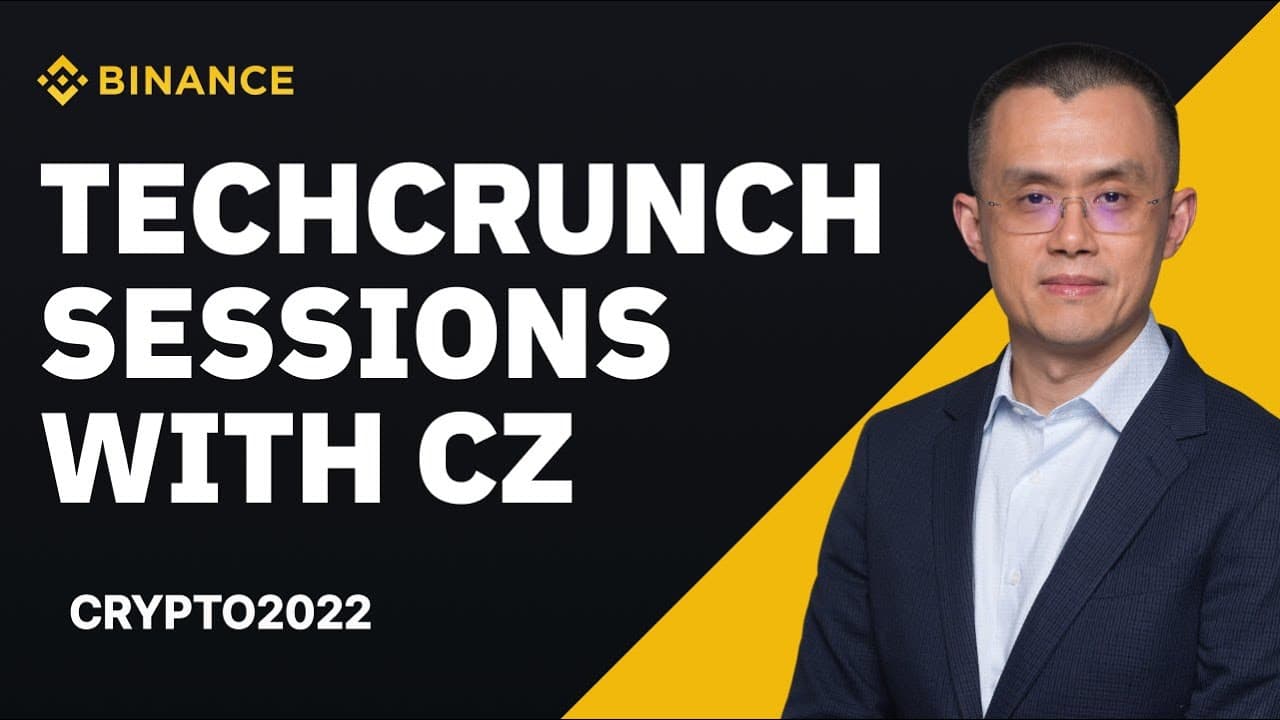
CZ Speaking at TechCrunch Sessions: Crypto 2022
TL;DR
FTX’s collapse damaged consumer confidence, prompted withdrawals from centralized exchanges, reduced trading activity, and increased regulatory scrutiny. CZ argued that stronger reserve audits and safeguards for client funds could reduce similar risks, while Binance remained profitable, held cash reserves, and considered supporting strong projects facing temporary cash shortages through a flexible industry recovery fund.
Transcript
thank you Hi how are you it's great to have you I can't hear you I think hello can you hear me yes we're good now um yes well Susie you have certainly made a lot of headlines this week and just in general and as soon as this morning I saw that binance had suspended deposits of uscc and usdt on Solana so I just wanted to start there asking you about... Read More
Key Insights
- FTX’s collapse damaged the broader crypto industry by trapping customer money, weakening confidence, encouraging withdrawals from centralized exchanges, reducing trading volume, and inviting much heavier scrutiny from regulators around the world.
- Binance’s revenue was more than 90 percent dependent on trading activity, so its income moved with market conditions and the Bitcoin price, which CZ described as a broad index for the crypto industry.
- Binance remained profitable and financially healthy despite market stress, according to CZ, with cash reserves available for acquisitions, investments, assistance to other projects, and continued day-to-day operations.
- Binance had several products it could monetize if needed, including CoinMarketCap advertising and transaction fees through Trust Wallet, but CZ said the company preferred offering products freely to lower friction and accelerate crypto adoption.
- CoinMarketCap generated $3 million per month in advertising revenue when Binance acquired it, according to CZ, but Binance removed banners, pop-ups, and project advertising to create a cleaner user experience.
- CZ’s FTT announcement involved plans to sell tokens representing about 3 percent of total supply over several months, and he said he did not expect the statement to have such a large market impact.
- The loss of trust in FTX developed through a longer chain of events, including suspicions about its activities, public spending, customer fund movements, and dissatisfaction with regulatory proposals associated with the company.
- Stronger reserve audits and safeguards for client funds could reduce the probability of another exchange collapse, but CZ warned that neither regulation nor auditing can provide complete protection when someone deliberately falsifies information.
Install to Summarize YouTube Videos and Get Transcripts
Explore YouTube Video Summarizer or Get YouTube Transcript Extractor
Questions & Answers
Q: How did FTX’s collapse affect the crypto industry?
FTX’s collapse caused direct financial harm because customer money was stuck on the platform, while also weakening trust and credibility across the crypto industry. CZ expected people to withdraw funds from centralized exchanges, trading volumes to fall, regulators to apply much greater scrutiny, and new licenses to become harder to obtain. He considered those effects negative in the short term, although stronger transparency could help over time.
Q: Why did CZ say his FTT announcement was not the sole cause?
CZ said the announcement was only a possible final trigger in a much longer deterioration of trust. Binance planned to sell FTT equal to about 3 percent of total supply over several months, and he did not expect the statement to have such a large impact. He pointed to earlier suspicions about FTX’s activities, spending, customer funds, and regulatory proposals as contributing factors.
Q: How dependent was Binance on trading revenue?
Binance received more than 90 percent of its revenue from trading activity, according to CZ. That meant revenue rose and fell with the Bitcoin price, which he described as an industry index that a large market participant would follow closely. Despite that concentration, he said Binance remained profitable, financially healthy, and able to continue its day-to-day operations during the market disruption.
Q: How could Binance diversify its revenue if trading declined?
Binance could monetize products that it was already providing without significant charges. CZ said CoinMarketCap had generated $3 million per month from advertising before Binance removed its ads, which could provide about $40 million annually if restored. He also said Trust Wallet could charge a small transaction fee. Binance was not planning those changes in the short term because it remained profitable.
Q: What regulations could reduce the risk of another exchange collapse?
Stronger audits of reserves, closer oversight of how money is used, and clearer safeguards for client funds could reduce the chance of a similar collapse, according to CZ. He did not claim that regulation could prevent every failure. A person intending to lie could falsify data or provide misleading information, so auditing and regulation improve protection without creating a complete guarantee.
Q: Why might ordinary audits fail to detect exchange problems?
CZ noted that FTX had been audited under generally accepted accounting principles in the United States, yet serious problems still emerged. He therefore supported better reserve auditing while questioning whether ordinary audits would necessarily have prevented this case. His central concern was that deliberate deception can undermine oversight because false data and misleading information may be presented to auditors and regulators.
Q: How was Binance planning its industry recovery fund?
Binance was considering a flexible recovery fund rather than committing immediately to a fixed amount. CZ said figures around $2 billion had been discussed, but he was unsure whether that would be too much or insufficient. The intended process was to identify strong projects facing a temporary cash shortage, evaluate their circumstances, and avoid funding applicants that were not strong enough to justify support.
Q: What would Binance receive for supporting distressed crypto projects?
Compensation could vary according to the project and its circumstances. CZ said Binance might receive equity, request another form of consideration, or provide support without direct financial compensation. For an open-source blockchain development project, Binance might simply issue a grant. The broader business rationale was that helping good industry participants survive could protect consumers, restore confidence, and support future industry growth.
Summary
In this video interview, Susie, a representative from Binance, discusses various topics related to the recent news and challenges in the crypto industry. She addresses the decision to suspend deposits on Solana, the potential impact of the FTX collapse on Binance, the dependence of Binance's business on trading volumes, Susie's thoughts on the FTX situation, the possibility of diversifying revenue streams, the influence of her tweets on the market, Binance's trustworthiness and transparency, the vulnerability of different parts of the industry, the prospects of decentralization, Binance's plans in India, the token listing process, the consideration of raising external funds, and the ideal regulatory framework for Binance.
Questions & Answers
Q: Why did Binance decide to suspend deposits of USDC and USDT on Solana?
The decision to suspend deposits on Solana was made by Binance's team, but the exact details are unclear. It is assumed that there may have been issues with the Solana Network, but more information is needed.
Q: How does Binance think the FTX collapse will impact its own business?
Binance believes that the FTX collapse will have a negative impact on the industry, consumers, and Binance itself. Many consumers will suffer financial losses due to funds being stuck on FTX, which will shake confidence and trust in the industry. The decrease in volume from people withdrawing funds will also affect Binance's business. Additionally, regulators worldwide will scrutinize the industry more heavily, making it harder to obtain licenses. However, Binance sees the situation as an opportunity to increase transparency and credibility in the industry.
Q: How dependent is Binance's business on trading volumes for revenue?
Trading volumes account for the majority (around 90%) of Binance's revenue. As a larger player in the industry, Binance closely follows the Bitcoin price, as it is considered an industry index. Despite the potential impact of the FTX collapse, Binance is still profitable and has a solid business foundation.
Q: Did Binance foresee the impact of its tweets on the market and the FTX situation?
Binance did not anticipate the magnitude of the market impact caused by its tweets. The tweets were about selling FTT tokens, which only accounted for a small percentage of the total supply. Binance's influence in the crypto industry is not something Binance believes it has to a significant degree. The FTX situation had been building up over time, and Binance's tweets may have been the trigger, but the lack of trust in FTX and other suspicions played a significant role.
Q: Is Binance planning to diversify its revenue streams?
While diversifying revenue streams is possible for Binance, it is not a priority at the moment. Binance offers various portfolio products, such as CoinMarketCap and Trust Wallet, which can generate revenue if monetized. However, Binance's current focus is on lowering barriers and increasing adoption of crypto tools. If the need arises, Binance can explore monetizing these products.
Q: Is Binance considering monetizing its free products in the short term?
Binance does not foresee the need to monetize its free products in the short term. Binance remains financially healthy and profitable, and there is no immediate pressure to turn on other revenue streams. However, the possibility of monetization may be considered in the future if the situation with FTX continues to unfold.
Q: Did Binance anticipate the collapse of FTX and the loss of consumer trust in centralized exchanges?
Binance did not expect the FTX collapse, but suspicions had been raised about FTX's activities in the industry. Binance can make educated guesses based on mental calculations, but understanding the inner workings of another platform is challenging. The scale and magnitude of the issues faced by FTX, such as the amount of lost money and customer fund movements, were surprising to Binance. Binance does not believe its tweets alone were the sole cause of the collapse; it was the culmination of factors eroding trust in FTX.
Q: What measures is Binance taking to regain and increase trust in the crypto industry?
Binance emphasizes transparency and has implemented measures such as proof of reserves to foster trust. While publishing wallet addresses and complying with audits are vital, transparency is an ongoing effort. Binance aims to provide secure wallet infrastructure, deploy technologies for verification, and establish clear guidelines on handling customer disputes. Trust should be built over time through ethical operations and protecting users. Binance believes users are smart and can make informed decisions based on available information.
Q: What else needs to be done for companies to regain trust in the crypto industry?
In addition to proof of reserves, Binance believes more focus should be placed on secure wallet structures and infrastructure, technology verification methods, handling customer disputes, and educating users about risk management. Binance aims to lead by example and share best practices with the industry to increase transparency and credibility. Continuous improvement and addressing different areas of concern will contribute to regaining trust.
Q: How is Binance's business expansion plan in India progressing?
Binance does not consider India a crypto-friendly environment due to high taxes. The current tax policy of 1.2% per transaction discourages trading and limits the potential market. Binance is working to communicate the economic benefits of lower taxes to the Indian government and industry associations. However, until the tax situation changes, Binance does not see a viable business opportunity in India.
Q: How does Binance decide which tokens to list on its platform?
The listing process for tokens on Binance is selective. Binance considers the number of users a project or coin has as an essential criterion for providing value. Product-market fit, the strength of the teams behind the projects, and other metrics are also evaluated. Binance aims to be highly selective and lists less than 1% of the projects that apply to maintain quality and credibility.
Q: Is Binance open to raising external investor money for its global exchange?
Binance considers raising external investor funds as an option to explore strategic advantages. External investors can bring connections, policy influence, regulatory connections, and potential partnerships. However, Binance is not under immediate financial pressure and has its own cash reserves. The consideration of raising funds from external investors is ongoing, but the timing and necessity are not urgent.
Q: What regulatory framework would be helpful for companies like Binance?
Binance believes an ideal regulatory framework would involve proper classification of crypto assets. It should not classify all crypto assets as a single asset class since different coins have different characteristics (e.g., security, commodity, currency). The framework should allow exchanges to operate with various product offerings, including spot, futures, earning, and payment options. Additionally, clear guidelines on KYC/AML, secure wallet infrastructure, and tax policies are crucial. Binance believes in transparency and wants regulations to enforce and encourage it. Collaboration between banks and crypto exchanges is also essential for the industry's growth.
Takeaways
The recent challenges faced by FTX and the crypto industry as a whole have highlighted the importance of building trust, transparency, and credibility. Binance recognizes the negative impact these events can have on the industry but also sees opportunities for growth and improvement. The importance of diversifying revenue streams and continuously innovating for long-term sustainability is emphasized. Binance aims to be a leader in the industry by setting high standards for transparency, security, and product-market fit. The ideal regulatory framework for companies like Binance involves proper classification of crypto assets, clear guidelines on operations, KYC/AML measures, and collaboration between banks and crypto exchanges. Trust will be earned over time through ethical operations, transparency, and fostering user empowerment.
Summary & Key Takeaways
-
FTX’s collapse hurt customers financially and weakened trust across the crypto industry. CZ expected withdrawals from centralized exchanges, lower trading volumes, heavier regulatory scrutiny, and greater difficulty obtaining licenses. He viewed these effects as negative in the short term but believed increased transparency and education could produce positive long-term changes.
-
Binance earned more than 90 percent of its revenue from trading activity, yet CZ described the company as profitable and financially healthy. He said Binance could monetize products such as CoinMarketCap or Trust Wallet if necessary, but preferred keeping barriers and friction low to encourage broader adoption of crypto tools.
-
CZ supported stronger audits of reserves and clearer controls over how exchanges hold and use client funds, while warning that regulation and auditing cannot eliminate deliberate deception. Binance was also considering a flexible recovery fund, potentially around $2 billion, to support strong projects experiencing cash shortages and limit wider industry damage.
Read in Other Languages (beta)
Share This Summary 📚
Summarize YouTube Videos and Get Video Transcripts with 1-Click
Try YouTube Summary with ChatGPT & Claude or YouTube Transcript Generator
Explore More Summaries from Binance 📚


Summarize YouTube Videos and Get Video Transcripts with 1-Click
Try YouTube Summary with ChatGPT & Claude or YouTube Transcript Generator