Space Station Crew Member Discusses His First Days in Space with Minnesota Students
TL;DR
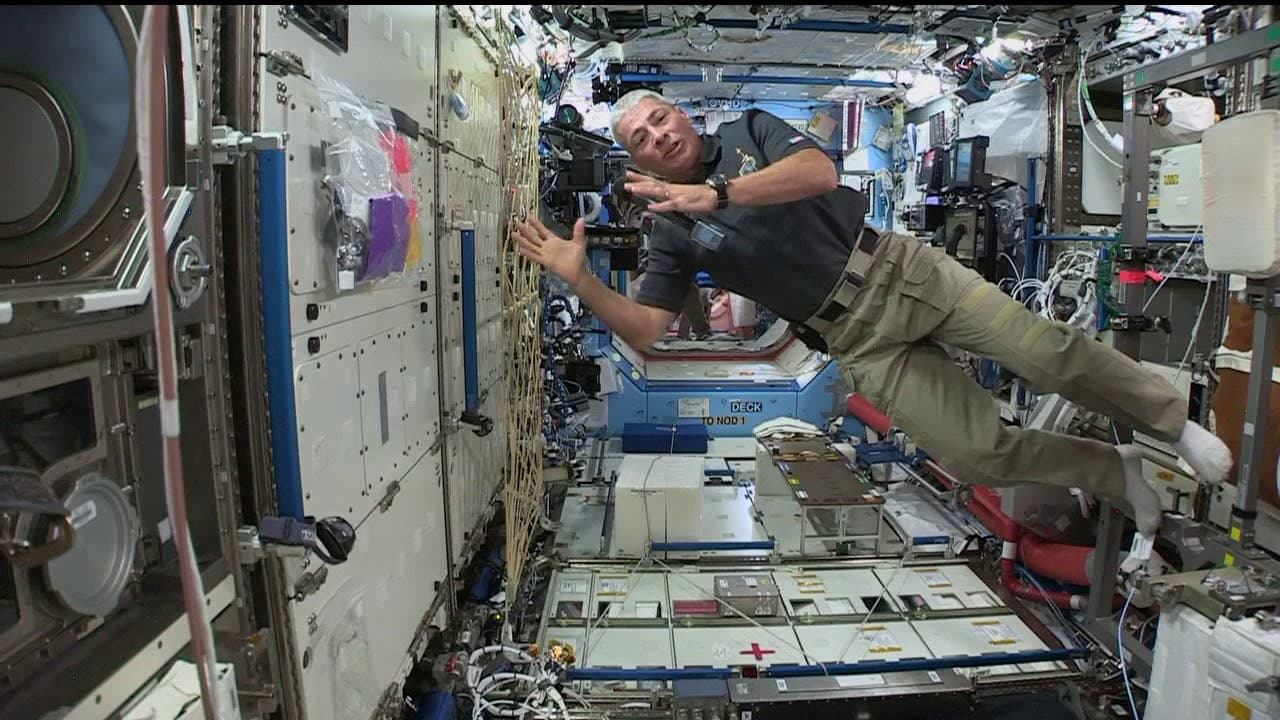
Astronaut Mark Vande Hei answers questions about his experiences in space, the challenges of microgravity, and the future of space exploration.
Transcript
station this is houston are you ready for the event houston this is station we are ready for the event pine river bacca schools this is mission control houston please call station for a voice check marcus a student at pine river school how do you hear me i hear you loud and clear my name is emma we want to welcome you flight engineer vanda high to ... Read More
Key Insights
- 👨🚀 Military experience plays an essential role in preparing astronauts for space exploration by developing skills in taking care of oneself and the team.
- 🤢 The force experienced during launch is similar to being shoved harder into the seat due to increased acceleration.
- 🧑🚀 Microgravity poses challenges and requires astronauts to adapt, learn to walk again, and secure themselves to surfaces to perform daily tasks.
- 😘 The ISS conducts numerous research experiments, including growing lung tissue to fight cancer.
- 😘 Astronauts can communicate with their families and friends from the ISS but may experience coverage issues.
- ✌️ The possibility of humans living on Mars is dependent on maintaining peace, progress, and continuous efforts.
- 👨🚀 The space station is designed to prevent damage from meteoroids, and precautions are taken to ensure the safety of astronauts during spacewalks.
- 👨🚀 Extensive training, simulations, and readiness for unexpected situations help astronauts mentally prepare for the hazards and risks of being in space.
Install to Summarize YouTube Videos and Get Transcripts
Explore YouTube Video Summarizer or Get YouTube Transcript Extractor
Questions & Answers
Q: How did your experiences in the military prepare you for being an astronaut?
Vande Hei explains that being in the military taught him how to take care of his team members, which translates to taking care of the six-person crew and oneself in space.
Q: What does gravitational force feel like during launch?
The astronaut describes the sensation as feeling like being shoved harder into the seat due to increased acceleration, but being in a reclined position helps alleviate discomfort.
Q: Do you get scared and sometimes think, "OMG, I'm in space"?
Vande Hei admits to having many "wow" moments and realizing how much our ability to walk is dependent on gravity, but overall, he embraces the experience and continues to learn how to move around in the microgravity environment.
Q: What kind of research do you do in space?
Vande Hei mentions that there are hundreds of experiments conducted on the ISS, including growing lung tissue to fight cancer and returning it to Earth for further analysis.
Q: How often do you get to speak to your family and friends while aboard the ISS?
The astronaut tries to talk to his wife every two days and frequently makes phone calls using the satellite coverage. However, there are occasional coverage issues.
Q: Do you think humans will ever live on Mars?
Vande Hei believes that as long as humanity maintains peace and progress, living on Mars is possible and that it requires hard work and continuous learning.
Q: Has a meteor ever hit the space station, and if so, how was the damage fixed?
The space station has experienced micro meteoroid strikes, but none have caused significant damage due to the station's design. Sharp edges resulting from these strikes are covered or made known to spacewalkers to prevent accidents.
Q: How do astronauts mentally prepare for the hazards and risks of space?
Vande Hei explains that extensive training, challenging simulations, and being ready for anything that could go wrong during the mission help astronauts mentally prepare for the hazards and risks of being in space.
Summary & Key Takeaways
-
Astronaut Mark Vande Hei discusses the correlation between his military background and being an astronaut, highlighting the importance of taking care of oneself and others in extreme environments.
-
Vande Hei explains that the gravitational force during launch feels like being pushed harder into the seat, but overall, it is not too bad.
-
The astronaut shares his experiences of being in space, including the challenges of navigating in microgravity and the numerous research experiments conducted on the International Space Station (ISS).
-
Vande Hei mentions the ability to communicate with family and friends from the ISS, the possibility of humans living on Mars, the precautions taken to prevent damage from meteoroids, and the extensive training required to become an astronaut.
Read in Other Languages (beta)
Share This Summary 📚
Summarize YouTube Videos and Get Video Transcripts with 1-Click
Try YouTube Summary with ChatGPT & Claude or YouTube Transcript Generator
Explore More Summaries from NASA 📚
Summarize YouTube Videos and Get Video Transcripts with 1-Click
Try YouTube Summary with ChatGPT & Claude or YouTube Transcript Generator