How Does Trade Increase Product Variety?
TL;DR
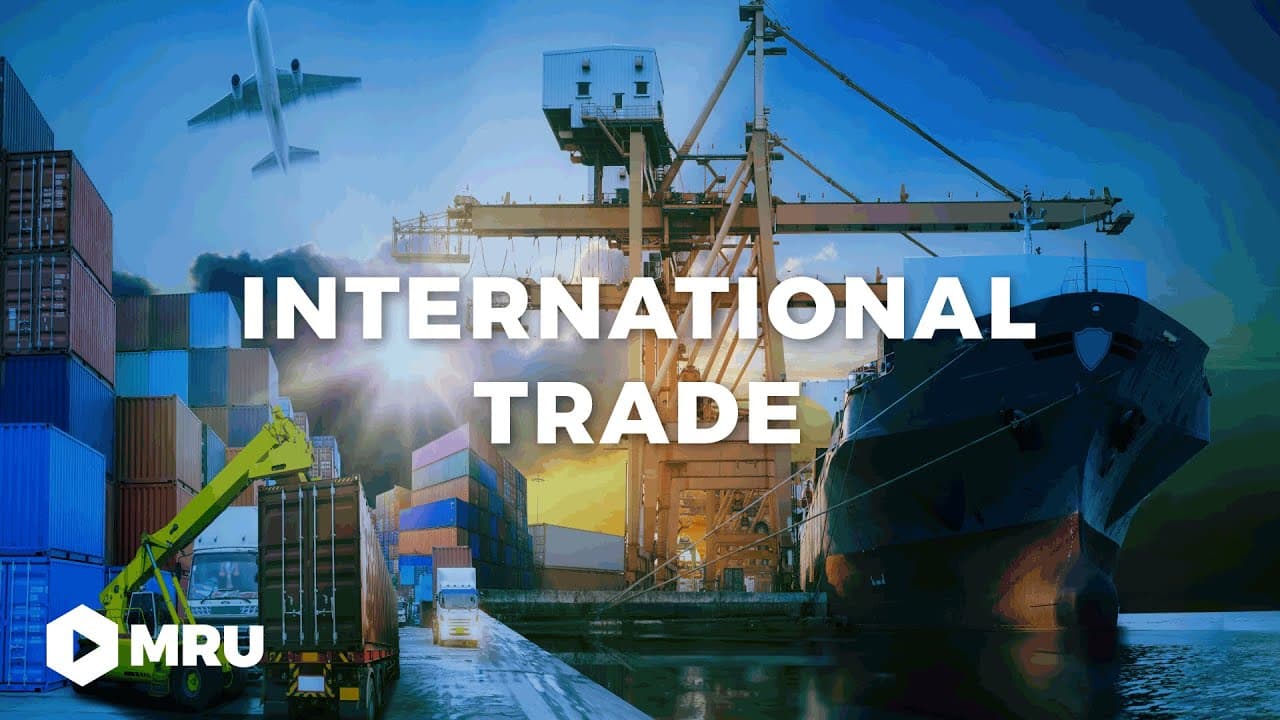
International trade enhances product variety, benefiting both consumers and producers. Consumers enjoy a wider selection that better matches their tastes, while producers gain access to specialized tools, boosting productivity. The trade-off between variety and average cost is mitigated by trade, which allows for more goods at lower costs, despite the challenges posed by economies of scale.
Transcript
today we're gonna look at the benefits of product variety and the effect of international trade on variety people are different tastes differ even for a good as simple as peanut butter some people like crunchy peanut butter other people like it smooth some people like it salty other people prefer it's sweet we can think about welfare as declining t... Read More
Key Insights
- Product variety improves consumer welfare by increasing the likelihood of finding goods that match individual tastes.
- Variety in producer goods enhances productivity by providing specialized tools tailored to specific tasks.
- Economies of scale create a trade-off between product variety and average cost, as producing fewer varieties in larger quantities reduces costs.
- International trade allows countries to specialize and exchange goods, increasing variety while lowering average costs.
- Monopolistic competition theories explain how markets manage the trade-off between variety and average cost, a complex problem addressed by Paul Krugman.
- Globalization increases individual access to variety but decreases geographic variety, making different regions appear more similar.
- From 1972 to 2001, the variety of products imported to the U.S. tripled, with consumers valuing this increase significantly.
- Increased variety benefits producers by providing more precisely tuned tools, enhancing productivity and efficiency.
Install to Summarize YouTube Videos and Get Transcripts
Explore YouTube Video Summarizer or Get YouTube Transcript Extractor
Questions & Answers
Q: How does international trade increase product variety?
International trade increases product variety by allowing countries to specialize in producing specific goods and then exchange them. This specialization and exchange enable consumers to access a wider range of products that better match their preferences, while producers benefit from lower average costs due to economies of scale, resulting in more affordable and diverse options.
Q: What is the trade-off between variety and average cost?
The trade-off between variety and average cost arises because producing a wider range of products typically increases production costs. Economies of scale dictate that producing larger quantities of fewer varieties reduces the average cost per unit. Thus, achieving greater variety often means higher costs, but international trade can help mitigate this by allowing specialization and exchange, reducing costs while increasing variety.
Q: Why can't consumers and producers have exactly what they desire in a good?
Consumers and producers face limitations in obtaining exactly what they desire due to economies of scale and the resulting trade-off between variety and average cost. Producing a vast range of highly specific goods would increase costs significantly. Instead, a balance is struck by producing fewer varieties in larger quantities, which reduces costs but may not perfectly match individual preferences.
Q: How does globalization affect geographic and preference variety?
Globalization reduces geographic variety by making different regions more similar, as global brands and products become widespread. However, it increases preference variety by providing individuals with access to a broader range of products and experiences, regardless of their location. This enhances consumer choice and satisfaction, despite the homogenization of geographic regions.
Q: What role did Paul Krugman play in understanding trade and variety?
Paul Krugman played a crucial role in understanding the relationship between trade and variety through his work on monopolistic competition. He demonstrated how international trade can lead to a better trade-off between variety and average cost, explaining the complex market processes involved. His pioneering research in this area contributed to his Nobel Prize, highlighting the economic benefits of increased variety through trade.
Q: How does increased variety benefit producers?
Increased variety benefits producers by providing access to more specialized and tailored tools, which enhance productivity and efficiency. With a wider range of intermediate goods, producers can select tools and components that are precisely suited to their specific tasks, improving the quality and effectiveness of their production processes. This leads to better outcomes and potentially lower production costs.
Q: What are the economic benefits of increased product variety?
Increased product variety offers significant economic benefits by enhancing consumer satisfaction and producer productivity. Consumers enjoy a wider selection of goods that better match their preferences, while producers gain access to specialized tools that improve efficiency. This variety also stimulates competition, driving innovation and potentially lowering prices, ultimately benefiting the overall economy by increasing welfare and productivity.
Q: How did product variety change in the U.S. from 1972 to 2001?
From 1972 to 2001, the variety of products imported into the United States increased threefold. This expansion in product variety significantly enhanced consumer choice and satisfaction, with estimates suggesting that consumers valued the increased variety as equivalent to 2.6% of their income. The growth in product variety reflects the benefits of globalization and international trade in providing more diverse and accessible goods.
Summary & Key Takeaways
-
International trade increases product variety, allowing consumers to find goods that better match their tastes, and producers to access specialized tools that enhance productivity. This trade-off between variety and average cost is managed through economies of scale, where producing fewer varieties in larger quantities reduces costs.
-
Paul Krugman's work on monopolistic competition explains how markets manage the trade-off between variety and average cost, contributing to his Nobel Prize. Globalization increases access to variety for individuals but reduces geographic variety, making regions appear more similar while enhancing consumer choice.
-
Between 1972 and 2001, the variety of products imported to the U.S. tripled, with consumers valuing this increase as a significant portion of their income. Increased variety also benefits producers by providing tools that are more precisely tuned to specific tasks, boosting productivity.
Read in Other Languages (beta)
Share This Summary 📚
Summarize YouTube Videos and Get Video Transcripts with 1-Click
Try YouTube Summary with ChatGPT & Claude or YouTube Transcript Generator
Explore More Summaries from Marginal Revolution University 📚

Summarize YouTube Videos and Get Video Transcripts with 1-Click
Try YouTube Summary with ChatGPT & Claude or YouTube Transcript Generator