How To Make Antivenom
TL;DR
Antivenom is made by extracting and freeze-drying snake venom, repeatedly injecting small doses into a horse, sheep, or goat, then harvesting, purifying, and concentrating the animal’s antibodies into dose vials. The process can require many venom extractions, several weeks of injections, and up to 6 litres of blood from the animal. Read on to understand each step, how the antibodies work, and why supplies are costly and limited.
Transcript
Bitten by a venomous snake? Well, you probably shouldn't waste three precious minutes watching this video, but if you're going to do it anyway, I can tell you that there is hope. Some animals have a natural resistance to snake venom like the snake-eating Honey Badger which can be bitten in the face by a cobra and still not care but for people, hist... Read More
Key Insights
- 💝 Albert Calmette developed the first snake antivenom in the late 1890s using his expertise in vaccine making.
- 💦 Antivenom works by stimulating antibody production to neutralize venom toxins.
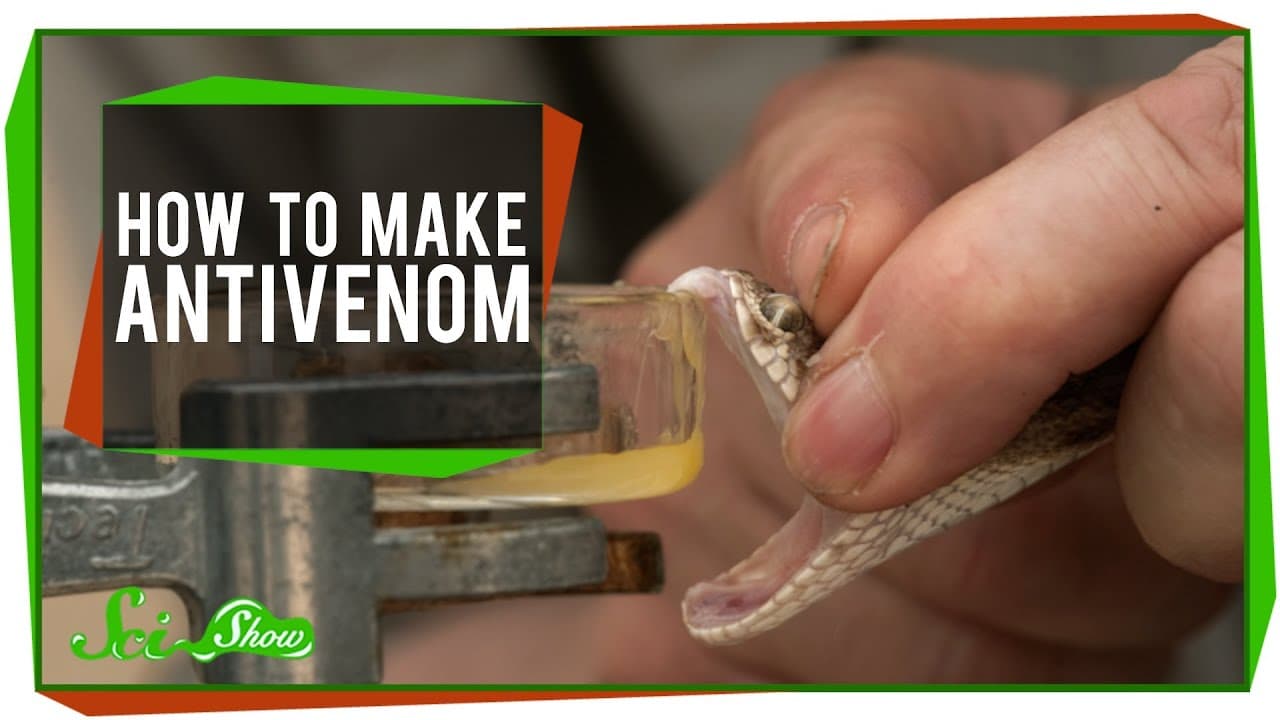
- 🐍 Snake venom is extracted by squeezing venom glands and collecting the venom in vials.
- 🏇 Animals like horses, sheep, or goats are injected with venom to produce antibodies for antivenom.
- 🩸 Antibodies can be harvested by draining blood from the animal's jugular.
- 🥺 The process to make antivenom is expensive and time-consuming, leading to global supply shortages.
- 🥶 Antivenom must be stored in cold conditions, posing challenges in developing countries with limited access to electricity.
Install to Summarize YouTube Videos and Get Transcripts
Explore YouTube Video Summarizer or Get YouTube Transcript Extractor
Questions & Answers
Q: How is antivenom made?
First, venom is extracted from snakes and freeze-dried to concentrate and preserve it. Small doses are repeatedly injected into a horse, sheep, or goat over several weeks, after which the resulting antibodies are harvested from the animal’s blood, filtered, purified, concentrated, and placed into dose vials.
Q: How does antivenom work against snake venom?
Antivenom relies on highly specialized antibodies produced by an animal’s immune system after repeated exposure to small venom doses. These antibodies cannot destroy the toxins or reverse damage already caused, but they can smother the toxins, prevent further spread, and render them harmless.
Q: How is snake venom collected for antivenom production?
A snake’s mouth is held over a vial while its venom glands are gently squeezed until empty, a process called milking. Because each extraction produces only a small amount, multiple snakes must be milked many times; Bill Haast needed 69,000 milkings over three years to collect about half a litre of coral snake venom.
Q: Why is venom freeze-dried when making antivenom?
After extraction, the venom is freeze-dried to concentrate it. This step also preserves the venom before it is used to stimulate antibody production in an animal.
Q: Which animals are used to produce antivenom antibodies?
Horses, sheep, or goats can be used to produce the necessary antibodies. They receive small venom doses repeatedly over several weeks, and their antibody levels peak after a couple of months.
Q: How are antibodies harvested and prepared as antivenom?
When antibody levels peak, up to 6 litres of blood is typically drained from the animal’s jugular without bleeding the animal to death. The antibodies are then filtered from the blood, purified, concentrated, and packaged into dose vials.
Q: Why is antivenom expensive and sometimes in short supply?
Producing antivenom is expensive and time-consuming, contributing to recurring global supply shortages. A single vial may cost over $1,500, and someone with a serious bite may require 20 to 30 vials to recover fully.
Q: Why must antivenom be kept cold?
Antivenom intended for later use is stored in a freezer. This cold-storage requirement creates a serious challenge in developing countries with scarce electricity, which the transcript notes are often also places with many dangerous snakes.
Summary & Key Takeaways
-
Snake antivenom was developed by Albert Calmette in the late 1890s using his expertise in vaccine making.
-
Antivenom works by stimulating the production of antibodies that neutralize venom toxins.
-
The process to make antivenom involves extracting venom, freeze-drying it, injecting animals to produce antibodies, and purifying the antibodies into dose vials.
Read in Other Languages (beta)
Share This Summary 📚
Summarize YouTube Videos and Get Video Transcripts with 1-Click
Try YouTube Summary with ChatGPT & Claude or YouTube Transcript Generator
Explore More Summaries from SciShow 📚


Summarize YouTube Videos and Get Video Transcripts with 1-Click
Try YouTube Summary with ChatGPT & Claude or YouTube Transcript Generator