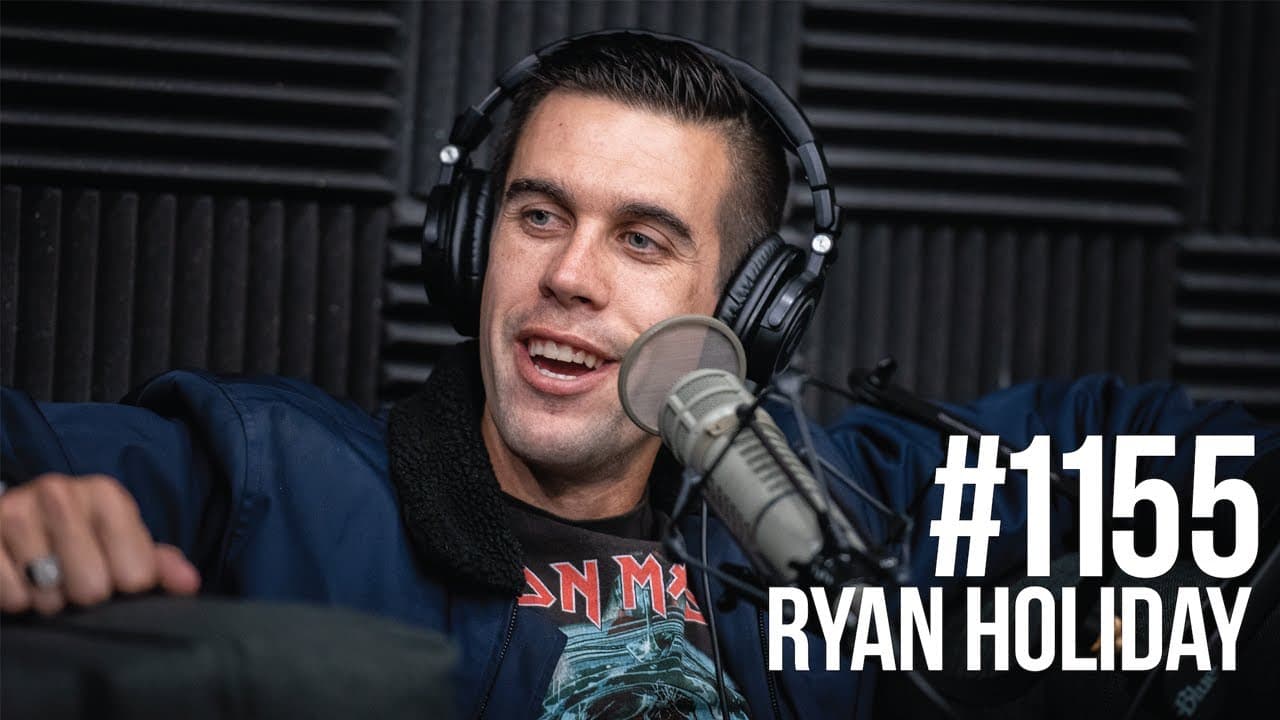
Ryan Holiday on Modern Media Manipulation
TL;DR
Ryan Holiday discusses the manipulation of media and the creation of fake news, drawing from his own experiences in marketing. He highlights how modern media's structure leads to misinformation and polarization, emphasizing the importance of digital wellness and intentional technology use to combat these issues.
Transcript
right on dude excited to have you on here yeah we I've read let's see here obstacles the way he goes the enemy I'm halfway through stillness I absolutely love those I didn't know about your earlier work I found you later on yeah and when we we were trying to get you on the show a while back when we were out in Austin the stuff that actually which i... Read More
Key Insights
- Ryan Holiday's book on fake news was initially criticized but later recognized for its insights into media manipulation.
- Yellow journalism is driven by the need for media outlets to capture attention in a competitive environment.
- Polarizing information is more likely to be shared and reacted to, increasing societal divides.
- Long-form content, like podcasts, offers a more nuanced understanding compared to short, sensationalized news.
- The pressure on journalists to produce content quickly can lead to the spread of misinformation.
- Digital wellness involves using technology intentionally to avoid being controlled by it.
- Stoicism offers practical exercises for dealing with life's challenges, focusing on what can be controlled.
- Historical context helps understand current media trends and the importance of critical thinking.
Install to Summarize YouTube Videos and Get Transcripts
Explore YouTube Video Summarizer or Get YouTube Transcript Extractor
Questions & Answers
Q: How does Ryan Holiday describe the creation of fake news?
Ryan Holiday explains that fake news is often created through the manipulation of media systems that prioritize sensationalism and speed over accuracy. He shares his experience in marketing, where he demonstrated how easy it was to fabricate stories that gained significant media attention, highlighting the vulnerabilities in current journalistic practices.
Q: What is yellow journalism, according to Ryan Holiday?
Yellow journalism refers to sensationalized news that aims to attract attention rather than provide accurate information. Ryan Holiday describes it as a historical practice driven by competition among newspapers, which is now mirrored in the digital age by platforms like Google News and social media, where the race for clicks and engagement often compromises journalistic integrity.
Q: Why does polarizing information tend to spread more easily?
Polarizing information spreads more easily because it triggers strong emotional reactions, making people more likely to share and engage with it. Ryan Holiday notes that this phenomenon is exacerbated by social media algorithms that prioritize content generating high engagement, leading to increased societal divides and misinformation.
Q: What is the significance of digital wellness in today's media landscape?
Digital wellness is crucial in today's media landscape as it involves using technology in a way that serves the user, rather than being controlled by it. Ryan Holiday emphasizes the importance of intentional technology use, such as limiting social media exposure and prioritizing long-form content, to maintain mental health and a balanced perspective amid the constant influx of information.
Q: How does stoicism help in dealing with modern challenges?
Stoicism helps in dealing with modern challenges by teaching individuals to focus on what they can control—namely their responses to external events—rather than the events themselves. Ryan Holiday advocates for stoicism as a practical philosophy that encourages resilience, clarity, and purposeful action in a world often dominated by distractions and misinformation.
Q: What historical parallels does Ryan Holiday draw with modern media practices?
Ryan Holiday draws parallels between historical practices of yellow journalism and modern media's focus on sensationalism and speed. He highlights how the competitive nature of media, both past and present, often leads to misinformation and the prioritization of attention-grabbing content over factual reporting.
Q: How can individuals combat misinformation in the media?
Individuals can combat misinformation by practicing digital wellness, which includes being selective about the sources of information they trust, engaging with long-form content that offers depth and context, and developing critical thinking skills. Ryan Holiday suggests that understanding the historical context of media practices can also provide valuable insights into current trends and challenges.
Q: What role does stoicism play in Ryan Holiday's personal and professional life?
Stoicism plays a significant role in Ryan Holiday's life by providing a framework for maintaining focus on what he can control and responding thoughtfully to life's challenges. Professionally, it guides his approach to writing and marketing, emphasizing resilience and intentionality, while personally, it supports his efforts to live a balanced and purposeful life amid external pressures and distractions.
Summary & Key Takeaways
-
Ryan Holiday shares his journey in understanding media manipulation, emphasizing how fake news is created and spread. He discusses the role of technology in shaping public perception and the need for digital wellness.
-
Holiday highlights the importance of stoicism in navigating modern challenges, focusing on controlling one's response to external events rather than the events themselves.
-
The conversation touches on the historical context of media practices, drawing parallels between past and present, and the need for a more informed and intentional approach to consuming information.
Read in Other Languages (beta)
Share This Summary 📚
Summarize YouTube Videos and Get Video Transcripts with 1-Click
Try YouTube Summary with ChatGPT & Claude or YouTube Transcript Generator
Explore More Summaries from Mind Pump Show 📚


Summarize YouTube Videos and Get Video Transcripts with 1-Click
Try YouTube Summary with ChatGPT & Claude or YouTube Transcript Generator