Why Don't Time Machines Exist Already?
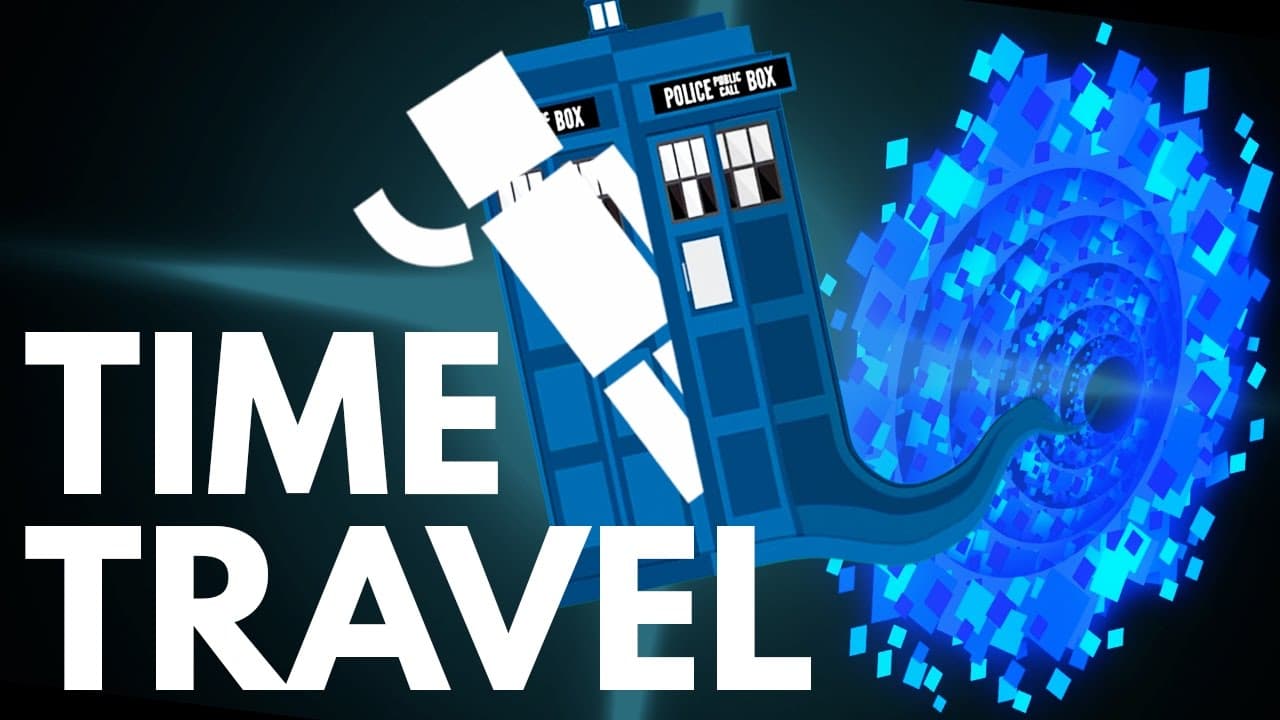
TL;DR
Time travel is possible in a relative sense, with time passing more slowly for objects in motion or closer to massive objects. However, traveling backwards in time is still a topic of debate among scientists.
Transcript
Hey there and welcome to Life Noggin. Have you ever wondered why we don’t have time machines already? Surely with all the technological wonder of today, someone would have figured out a way for me to go back in time and ask my animator why he didn’t give me bigger muscles. Is time travel even possible? Let’s see if we can go back in time and convin... Read More
Key Insights
- ☠️ Time can pass at different rates for different objects based on their relative motion or proximity to massive objects.
- 🧭 Time dilation, observed in special relativity, explains why time passes more slowly for objects in motion.
- ⏲️ Gravity, as explained by general relativity, can also impact the speed of time, with clocks closer to massive objects ticking more slowly.
- 🧑🔬 Traveling back in time is still a topic of debate among scientists, with some believing it may not be possible.
- 🥳 Stephen Hawking's party experiment was an intriguing way to explore the possibility of time travel to the past.
- 👮 Concepts like wormholes and undiscovered laws of physics offer potential avenues for time travel to the past.
Install to Summarize YouTube Videos and Get Transcripts
Explore YouTube Video Summarizer or Get YouTube Transcript Extractor
Questions & Answers
Q: How does time dilation work?
Time dilation refers to the phenomenon observed in Albert Einstein's theory of special relativity, where an observer in motion experiences time passing more slowly than a stationary observer. This means that time can flow at different rates for different objects depending on their relative speed.
Q: What influences the speed of time?
The speed of time can be influenced by both velocity and gravity. According to Einstein's theories, objects in motion or closer to massive objects experience time passing more slowly. For example, an astronaut in space would age slightly slower than their twin sister on Earth due to the effects of both velocity and less gravity.
Q: Can we travel back in time?
The possibility of traveling back in time is a subject of debate among scientists. Stephen Hawking conducted an experiment where he threw a party but only publicized it after the event. If time travel were possible, attendees from the future could have heard about the party and traveled back in time to attend. However, no one showed up, leading some to believe that time travel to the past may not be feasible.
Q: Are there any theories or concepts that suggest time travel to the past is possible?
While it is still speculative, some scientists propose the potential of time travel using concepts like wormholes or undiscovered laws of physics. Wormholes are theoretical shortcuts that could connect distant points in spacetime and potentially allow for travel back in time. However, more research is needed to determine the practicality and feasibility of these ideas.
Summary & Key Takeaways
-
Time travel is possible in a relative sense, as objects in motion or closer to massive objects experience time passing more slowly.
-
Albert Einstein's theory of special relativity established time dilation, where observers moving relatively fast measure time passing more slowly than stationary observers.
-
Einstein's theory of general relativity determined that gravity also affects the passage of time, with clocks closer to massive objects ticking more slowly.
Read in Other Languages (beta)
Share This Summary 📚
Summarize YouTube Videos and Get Video Transcripts with 1-Click
Try YouTube Summary with ChatGPT & Claude or YouTube Transcript Generator
Explore More Summaries from Life Noggin 📚

Summarize YouTube Videos and Get Video Transcripts with 1-Click
Try YouTube Summary with ChatGPT & Claude or YouTube Transcript Generator