How to Achieve Financial Independence and Happiness
TL;DR
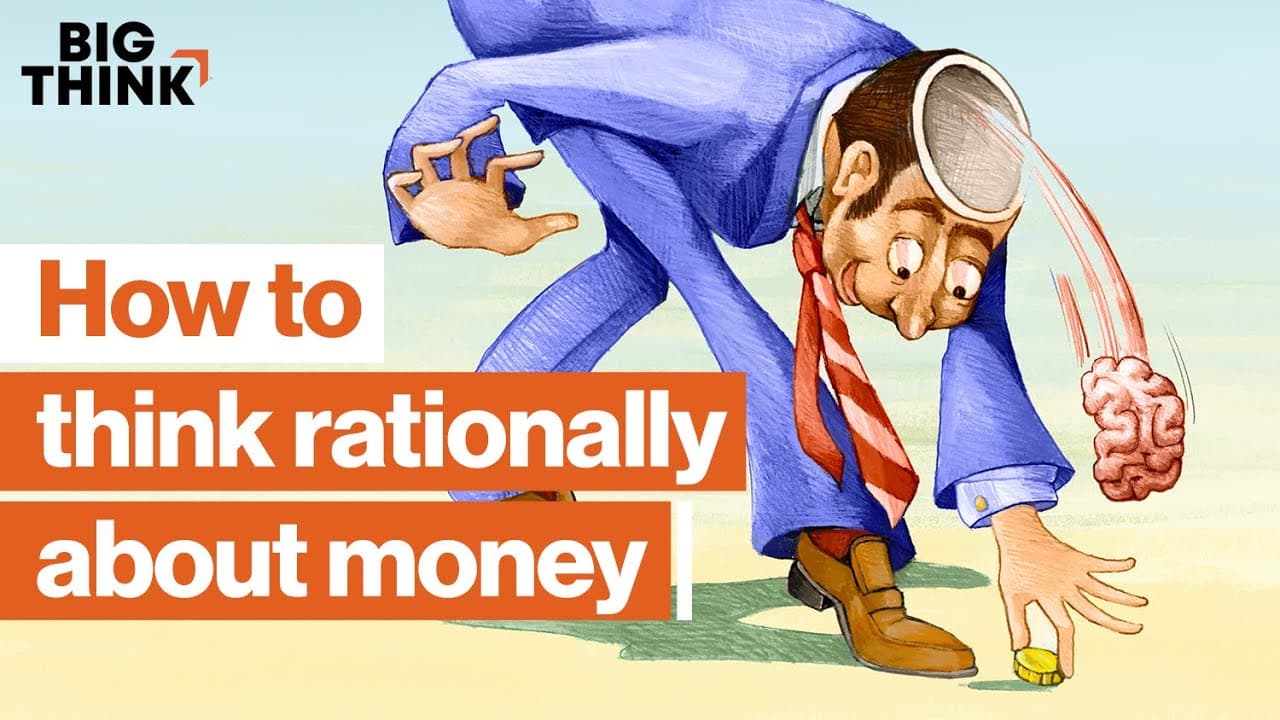
Achieving financial independence involves understanding your relationship with money and finding your 'enough' point. Key steps include freeing your mind from consumer pressures, eliminating debt, creating an emergency fund, and investing wisely. Emphasizing experiences over material goods and fostering financial education in children can also lead to a happier, more fulfilling life.
Transcript
VICKI ROBIN: I was leading a session on a relationship with money. I just was curious about where people were with this at this point. This was in 2016. We had 50 people in the room. We circled up and we went around the room, just say something about your relationship with money. And I realized every person in that room was in fear about money. Fro... Read More
Key Insights
- 🌟 People from all walks of life, regardless of their financial status, experience fear and anxiety when it comes to money, highlighting the societal pressure to participate in something that terrifies them.
- 🤔 Human decision-making is often limited by narrow framing, where individuals fail to take a broader view of problems and treat their whole portfolio of assets as one entity. Looking at problems as recurring and adopting a policy for a class of problems can lead to better decision-making.
- 💡 Financial independence consists of multiple layers: freedom of the mind, getting out of debt, building an emergency fund, and investing surplus savings to generate passive income. The journey towards financial independence requires conscious control over spending habits and being aware of the impact of money on one's life.
- 📊 Being numerate and understanding concepts like compound interest can significantly impact financial decision-making. Taking a broad view of financial situations and avoiding strong emotional reactions to gains and losses are important for a rational approach.
- 💰 Money's ability to bring happiness is complex, as it often becomes a means to project deep emotional feelings onto. Spending on oneself may not lead to happiness, but giving to others and investing in experiences can contribute to greater happiness.
- 👧👦 It is crucial to have conversations about money with children at an age-appropriate level. Educating children about money, allowing them to make mistakes, and limiting the influence of money can set them on a path towards financial literacy and responsible decision-making.
- 🗺️ The old roadmap for money focused on growth and constant consumption. The new roadmap emphasizes the concept of "enough," where individuals prioritize their own happiness, values, and purpose in relation to the flow of money and possessions in their lives. Enough is about having everything one needs to live a fulfilling life with nothing in excess.
Install to Summarize YouTube Videos and Get Transcripts
Explore YouTube Video Summarizer or Get YouTube Transcript Extractor
Questions & Answers
Q: How can financial independence be achieved according to Vicky Robin's roadmap?
According to Vicky Robin's roadmap, financial independence can be achieved by freeing our minds from the consumer culture, getting out of debt, building an emergency fund, and investing to generate passive income. By taking these steps, individuals can gain control over their financial lives and achieve a sense of freedom and security.
Q: How does Vicky Robin define "enough" in relation to our relationship with money?
According to Vicky Robin, "enough" is the point where individuals have everything they want and need to have a life they love and full self-expression, without anything in excess. It is finding a balance between having what we need and avoiding excessive consumption, allowing us to experience contentment and satisfaction with our financial resources.
Q: What are some common mistakes wealthy families make when teaching their children about money, according to Bruce Feiler?
According to Bruce Feiler, wealthy families often fail to have conversations about money with their children, which leaves them unprepared to handle financial responsibilities. Additionally, some families make the mistake of overlaping chores with allowance, as this leads kids to only do chores for the money. Finally, instead of allowing children to make their own financial decisions and learn from their mistakes, some families try to control and dictate their child's spending, hindering their financial development.
Q: How can spending money on experiences and giving to others contribute to happiness, as explained by Michael Norton?
Michael Norton explains that spending money on experiences, rather than on material possessions, tends to result in greater happiness. Experiences often involve social interactions, which naturally increase happiness. Furthermore, when people give to others, whether it's through charity or treating a friend to lunch, it is associated with increased happiness. Both experiences and acts of giving create positive social connections and foster a sense of fulfillment and joy.
Summary & Key Takeaways
-
Vicky Robin discusses how society's relationship with money is driven by fear and anxiety, and the need to free our minds from consumer culture.
-
Daniel Kahneman highlights the tendencies of people to frame decisions narrowly and the importance of taking a broader view in order to make better choices.
-
Four layers of financial independence are discussed: freedom of the mind, getting out of debt, building an emergency fund, and investing to generate passive income.
Read in Other Languages (beta)
Share This Summary 📚
Summarize YouTube Videos and Get Video Transcripts with 1-Click
Try YouTube Summary with ChatGPT & Claude or YouTube Transcript Generator
Explore More Summaries from Big Think 📚


Summarize YouTube Videos and Get Video Transcripts with 1-Click
Try YouTube Summary with ChatGPT & Claude or YouTube Transcript Generator