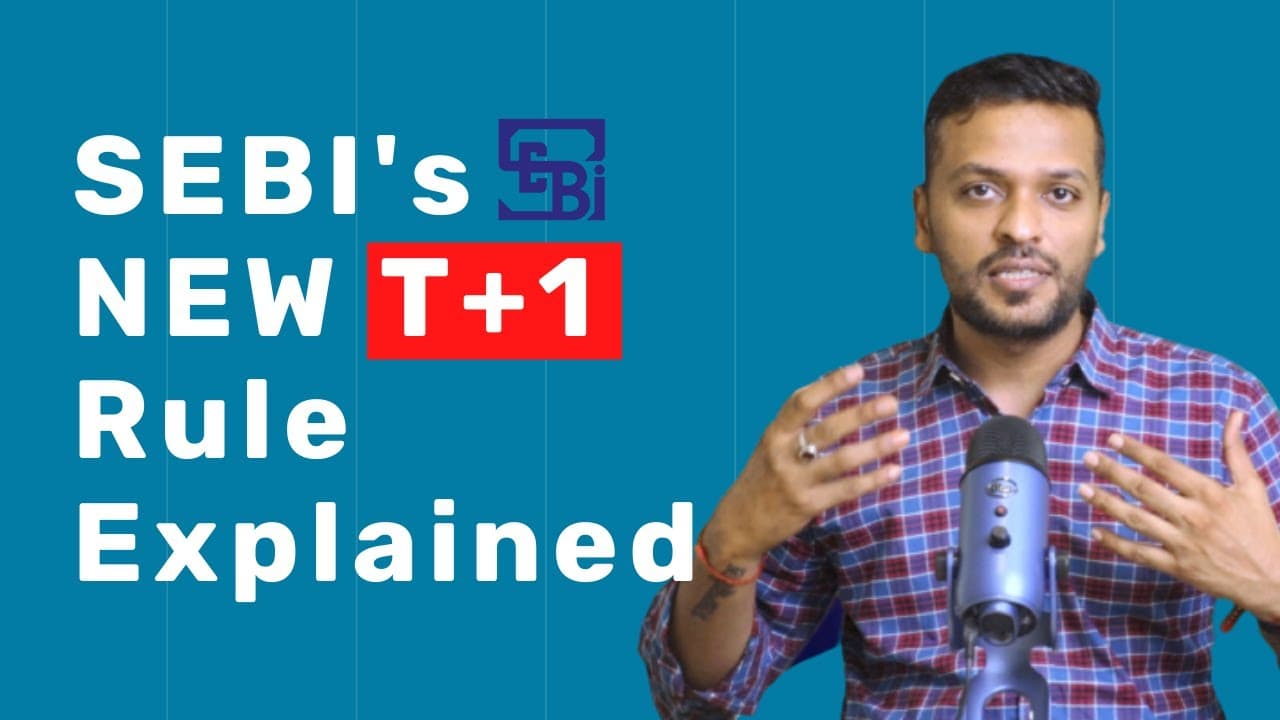
SEBI Introduces T+1 Settlement Cycle From Jan 1 | T+2 Settlement by SEBI | New T+1 Rule
TL;DR
SEBI has introduced a new rule allowing trades to be settled within one day instead of the current T+2 settlement, bringing joy to investors and traders.
Transcript
what would give you more joy imagine you were to settle something after two days but suddenly a new rule comes and says you know what it will be settled tomorrow only you don't have to wait for two days to settle that wouldn't that be a matter of joy and which is what sebby has given to its investors and traders they have given such a good news by ... Read More
Key Insights
- 🤣 SEBI has introduced T+1 rolling settlement on an optional basis, allowing trades to be settled a day in advance.
- ⌛ This rule aims to reduce the waiting time for settlement and bring more efficiency to the market.
- 💨 Investors and traders will benefit from faster reflection of bought shares in their trading accounts and a quicker withdrawal process.
- 🥳 The new rule also allows eligibility for splits, bonuses, and dividends with a position taken on the previous day.
- 🤝 The T+1 rule applies to all transactions, including block deals.
- 🈷️ Exchanges must give one month's notice before implementing the T+1 rule and can switch back to T+2 after a minimum of six months.
- 📏 The potential conflict between exchanges following different settlement rules is yet to be addressed.
Install to Summarize YouTube Videos and Get Transcripts
Explore YouTube Video Summarizer or Get YouTube Transcript Extractor
Questions & Answers
Q: What is the significance of SEBI introducing T+1 rolling settlement?
The introduction of T+1 rolling settlement means trades will be settled a day in advance, benefiting investors and traders by reducing the waiting time for settlement.
Q: Is the T+1 rolling settlement rule mandatory for all exchanges?
Currently, the rule is optional, but if it proves successful, SEBI may make it compulsory for all exchanges to follow.
Q: How long does it take for trades to be settled under the current T+2 rule?
Under the T+2 rule, trades typically take around 48 to 76 hours to be settled.
Q: Can exchanges switch back to the T+2 rule after implementing T+1 rolling settlement?
Exchanges can switch back to T+2, but they must follow the T+1 rule for a minimum of six months and provide a one-month notice before switching back.
Summary & Key Takeaways
-
SEBI has published a circular introducing T+1 rolling settlement on an optional basis, allowing trades to be settled a day in advance.
-
This new rule is not currently compulsory but may become mandatory if it proves successful.
-
Previously, India followed a T+3 settlement cycle until it was changed to T+2 in April 2003.
Read in Other Languages (beta)
Share This Summary 📚
Summarize YouTube Videos and Get Video Transcripts with 1-Click
Try YouTube Summary with ChatGPT & Claude or YouTube Transcript Generator
Explore More Summaries from Trade Brains 📚






Summarize YouTube Videos and Get Video Transcripts with 1-Click
Try YouTube Summary with ChatGPT & Claude or YouTube Transcript Generator