PiDP-11 Retro Computer Build - Computerphile
TL;DR
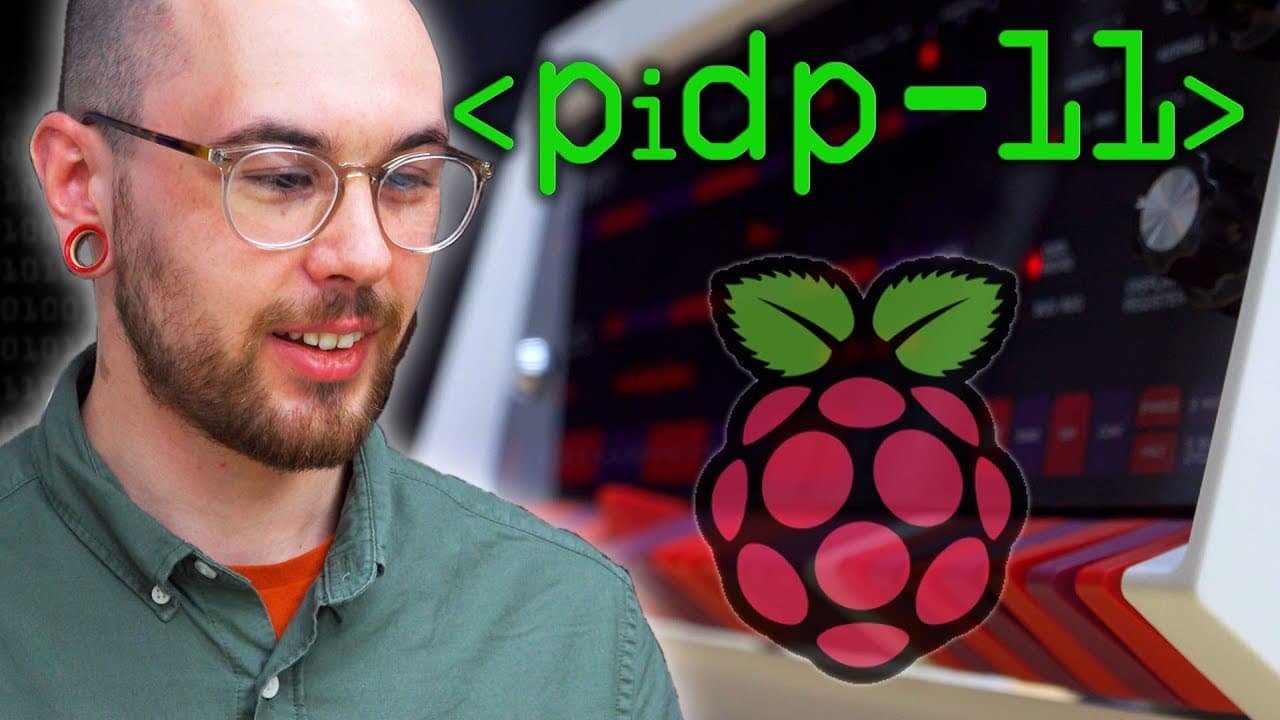
Learn about the process of building a modern replica of a PDP-11 computer using a Raspberry Pi.
Transcript
In the previous video I showed my PDP 1173 that came quite late in the history of PDP 11 Whereas what we brought in here is a replica a modern replica based on a Raspberry Pi Although much earlier PDP 11 the pdp-11 70 and these were much more visually interesting They had sort of flashing lights on the front and toggle switches that you can you kno... Read More
Key Insights
- 💁 The replica PDP-11 computer is based on a Raspberry Pi, providing modern technology in a vintage-inspired form.
- 🔦 The original PDP-11 computers had flashing lights and toggle switches on the front panel, allowing for manual programming.
- 🔪 The kit includes all necessary components for assembly, and the process can be completed in a few hours.
- 😫 The PDP-11 series of computers used octal representation and had word lengths in multiples of six to accommodate the full character set.
- 👻 The replica PDP-11 allows for entering programs using the switches and provides the experience of programming on vintage hardware.
- 🙂 The speed of the replica PDP-11 is significantly faster than an actual PDP-11, impacting the rate at which LEDs light up.
- 👻 The replica PDP-11 consumes low power and allows for easy backup and restoration of the system.
Install to Summarize YouTube Videos and Get Transcripts
Explore YouTube Video Summarizer or Get YouTube Transcript Extractor
Questions & Answers
Q: What components are included in the kit for building the PDP-11 replica?
The kit includes switches, LEDs, chips, diodes, and resistors.
Q: How long does it take to assemble the replica?
It took approximately three hours to assemble, excluding breaks, which is much smaller than an actual PDP-11.
Q: What is the significance of the octal representation in PDP-11 computers?
The PDP-11 computers used octal representation due to their word sizes being in multiples of six, allowing for representation of the full character set.
Q: Can programs be entered into the replica PDP-11?
Yes, programs can be entered into the replica using the switches, and a simple "chasing light" program can be a good starting point.
Summary & Key Takeaways
-
The video showcases the process of assembling a modern replica of a PDP-11 computer based on a Raspberry Pi, featuring flashing lights and toggle switches.
-
The kit includes switches, LEDs, chips, diodes, and resistors, with a front panel displaying data and current addresses.
-
The PDP-11 series of computers were based around octal and had word lengths of multiples of six, and this replica preserves that tradition.
Read in Other Languages (beta)
Share This Summary 📚
Summarize YouTube Videos and Get Video Transcripts with 1-Click
Try YouTube Summary with ChatGPT & Claude or YouTube Transcript Generator
Explore More Summaries from Computerphile 📚



Summarize YouTube Videos and Get Video Transcripts with 1-Click
Try YouTube Summary with ChatGPT & Claude or YouTube Transcript Generator