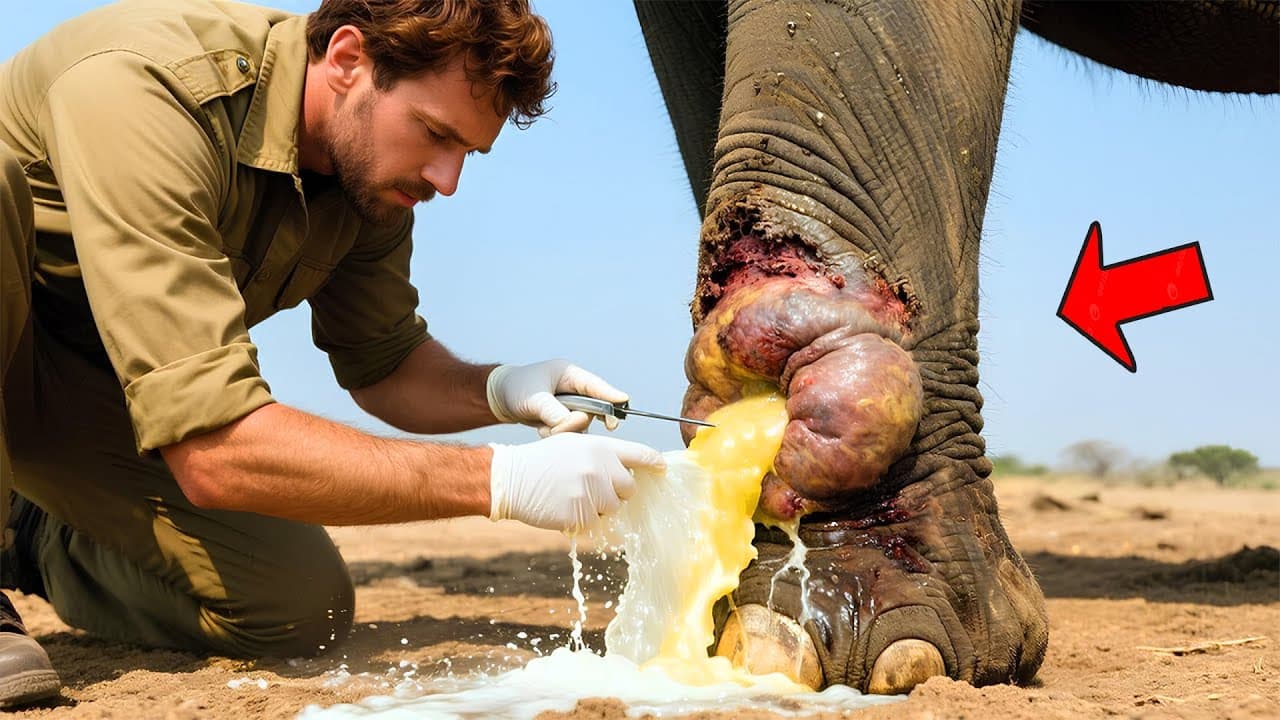
Mann rettet Elefanten mit Abszess im Bein – als er die Ursache erfährt, sind alle untröstlich
TL;DR
An elephant is rescued from 20 years of captivity in Odisha.
Transcript
Read and summarize the transcript of this video on Glasp Reader (beta).
Key Insights
- Bhola, an elephant in Odisha, was kept in captivity for over 20 years, suffering from severe neglect and abuse, leading to a life-threatening leg abscess.
- The villagers of Dharipur were unaware of the harm caused to Bhola, treating him as a tool for labor without understanding his suffering.
- Wildlife SOS, led by Arjun Mehra, intervened after learning about Bhola's condition, documenting his injuries and advocating for his release.
- Despite initial resistance from local authorities, public outrage and media coverage forced the government to issue a confiscation order for Bhola's rescue.
- Once rescued, Bhola underwent intensive medical treatment for his abscess, receiving round-the-clock care and a nutritious diet at the Wildlife SOS center.
- Bhola's recovery was remarkable, gaining weight and regaining mobility, symbolizing hope and resilience after decades of suffering.
- After rehabilitation, Bhola was released into the semi-wild, where he integrated with a herd of elephants, rediscovering his natural instincts and freedom.
- Bhola's story highlights the impact of human actions on wildlife and the importance of compassion and intervention in animal rescue efforts.
Install to Summarize YouTube Videos and Get Transcripts
Explore YouTube Video Summarizer or Get YouTube Transcript Extractor
Questions & Answers
Q: What were the conditions that Bhola the elephant endured in captivity?
Bhola was kept in captivity for over 20 years in Odisha, used for labor such as pulling wood and transporting agricultural products. He was chained with steel chains around his legs, leading to severe neglect and a life-threatening leg abscess. His living conditions were harsh, with no shelter or clean water, causing him immense suffering.
Q: How did Wildlife SOS become involved in Bhola's rescue?
Wildlife SOS became involved after a young member discovered news about Bhola's dire condition. They documented his injuries and living conditions under the guise of an agricultural inspection. Chief ranger Arjun Mehra led the efforts to advocate for Bhola's release, filing petitions and gathering public support to pressure local authorities into action.
Q: What challenges did Wildlife SOS face in rescuing Bhola?
Wildlife SOS faced resistance from local authorities who feared backlash from residents. Despite filing petitions and negotiating for over two months, they struggled to secure Bhola's release. However, public outrage and media coverage eventually forced the government to issue a confiscation order, allowing Wildlife SOS to rescue Bhola.
Q: What medical treatment did Bhola receive after his rescue?
After his rescue, Bhola was placed in a special care unit at the Wildlife SOS center, where a medical team treated his leg abscess. The wound was incised, drained, and cleaned, with daily bandage changes and antibiotic injections. Bhola received a nutritious diet and constant monitoring, leading to significant improvement in his health.
Q: How did Bhola's condition change after receiving care at Wildlife SOS?
Bhola's condition improved remarkably after receiving care at Wildlife SOS. He gained over 60kg, his wound healed, and he regained mobility. Bhola began to exhibit happier behaviors, responding to his name and interacting positively with caregivers, symbolizing a significant recovery both physically and emotionally.
Q: What was Bhola's experience like upon being released into the semi-wild?
Upon release into the semi-wild, Bhola was initially hesitant but quickly integrated with a herd of elephants. He rediscovered his natural instincts, moving confidently with the herd and forming social bonds. The release marked a new chapter for Bhola, transitioning from a life of captivity to freedom and community.
Q: What impact did Bhola's story have on the public and conservation efforts?
Bhola's story raised awareness about the impact of human actions on wildlife and the importance of compassion in animal rescue. Public outrage played a crucial role in his rescue, highlighting the power of advocacy and media in conservation efforts. Bhola became a symbol of hope and resilience, inspiring continued efforts to protect wildlife.
Q: How did Arjun Mehra and the Wildlife SOS team feel about Bhola's successful rescue and rehabilitation?
Arjun Mehra and the Wildlife SOS team felt a deep sense of fulfillment and hope following Bhola's successful rescue and rehabilitation. Arjun, in particular, saw Bhola's recovery as a testament to the power of compassion and intervention. The team was overjoyed to see Bhola thriving in the semi-wild, knowing they had saved him from a life of suffering.
Summary & Key Takeaways
-
Bhola, an elephant in Odisha, suffered from neglect and abuse, leading to a severe leg abscess. Wildlife SOS intervened to rescue him after public outrage and legal battles. Bhola received intensive medical care and was eventually released into the semi-wild, symbolizing hope and resilience.
-
Kept in captivity for over 20 years, Bhola's condition deteriorated due to ignorance and neglect. Wildlife SOS documented his injuries and advocated for his release. Despite resistance, public pressure led to his rescue, and Bhola underwent successful rehabilitation, gaining freedom and a new life.
-
Bhola's story is a testament to the power of compassion and intervention. After enduring decades of suffering, he was rescued and rehabilitated by Wildlife SOS. Released into the semi-wild, Bhola found a new home among a herd of elephants, embodying hope and the possibility of renewal.
Read in Other Languages (beta)
Share This Summary 📚
Summarize YouTube Videos and Get Video Transcripts with 1-Click
Try YouTube Summary with ChatGPT & Claude or YouTube Transcript Generator