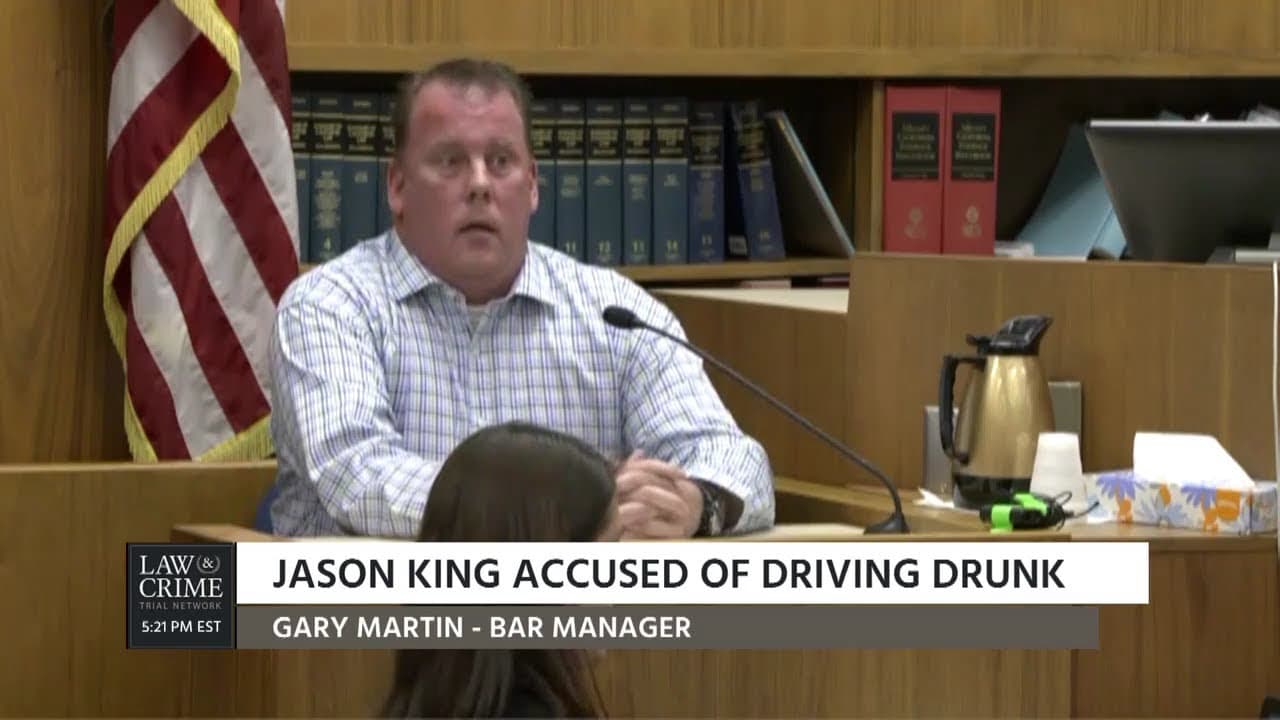
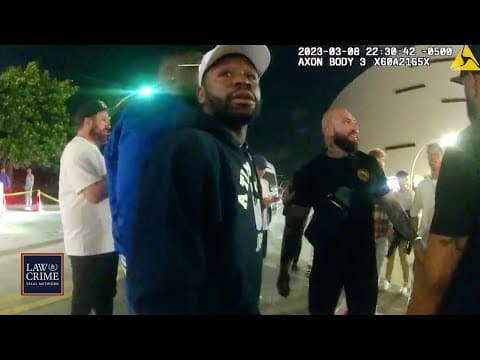
Jason King Trial Day 2 Part 2 Bar Manager Gary Martin Testifies
TL;DR
Witnesses provide testimony in a DUI case involving a wrong-way driver on the freeway. The witnesses describe the events leading up to the accident and their interactions with the driver, who appeared to be intoxicated.
Transcript
mr. Kings presence at the states and yes and was there anything what happened basically the start of the safety stand them well King was behind when we all went to they have to have healthy safety stand-down the based on based movie theater and I had asked him to look for my wallet because I had misplaced it so how did you ask me a text message how... Read More
Key Insights
- 🥺 Witness testimony plays a vital role in establishing a driver's potential intoxication and the circumstances leading up to an accident.
- 😃 Physical signs such as odor, red watery eyes, and impaired motor functions can be indicative of impairment due to alcohol consumption.
- 😷 In DUI cases, witnesses may be asked to recall events, interactions, and observations that could help determine the state of a driver's sobriety.
- 🪛 The ability of a driver to provide clear and consistent answers to questions can impact the determination of impairment.
Install to Summarize YouTube Videos and Get Transcripts
Explore YouTube Video Summarizer or Get YouTube Transcript Extractor
Questions & Answers
Q: How did the witnesses first become aware of the wrong-way driver?
The witnesses received a radio call about a wrong-way driver and observed the vehicle on the freeway.
Q: Did the witnesses detect any signs of impairment in the driver?
Yes, witnesses noticed a strong odor of alcohol, red watery eyes, and impaired motor functions in the driver.
Q: Did the driver admit to drinking alcohol?
Yes, the driver stated that he had consumed a significant amount of alcohol.
Q: Were the witnesses able to gather any information about the driver's whereabouts and actions leading up to the accident?
The driver was unable to provide clear answers to questions about his whereabouts and actions before the accident.
Q: How did the witnesses argue that the driver was possibly intoxicated?
The witnesses described the driver's physical signs of impairment, such as the smell of alcohol, red watery eyes, and impaired motor functions.
Q: What was the overall impact of the witness testimonies on the case?
The witness testimonies provided crucial evidence of the driver's potential intoxication and involvement in the accident.
Q: Did the witnesses observe any injuries or discomfort in the driver at the accident scene?
The witnesses noted that the driver was moaning and appeared to be in discomfort at the accident scene.
Q: Did the driver cooperate with the officers' questions during the investigation?
Yes, the driver cooperated and answered the officers' questions to the best of his ability.
Summary & Key Takeaways
-
Witnesses observed a wrong-way driver on the freeway, who eventually collided with another vehicle.
-
Witnesses testified that the driver smelled of alcohol, had red watery eyes, and showed signs of impaired motor functions.
-
The driver admitted to drinking but was unable to provide clear answers to questions about his whereabouts and the amount he had consumed.
-
Witness testimonies helped establish the driver's possible intoxication and involvement in the accident.
Read in Other Languages (beta)
Share This Summary 📚
Summarize YouTube Videos and Get Video Transcripts with 1-Click
Try YouTube Summary with ChatGPT & Claude or YouTube Transcript Generator
Explore More Summaries from Law&Crime Network 📚


Summarize YouTube Videos and Get Video Transcripts with 1-Click
Try YouTube Summary with ChatGPT & Claude or YouTube Transcript Generator