How to Use a Scorecard for Business Growth
TL;DR
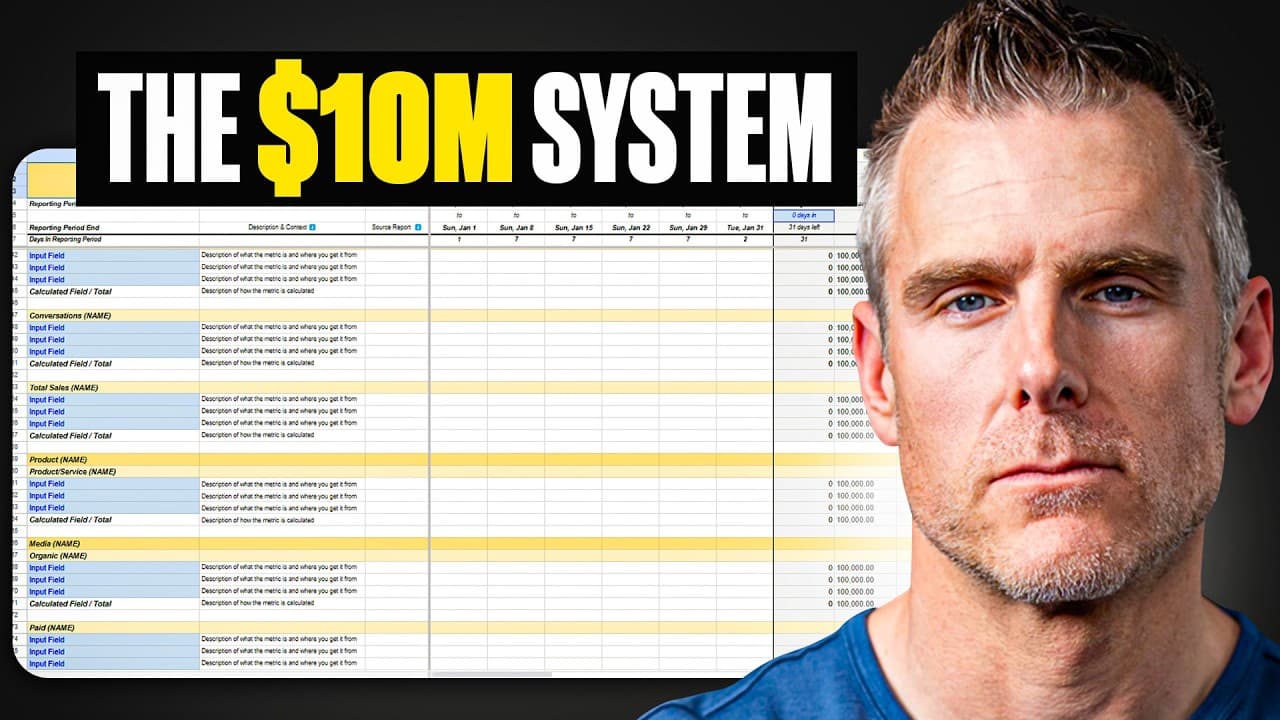
Using a scorecard can transform your business by providing clarity on team performance and aligning weekly goals. By assigning responsibility, setting clear metrics, and holding regular sync meetings, you can effectively manage your business with minimal time investment. This approach reduces micromanagement and empowers teams to self-correct, driving growth and efficiency.
Transcript
you were spending over 60 hours a week juggling all the responsibilities in your business and you still feel like nothing's getting done I know how you feel because I used to be there too I went from being overwhelmed distracted burnt out to running a 10 million a year business in just 45 minutes per week using a single scorecard and I'm going to s... Read More
Key Insights
- A scorecard assigns a Direct Responsible Individual for each metric, ensuring accountability.
- The traffic light system (red, yellow, green) helps teams focus on priorities and self-correct.
- Weekly trend lines on scorecards help visualize progress and identify areas needing attention.
- Regular reporting meetings allow teams to adjust course and maintain alignment with goals.
- Measuring performance frequently prevents businesses from veering off track.
- Transformational leadership involves setting clear outcomes, measuring impact, and coaching.
- Building leaders requires systems, strategy, and focusing on hiring, training, and retaining talent.
- Effective team management emphasizes treating employees as adults, fostering independence.
Install to Summarize YouTube Videos and Get Transcripts
Explore YouTube Video Summarizer or Get YouTube Transcript Extractor
Questions & Answers
Q: How to use a scorecard to improve business performance?
A scorecard improves business performance by assigning responsibility for each metric to a Direct Responsible Individual (DRI). This accountability ensures that team members are focused on their specific goals. The scorecard uses a traffic light system (red, yellow, green) to indicate progress, allowing teams to self-correct and prioritize effectively. Regular trend lines help visualize progress, while weekly reporting meetings ensure alignment and timely adjustments.
Q: What is the traffic light system in business management?
The traffic light system in business management is a method of indicating the status of various metrics or goals using colors: red, yellow, and green. Red signifies that a goal is not on track, yellow indicates it is somewhat off track, and green means it is on track. This visual system helps teams quickly assess progress, focus on priorities, and make necessary adjustments to improve performance.
Q: Why are weekly reporting meetings important?
Weekly reporting meetings are crucial because they provide an opportunity for teams to review progress, align on goals, and make necessary adjustments. These meetings ensure that everyone is on the same page, preventing misalignment and inefficiency. By regularly assessing performance, teams can address issues promptly, maintain momentum, and stay focused on achieving business objectives. Frequent check-ins also foster accountability and transparency within the team.
Q: How does transformational leadership benefit a business?
Transformational leadership benefits a business by fostering an environment of empowerment and independence. Leaders set clear outcomes, measure their impact, and coach team members to improve their performance. This approach reduces the need for micromanagement, allowing teams to self-correct and innovate. By focusing on personal development and aligning individual goals with business objectives, transformational leadership builds a strong, capable team that drives business success.
Q: What is the importance of assigning a Direct Responsible Individual (DRI)?
Assigning a Direct Responsible Individual (DRI) is important because it ensures accountability for specific metrics or goals within a business. The DRI is responsible for monitoring progress, making adjustments, and reporting outcomes. This clear assignment of responsibility prevents confusion and overlaps, enabling teams to focus on their respective areas and drive performance. By having a designated person in charge, businesses can effectively track progress and achieve their objectives.
Q: How can businesses balance customer acquisition and team development?
Businesses can balance customer acquisition and team development by aligning their strategies and systems to support both aspects simultaneously. This involves hiring, training, and retaining top talent while maintaining effective processes for customer acquisition and retention. By ensuring that the team is equipped to deliver on what is sold, businesses can prevent bottlenecks and inefficiencies. Regular assessment and adjustment of both customer and team strategies ensure sustainable growth and success.
Q: What role does strategy play in effective leadership?
Strategy plays a critical role in effective leadership by providing a clear roadmap for decision-making and resource allocation. It involves sequencing actions, solving the right problems at the right time, and deploying resources efficiently. A well-defined strategy ensures that leaders and their teams are focused on the most impactful activities, preventing wasted efforts and aligning everyone with the business's long-term goals. Strategy is essential for navigating complex challenges and driving business success.
Q: How can leaders foster independence in their teams?
Leaders can foster independence in their teams by setting clear expectations, providing the necessary tools and resources, and encouraging autonomy. This involves treating team members as capable adults, trusting them to make decisions, and allowing them to take ownership of their work. Regular coaching and feedback help team members develop their skills and confidence. By creating a supportive environment that values initiative and problem-solving, leaders empower their teams to operate independently and drive business success.
Summary & Key Takeaways
-
Scorecards are essential for assigning responsibility and tracking progress in business. By implementing a traffic light system and trend lines, teams can self-correct and focus on key priorities. Regular reporting meetings ensure alignment and allow for real-time adjustments, preventing businesses from straying off course.
-
Transformational leadership involves setting clear outcomes, measuring their impact, and coaching team members. This leadership style reduces micromanagement, fosters independence, and builds a strong team capable of achieving business goals. Key to this approach is treating employees as capable adults, encouraging autonomy.
-
Building a successful business requires a balance between customer acquisition and team development. This involves hiring, training, and retaining top talent while maintaining effective systems and strategies. Aligning these aspects ensures business growth and efficiency, leading to long-term success.
Read in Other Languages (beta)
Share This Summary 📚
Summarize YouTube Videos and Get Video Transcripts with 1-Click
Try YouTube Summary with ChatGPT & Claude or YouTube Transcript Generator
Explore More Summaries from Dan Martell 📚




Summarize YouTube Videos and Get Video Transcripts with 1-Click
Try YouTube Summary with ChatGPT & Claude or YouTube Transcript Generator