How Animals Can Get High in the Wild
TL;DR
Animals seeking out intoxicants may make for entertaining anecdotes, but scientific evidence suggests that most cases of animal drug-seeking behavior are either exaggerated or nonexistent.
Transcript
[♪ INTRO] Although, of course, not every person likes to get drunk or high, there’s no doubt that, as a species, we do have a bit of a fondness for mind-altering substances. You find them in every human culture that has ever existed. And it seems like our feathered and furry friends also partake from time to time. You might have read the news about... Read More
Key Insights
- 💼 Most cases of animal drug-seeking behavior are anecdotal and not supported by scientific evidence.
- 🐬 The playful behavior of dolphins with puffer fish is not an indication of drug-seeking.
- 🐘 Stories of drunken elephants are likely fictional, as the amount of fermented fruit needed to get intoxicated is impossible for them to consume.
- 😋 Cows' odd behavior may be due to limited food options, rather than addiction to locoweed.
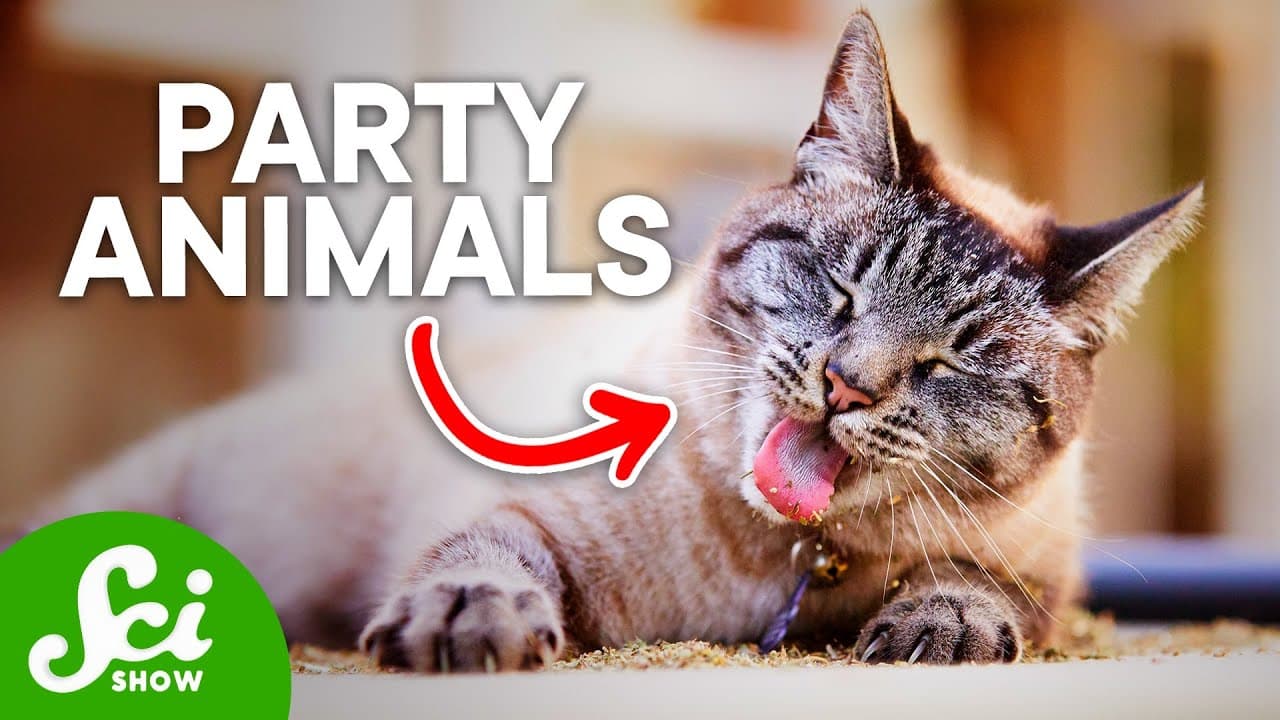
- 😺 Catnip's effects on cats are a response to their natural behaviors related to sexual attraction and scent recognition.
- ❓ Animals' interactions with intoxicants differ from humans, as they do not exhibit true drug-seeking behavior.
- 🤯 There is still much to explore regarding animal interactions with mind-altering substances.
Install to Summarize YouTube Videos and Get Transcripts
Explore YouTube Video Summarizer or Get YouTube Transcript Extractor
Questions & Answers
Q: Do dolphins actually get high by consuming puffer fish toxins?
There is no empirical evidence to support this claim. Observations suggest that dolphins play with puffer fish, and the apparent stoned behavior afterward is simply resting at the water's surface.
Q: Is it true that elephants get drunk on fermented fruit?
No, the math doesn't add up. Fermented fruit contains low levels of alcohol, and elephants would have to consume an unrealistic amount to get intoxicated. Aggressive behavior around marula fruit may be due to territorial protection.
Q: Are cows addicted to locoweed?
No, it is unlikely that cows develop an addiction to locoweed. They may consume it when alternative food sources are scarce, and the taste preference can be learned and passed on to other cows.
Q: Does catnip make cats hallucinate?
No, there is no scientific evidence to support this claim. Catnip triggers natural behaviors related to sexual attraction and is chemically similar to feline social odors.
Summary & Key Takeaways
-
Dolphins allegedly getting high by "milking" toxins from puffer fish is more likely a case of playful behavior rather than drug-seeking.
-
Stories of elephants getting drunk on fermented marula fruit are likely tall tales, as the math shows that elephants would have to consume impossible amounts to get intoxicated.
-
Cows appearing "out of it" may not be due to addiction to locoweed, but rather a result of limited food options and a taste preference for the plant.
-
Catnip's effects on cats are not hallucinatory, but rather a response to their natural sexual behaviors and the scent of other cats.
Read in Other Languages (beta)
Share This Summary 📚
Summarize YouTube Videos and Get Video Transcripts with 1-Click
Try YouTube Summary with ChatGPT & Claude or YouTube Transcript Generator
Explore More Summaries from SciShow 📚

Summarize YouTube Videos and Get Video Transcripts with 1-Click
Try YouTube Summary with ChatGPT & Claude or YouTube Transcript Generator