Marxism Explained | Richard Wolff and Lex Fridman
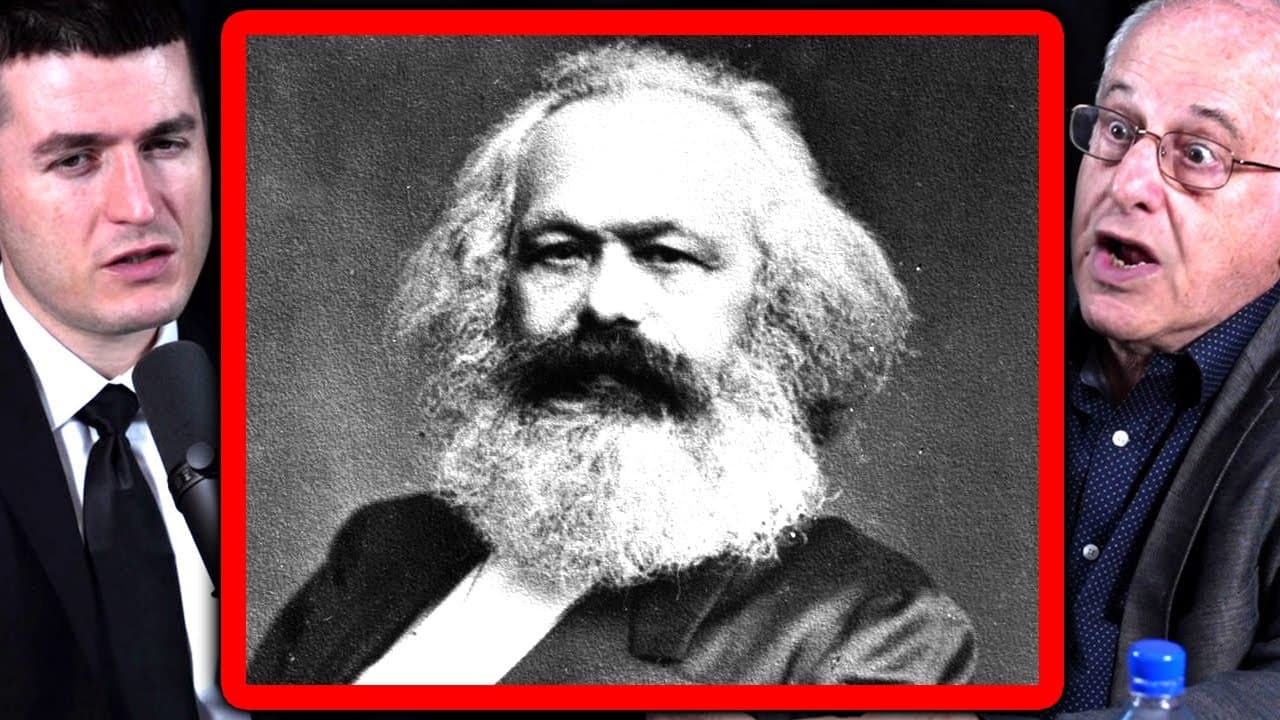
TL;DR
Marxism is an economic and political theory inspired by Karl Marx's works, which has spread globally over the past 140 years, leading to diverse interpretations in different countries and cultures.
Transcript
what is marxism what are the defining characteristics of uh marxism as an economic and political theory and ideology well the simplest way to begin a definition would be to say it's the tradition that takes its founding inspiration from the works of karl marx um but because these ideas that he put forward spread as fast as they did and as globally ... Read More
Key Insights
- 🫚 Marxism is a tradition rooted in the critical analysis of capitalism and envisioning a better society.
- ❓ The Paris Commune briefly transformed Marxism into a theory of society organization and governance before its suppression.
- 💋 The Bolshevik Revolution in Russia marked a significant shift, turning Marxism into a plan for post-capitalist societies.
- 🥺 Marxism's spread globally led to diverse interpretations due to the influence of different cultural, religious, and economic factors.
- 😘 It continues to be a framework with two major wings: critique of capitalism and notions of alternative post-capitalist societies.
- ❓ Disagreements and confusion persist regarding the specifics of an alternative society within the Marxist tradition.
- 💡 Marxism's basic idea is that human society can surpass capitalism and should strive for improvement.
Install to Summarize YouTube Videos and Get Transcripts
Explore YouTube Video Summarizer or Get YouTube Transcript Extractor
Questions & Answers
Q: What is the essence of Marxism?
Marxism is fundamentally a critique of capitalism, aiming to explore alternatives and envision a society that surpasses its limitations.
Q: How did the Paris Commune influence Marxism?
The Paris Commune briefly made Marxism explicit in terms of organizing and governing a society, but its suppression limited its impact.
Q: What role did the Bolshevik Revolution play in the evolution of Marxism?
The Bolshevik Revolution in Russia transformed Marxism into a plan for post-capitalist societies, presenting challenges and opportunities for implementation.
Q: How has Marxism spread globally over the years?
Marxism's ideas spread rapidly and interacted with diverse cultural, religious, and economic contexts, resulting in different interpretations and applications in various countries.
Summary & Key Takeaways
-
Marxism is a tradition rooted in critical analysis of capitalism, primarily focused on understanding and critiquing its workings.
-
The Paris Commune in 1871 briefly transformed Marxism into a theory of society organization and governance before its suppression.
-
The Bolshevik Revolution in Russia in 1917 marked a significant change, as Marxism transformed into a plan for post-capitalist societies and faced challenges of implementation.
Read in Other Languages (beta)
Share This Summary 📚
Summarize YouTube Videos and Get Video Transcripts with 1-Click
Try YouTube Summary with ChatGPT & Claude or YouTube Transcript Generator
Explore More Summaries from Lex Clips 📚




Summarize YouTube Videos and Get Video Transcripts with 1-Click
Try YouTube Summary with ChatGPT & Claude or YouTube Transcript Generator