What Is the History of Toilets and Sanitation Systems?
TL;DR
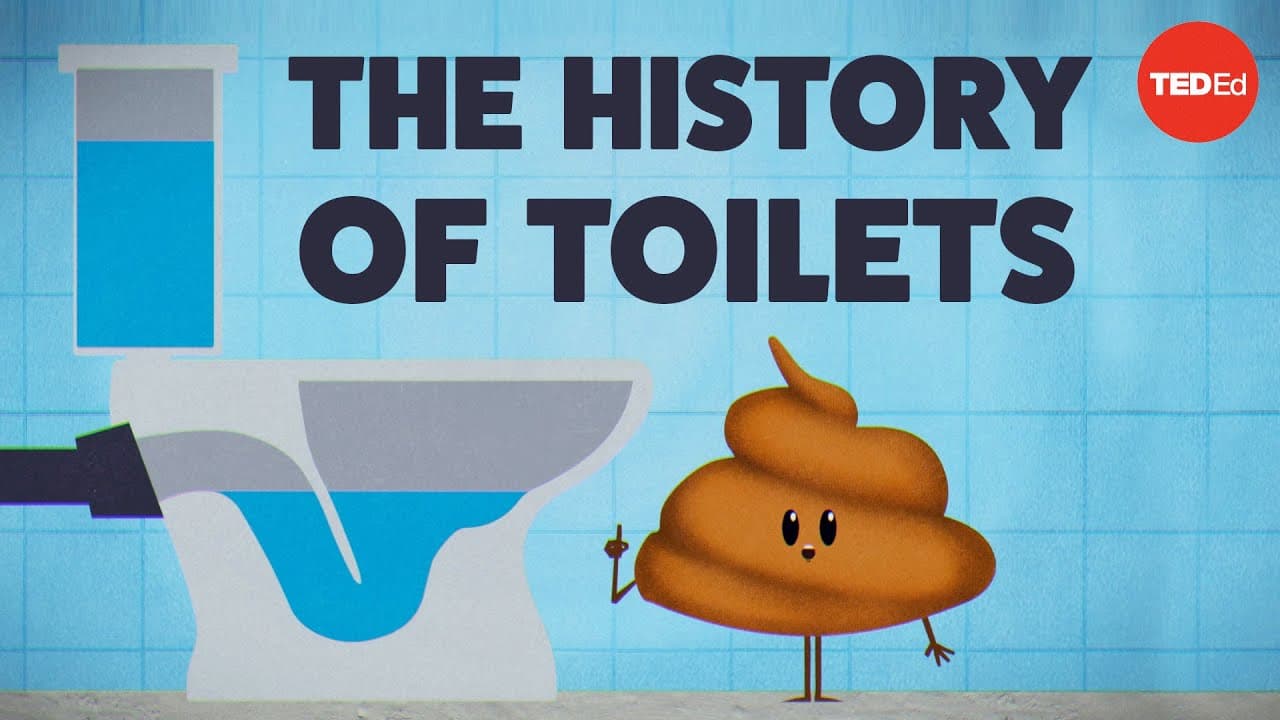
The history of toilets shows their evolution from ancient sewage systems in Mesopotamia and the Indus Valley to modern flush toilets designed in the 16th century. While advanced sewage infrastructure improved public health, today, 4.2 billion people still lack access to adequate sanitation facilities, underscoring the need for innovative solutions to ongoing sanitation challenges.
Transcript
On sunny days, the Roman citizens of Ostia could be found on a long stone bench near the Forum. Friends and neighbors exchanged news and gossip while simultaneously attending to more... urgent business. These public latrines could sit up to 20 Romans at a time, draining waste in water conduits below. Today, most cultures consider trips to the res... Read More
Key Insights
- 💩 Ancient civilizations, like those in Rome and Mesopotamia, had early forms of sewage systems connected to latrines or toilets, highlighting the importance of waste management for public health.
- 💧 Water infrastructure played a crucial role in waste disposal during the Bronze Age, with some regions having toilet systems connected to citywide sewage systems.
- 🐷 In ancient China, waste from toilets and latrines was recycled as fertilizer for pig sties, showcasing a sustainable approach to waste management.
- 🏰 During Europe's Dark Ages, unsanitary practices were prevalent, such as pit latrines and dumping waste into the streets, reflecting a lack of efficient sanitation systems.
- 🚽 Toilet technology evolved over time, such as the introduction of commode stools in the Middle Ages and Sir John Harrington's modern flush toilet design in 1596.
- 👃 In 1775, Alexander Cumming improved toilet design with the addition of an S-trap to limit odors, later refined into the U-bend by Thomas Crapper.
- 🌍 Despite advancements, approximately 4.2 billion people lack access to proper sanitation facilities, highlighting the need for innovative solutions to address global inequity.
- 🚰 To overcome sanitation challenges, it will require the development of new technologies and addressing behavioral, financial, and political barriers in the sanitation pipeline.
Install to Summarize YouTube Videos and Get Transcripts
Explore YouTube Video Summarizer or Get YouTube Transcript Extractor
Questions & Answers
Q: How did waste management systems evolve in ancient civilizations?
Ancient civilizations like Mesopotamia and the Indus Valley developed sewage systems using running water to transport waste into canals and cesspits, which helped to maintain public health and prevent the spread of diseases.
Q: What advancements in sanitation were made during the Roman Empire?
The Roman Empire had continuously flowing aqueducts dedicated to carrying waste outside city walls, demonstrating their commitment to public sanitation and health.
Q: How was waste managed in medieval Europe?
After the fall of the Roman Empire, pit latrines and chamber pots were commonly used in medieval Europe, with waste often being dumped into the streets and later collected by "gong farmers" to be disposed of beyond city limits.
Q: Who invented the modern flush toilet?
Sir John Harrington designed the first modern flush toilet in 1596 for Queen Elizabeth, using levers to release water and a valve to drain the bowl, but it still had issues with sewage odor until improvements were made by Alexander Cumming and Thomas Crapper.
Summary & Key Takeaways
-
Ancient civilizations like Mesopotamia and the Indus Valley had early sewage systems, using running water to move waste into canals and cesspits.
-
The Roman Empire had sophisticated sewage infrastructure, while Chinese dynasties recycled waste as fertilizer.
-
Europe experienced unsanitary conditions after the fall of the Roman Empire, but the Middle Ages saw the introduction of commode stools. Sir John Harrington designed the first modern flush toilet in 1596, and improvements by Alexander Cumming and Thomas Crapper eventually led to the development of the modern U-bend.
Read in Other Languages (beta)
Share This Summary 📚
Summarize YouTube Videos and Get Video Transcripts with 1-Click
Try YouTube Summary with ChatGPT & Claude or YouTube Transcript Generator
Explore More Summaries from TED-Ed 📚




Summarize YouTube Videos and Get Video Transcripts with 1-Click
Try YouTube Summary with ChatGPT & Claude or YouTube Transcript Generator