What Are the Stereotypes of Women in Motorbike Culture?
TL;DR
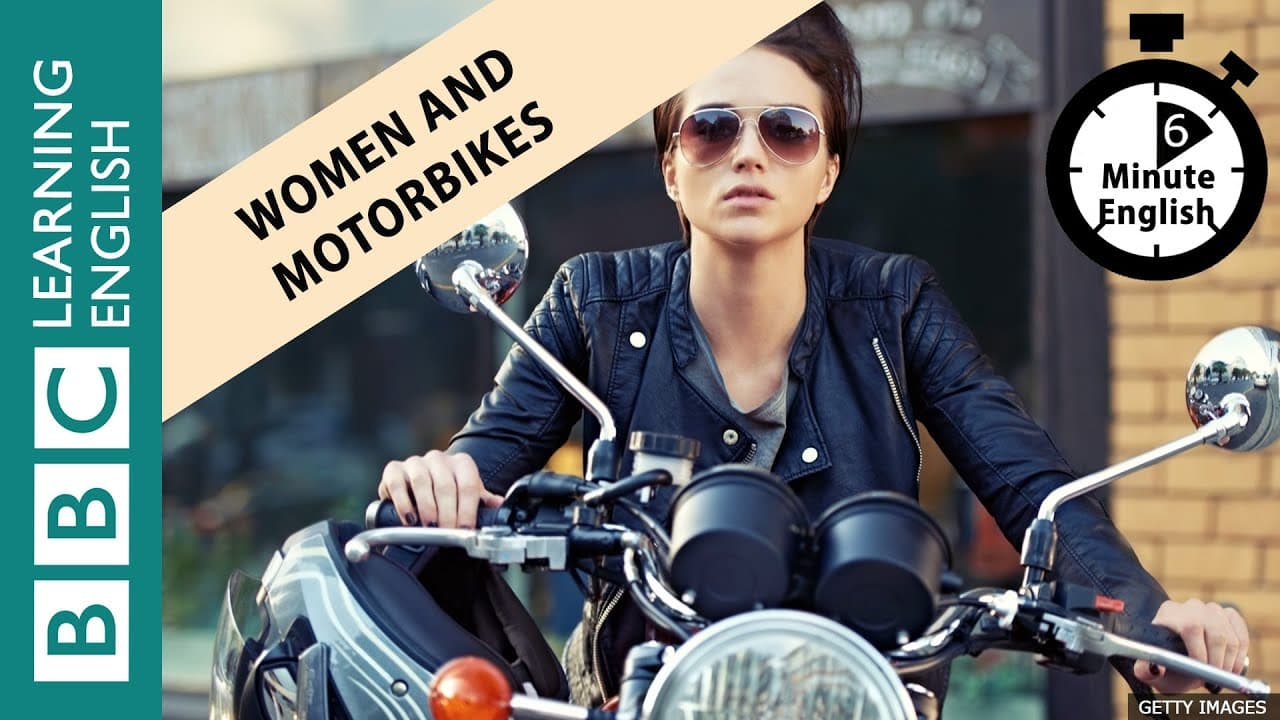
Women in motorbike culture often face three main stereotypes: the empowered but sexualized rider, the masculinized female biker, and the silly scooter girl. Despite their growing presence, these portrayals in media commonly lack depth and fail to represent women positively, with riding at high speeds sometimes transcending traditional gender and race distinctions.
Transcript
Neil: Hello and welcome to 6 Minute English. I'm Neil. Sam: And I'm Sam. Neil: And if I say to you, Sam, motorbike, what do you think of? Sam: Oh, I think of the film Easy Rider with Jack Nicholson and Peter Fonda cruising the wide open spaces on powerful machines. How about you, Neil? Neil: Oh, well, I think of the young man on a moped who deliver... Read More
Key Insights
- Motorbikes are often associated with masculinity, but women are increasingly part of this culture, challenging stereotypes.
- Esperanza Miyake's study examines how women on motorbikes are portrayed in media, revealing three main stereotypes.
- Riding at high speeds on motorbikes can dissolve social constructs like gender and race, emphasizing the external experience.
- The first stereotype is the empowered woman, often portrayed as independent but sexualized in media representations.
- The second stereotype is the masculinized female rider, embodying traditionally male characteristics in appearance and behavior.
- The third stereotype is the silly, giggly female on a scooter, undermining the serious image of women bikers.
- The discussion highlights a lack of positive, diverse representations of women in motorbike culture within popular media.
- The first mass-produced motorcycle was released in the 1890s, marking a significant moment in transportation history.
Install to Summarize YouTube Videos and Get Transcripts
Explore YouTube Video Summarizer or Get YouTube Transcript Extractor
Questions & Answers
Q: What is the main focus of this 6 Minute English episode?
The main focus of this episode is to explore the roles and representations of women in motorbike culture. The hosts, Neil and Sam, discuss how motorbikes are typically associated with masculinity but are also embraced by women. They delve into the stereotypes present in media portrayals of female bikers and discuss how these representations can be limiting and lack positivity.
Q: What are the three stereotypes of women bikers mentioned by Esperanza Miyake?
Esperanza Miyake identifies three stereotypes of women bikers in media representations: the empowered woman, who is independent but often sexualized; the masculinized female rider, who embodies traditionally male characteristics; and the silly, giggly female on a scooter, which undermines the serious image of women bikers. These stereotypes highlight the challenges in achieving diverse and positive portrayals of women in motorbike culture.
Q: How does riding a motorbike at high speeds affect social constructs like gender and race?
Riding a motorbike at high speeds can dissolve social constructs like gender and race, according to the discussion in this episode. The experience emphasizes the external world and diminishes the importance of these constructs. The sensation of speed and the lack of interiority on a bike contribute to a sense of freedom and equality, making gender and race less significant in the context of the ride.
Q: What vocabulary words are introduced in this episode?
The episode introduces several vocabulary words, including 'dissolves,' which means to get weaker or less immediate; 'empowered,' referring to having control over one's life; 'sexualised,' indicating something given a sexual styling; and 'embodying,' which means showing the true characteristics of something. These words are used to describe aspects of the discussion on women and motorbikes.
Q: When was the first mass-produced motorcycle released?
The first mass-produced motorcycle was released in the 1890s. This historical milestone marked a significant development in transportation. The episode's quiz question challenged listeners to guess the correct decade, and it was revealed that the answer was indeed the 1890s, with a bonus point for knowing the exact year, 1894.
Q: Why is the portrayal of women bikers in media significant?
The portrayal of women bikers in media is significant because it reflects and influences societal perceptions of gender roles and the acceptance of women in traditionally male-dominated spaces. Positive and diverse representations can challenge stereotypes and empower women, while negative or limited portrayals can reinforce outdated notions and hinder progress toward gender equality in various cultural contexts.
Q: What is the impact of sexualized portrayals of women bikers in media?
Sexualized portrayals of women bikers in media can have a detrimental impact by reducing complex characters to mere objects of attraction, primarily for a male audience. This type of representation can overshadow their skills, independence, and contributions to motorbike culture, perpetuating stereotypes and limiting the perception of women's roles in this sphere. It highlights the need for more nuanced and respectful portrayals.
Q: How do the hosts suggest listeners can use this episode to improve their English?
The hosts suggest that listeners can use this episode to improve their English by learning new vocabulary related to the discussion on women and motorbikes. By understanding the context in which these words are used, listeners can enhance their language skills and cultural knowledge. The episode is part of the BBC Learning English series, which offers various topics to help learners expand their vocabulary and comprehension.
Summary & Key Takeaways
-
The discussion in this episode of 6 Minute English revolves around women and their roles in motorbike culture. The hosts, Neil and Sam, explore how motorbikes are traditionally seen as masculine but are also embraced by women. They discuss the media's portrayal of female bikers and the stereotypes associated with them.
-
Esperanza Miyake's research highlights three stereotypes of women bikers: empowered but sexualized, masculinized, and silly scooter riders. These portrayals often lack depth and fail to represent women bikers positively. The conversation also touches on how riding at high speeds can diminish social constructs like gender and race.
-
The episode also includes a vocabulary lesson, introducing words like 'dissolves,' 'empowered,' and 'embodying.' Additionally, they reveal that the first mass-produced motorcycle was released in the 1890s. The hosts encourage listeners to explore more episodes to improve their English vocabulary and understanding of cultural topics.
Read in Other Languages (beta)
Share This Summary 📚
Summarize YouTube Videos and Get Video Transcripts with 1-Click
Try YouTube Summary with ChatGPT & Claude or YouTube Transcript Generator
Explore More Summaries from BBC Learning English 📚

Summarize YouTube Videos and Get Video Transcripts with 1-Click
Try YouTube Summary with ChatGPT & Claude or YouTube Transcript Generator