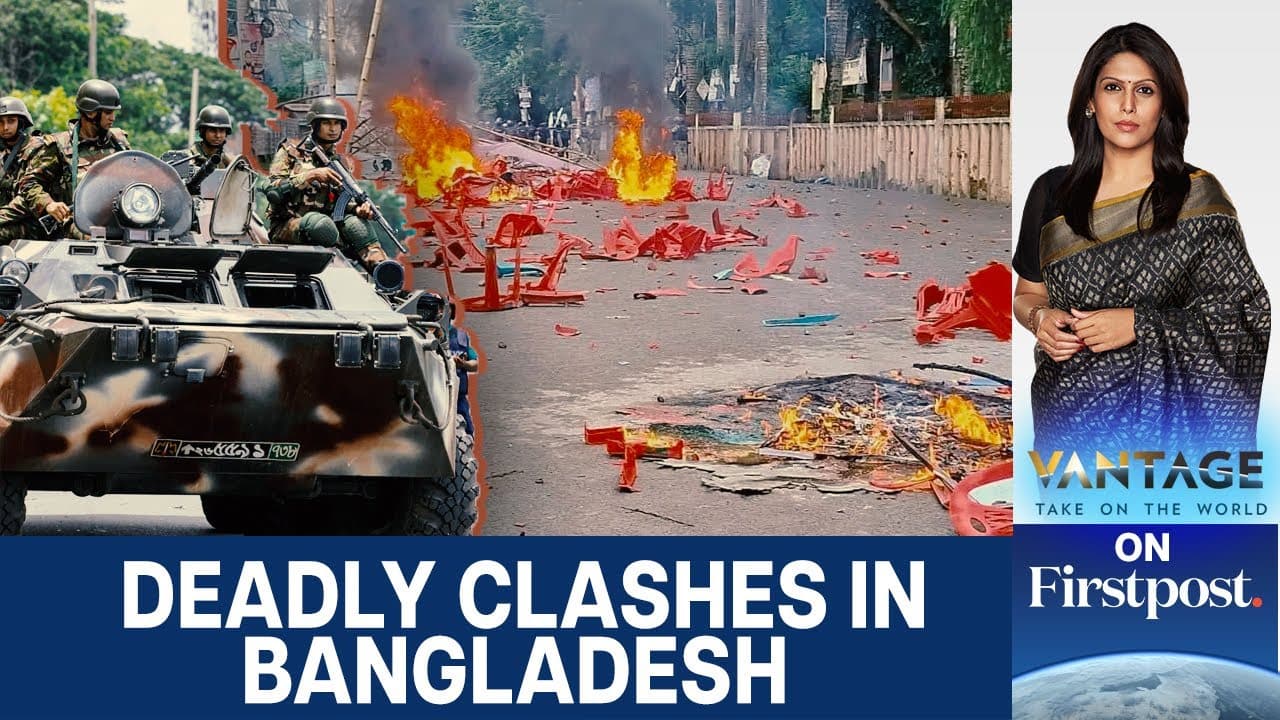
4 killed, 14 arrested: What Sparked the Gopalganj Violence? | Vantage with Palki Sharma | N18G
TL;DR
Violence erupts in Gopalganj amid political tensions in Bangladesh.
Transcript
Read and summarize the transcript of this video on Glasp Reader (beta).
Key Insights
- The violence in Gopalganj is linked to political tensions following last year's protests that led to the ouster of Sheikh Hasina.
- The National Citizen Party (NCP) organized a rally in Gopalganj, which was perceived as a provocation by Sheikh Hasina's loyalists.
- Gopalganj holds significant historical and political importance as the hometown of Bangladesh's founding father, Sheikh Mujibur Rahman.
- The unrest resulted in four deaths, numerous injuries, and the arrest of 14 individuals, prompting a military curfew in the area.
- Both the NCP and Sheikh Hasina's Awami League blame each other for the violence, highlighting deep political divisions in Bangladesh.
- The interim government has promised an investigation, but there is widespread skepticism about its effectiveness given past experiences.
- India is closely monitoring the situation, reflecting regional concerns about stability in Bangladesh.
- Despite the ouster of Sheikh Hasina, Bangladesh remains in a state of political flux, with unresolved tensions and ongoing unrest.
Install to Summarize YouTube Videos and Get Transcripts
Explore YouTube Video Summarizer or Get YouTube Transcript Extractor
Questions & Answers
Q: What triggered the violence in Gopalganj?
The violence in Gopalganj was triggered by a rally organized by the National Citizen Party, which was perceived as a provocation by Sheikh Hasina's loyalists. The rally was seen as a threat to the historical and political significance of Gopalganj, leading to clashes between the two sides.
Q: Why is Gopalganj significant in Bangladesh's political landscape?
Gopalganj is significant as it is the hometown of Sheikh Mujibur Rahman, the founding father of Bangladesh. It holds historical and political importance, being a stronghold for Sheikh Hasina's Awami League. This makes any political activity in the area highly sensitive and potentially provocative.
Q: What were the immediate consequences of the Gopalganj unrest?
The immediate consequences of the Gopalganj unrest included four deaths, numerous injuries, and the arrest of 14 individuals. The situation escalated to the point where a military curfew was imposed to restore order, reflecting the severity of the violence and the political tensions involved.
Q: How has the interim government responded to the violence?
The interim government has promised an investigation into the violence in Gopalganj. However, there is widespread skepticism about the effectiveness of such investigations, as past probes have often led to inaction and have failed to address the underlying political tensions in Bangladesh.
Q: What role does the National Citizen Party play in Bangladesh's current political climate?
The National Citizen Party emerged from last year's protests that led to the ouster of Sheikh Hasina. It positions itself as a reformist movement and has been actively challenging the political status quo in Bangladesh. Its activities, such as the rally in Gopalganj, are seen as provocative by Hasina's supporters.
Q: How has the international community reacted to the Gopalganj violence?
The international community, including India, is closely monitoring the situation in Gopalganj. There are concerns about regional stability, given Bangladesh's strategic importance. The violence highlights ongoing political instability in Bangladesh, which has implications for its neighbors and international relations.
Q: What are the long-term implications of the unrest in Bangladesh?
The long-term implications of the unrest in Bangladesh include continued political instability and the potential for further violence. The deep political divisions and unresolved tensions suggest that Bangladesh may struggle to achieve political consensus and stability, affecting its governance and development prospects.
Q: What challenges does Bangladesh face in moving forward from this unrest?
Bangladesh faces significant challenges in moving forward from this unrest, including bridging deep political divisions, restoring public trust in governance, and addressing historical grievances. The lack of effective political dialogue and consensus-building mechanisms further complicates efforts to achieve long-term stability and peace.
Summary & Key Takeaways
-
The Gopalganj violence stems from deep-rooted political tensions in Bangladesh, following the ouster of Sheikh Hasina last year. A rally organized by the National Citizen Party escalated into deadly clashes, resulting in four deaths and numerous injuries, with both sides blaming each other.
-
Gopalganj's historical significance as the hometown of Sheikh Mujibur Rahman adds to the complexity of the unrest. The area is a stronghold for Sheikh Hasina's supporters, who viewed the rally as a threat, leading to violent confrontations and a military-imposed curfew.
-
The interim government's promise of an investigation into the violence is met with skepticism, as similar probes in the past have led to inaction. Bangladesh remains politically unstable, with unresolved tensions and the potential for further unrest.
Read in Other Languages (beta)
Share This Summary 📚
Summarize YouTube Videos and Get Video Transcripts with 1-Click
Try YouTube Summary with ChatGPT & Claude or YouTube Transcript Generator
Explore More Summaries from Firstpost 📚






Summarize YouTube Videos and Get Video Transcripts with 1-Click
Try YouTube Summary with ChatGPT & Claude or YouTube Transcript Generator