Why Are College Protests More Polarized Than Ever?
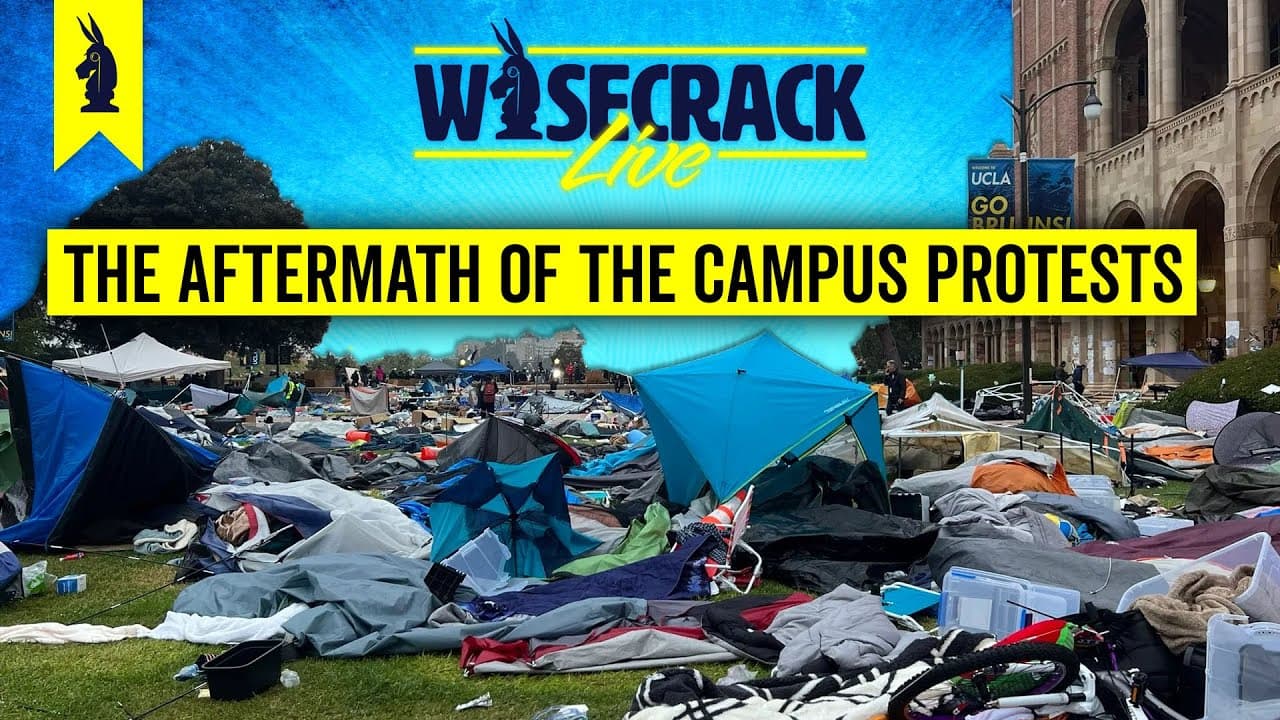
TL;DR
Recent college protests, particularly regarding the Israel-Palestine conflict, reveal a growing gap between student activism and media portrayals that oversimplify their goals. Students aim for a ceasefire and divestment from linked companies, while professors navigate the complexities of supporting protests amid institutional risks, highlighting tensions in academic freedom and expression.
Transcript
welcome welcome wise chat it's Wednesday May 8th this is wise crack live producer Henry saying thank you for joining us go ahead take a seat get cozy like that stream Mike will be with us in just a moment what is up Zach thanks for joining us old gree definitely check that book out it it really is just ORS and Wells rambling on a variety of topics ... Read More
Key Insights
- 🧑🎓 The protests on college campuses are often misunderstood by the media, focusing on sensational stories rather than student demands and solidarity.
- ❤️🩹 Students protest for broader humanitarian reasons, seeking an end to military actions and divestment from companies linked to violence, challenging traditional power structures.
- 😀 Professors are supportive but face institutional risks when aligning with student protests, indicating a tense relationship between academic freedom and administrative caution.
- 🔉 Media portrayal of protests can perpetuate stereotypes, focusing on physical appearance rather than the intellectual and political substance of the activism.
- 🧡 A wide range of student identities influences their participation in protests, revealing a complex interplay of personal beliefs, backgrounds, and social pressures.
- 🧑🎓 The involvement of artists and public figures in protests serves to amplify student voices and brings increased awareness to their causes.
- 🪡 The conversation around protests continues to evolve, demonstrating a need for understanding and nuanced discussions surrounding activism and representation.
Install to Summarize YouTube Videos and Get Transcripts
Explore YouTube Video Summarizer or Get YouTube Transcript Extractor
Questions & Answers
Q: What are the primary goals of the recent student protests?
The primary goals of recent student protests include securing a permanent ceasefire in the Israel-Palestine conflict and urging universities to divest from companies involved in military actions, thus addressing corporate funding linked to violence. Protesters seek to raise awareness while advocating for human rights and social justice.
Q: How do professors feel about the protests, and what risks do they face?
Professors often support student protests, viewing them as key to a university's mission. However, they face risks such as administrative backlash or confrontations with counter-protesters. Some have been arrested or punished for their involvement, highlighting a tense atmosphere on campuses regarding free expression and activism.
Q: What impact does media coverage have on public perception of student protests?
Media coverage tends to focus on sensational aspects, such as confrontations or the appearance of protesters, rather than the substantive goals and ideals they advocate for. This oversimplification can shape public opinion negatively and diminish the perceived legitimacy of the students’ causes.
Q: How are students navigating identity and activism in these protests?
Students are grappling with their identities as both supporters of humanitarian causes and as individuals often confronted with cultural or familial pressures regarding their views. Many Jewish students finding themselves in solidarity with pro-Palestinian movements are navigating complex feelings of belonging and advocacy.
Q: Can you explain the significance of artist involvement in recent protests?
Artist involvement, like that of prominent figures attending protests, adds visibility and legitimacy to student causes. It demonstrates solidarity across various activist movements and promotes broader conversations regarding social justice, leveraging cultural influence to garner broader support.
Q: What social dynamics are visible in the protests regarding aesthetics?
The discourse around the attractiveness of protesters reveals underlying biases that equate physical appearance with moral validity. This reflects societal concerns about representation and how narratives are shaped by perceptions of beauty, which can detract from the actual messages being conveyed.
Summary & Key Takeaways
-
Recent protests at universities, particularly regarding the Israel-Palestine conflict, have highlighted a growing disparity between on-the-ground activism and media narratives that often oversimplify the students' goals and identities.
-
Inside the university setting, professors and students navigate complex feelings around safety, identity, and activism while facing administrative responses that can sometimes undermine academic freedom and student expression.
-
The current discourse on protests has also unfairly focused on the physical appearance of demonstrators, revealing deeper societal issues surrounding aesthetics and activism.
Read in Other Languages (beta)
Share This Summary 📚
Summarize YouTube Videos and Get Video Transcripts with 1-Click
Try YouTube Summary with ChatGPT & Claude or YouTube Transcript Generator