What Happens After You're Released From Prison?
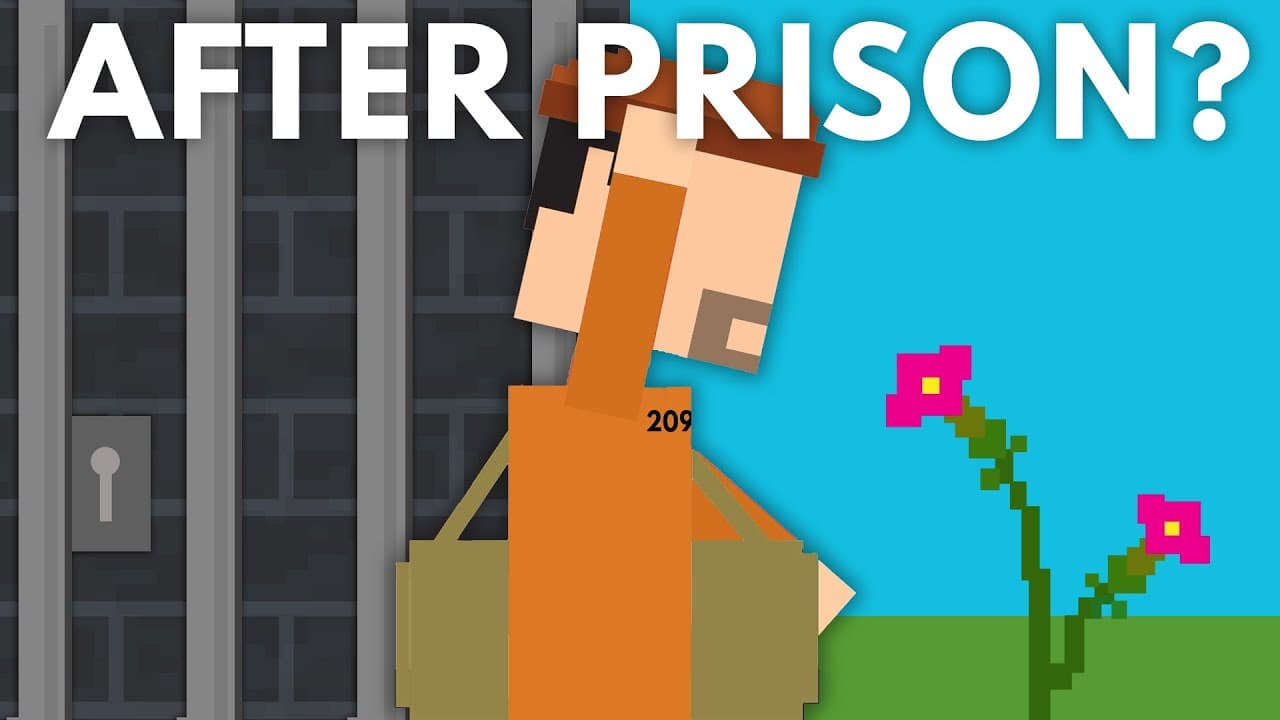
TL;DR
Re-integrating into society after prison is difficult due to limited job opportunities, housing barriers, and financial hardships.
Transcript
this video was made possible thanks to our friends over at hollywood health and society, who sponsored this video. Hey there! Welcome to Life Noggin! According to the United State’s Bureau of Justice Statistics, around 1.5 million adults were in prison at the end of 2017. And while each year more than 600,000 individuals are released, about 450,000... Read More
Key Insights
- 🖤 Re-entering society with a criminal record is challenging due to limited job opportunities and a lack of educational and employment history.
- 🥺 Housing barriers make it difficult for returning citizens to find stable and affordable housing, leading to homelessness.
- 😘 Incarceration disproportionately affects individuals with low levels of education and minority groups, particularly people of color.
- 🪚 Re-entry programs that provide housing, job assistance, and therapy can help prevent recidivism.
Install to Summarize YouTube Videos and Get Transcripts
Explore YouTube Video Summarizer or Get YouTube Transcript Extractor
Questions & Answers
Q: Why do many employers hesitate to hire individuals with a criminal record?
Many employers have reservations about hiring individuals with a criminal record due to concerns about trust, reliability, and potential liability issues. This stigma affects job prospects for returning citizens.
Q: What are the financial challenges faced by returning citizens?
Returning citizens often find themselves in low-skilled, low-wage jobs, which makes it difficult to support themselves and their families. Additionally, they are burdened with parole fees and other penalties that can strain their finances.
Q: How does housing insecurity contribute to recidivism?
Limited finances and housing policies that ban renting to those with a criminal record lead to housing insecurity for returning citizens. Homelessness, which is prevalent among previously incarcerated individuals, increases the likelihood of returning to prison.
Q: How can re-entry programs help prevent recidivism?
Re-entry programs assist former inmates by providing short-term housing, job placement assistance, and therapy. By addressing the challenges faced during reintegration, these programs aim to break the cycle of recidivism.
Summary & Key Takeaways
-
According to the Bureau of Justice Statistics, approximately 1.5 million adults were in prison in the US at the end of 2017, and many face challenges reintegrating into society.
-
Limited job opportunities exist for individuals with a criminal record, as employers are often hesitant to hire them. This, coupled with a lack of education and employment history, makes finding employment challenging.
-
Housing barriers further compound the difficulty, as returning citizens often struggle to afford a home, and housing policies can prevent them from renting apartments.
Read in Other Languages (beta)
Share This Summary 📚
Summarize YouTube Videos and Get Video Transcripts with 1-Click
Try YouTube Summary with ChatGPT & Claude or YouTube Transcript Generator
Explore More Summaries from Life Noggin 📚






Summarize YouTube Videos and Get Video Transcripts with 1-Click
Try YouTube Summary with ChatGPT & Claude or YouTube Transcript Generator