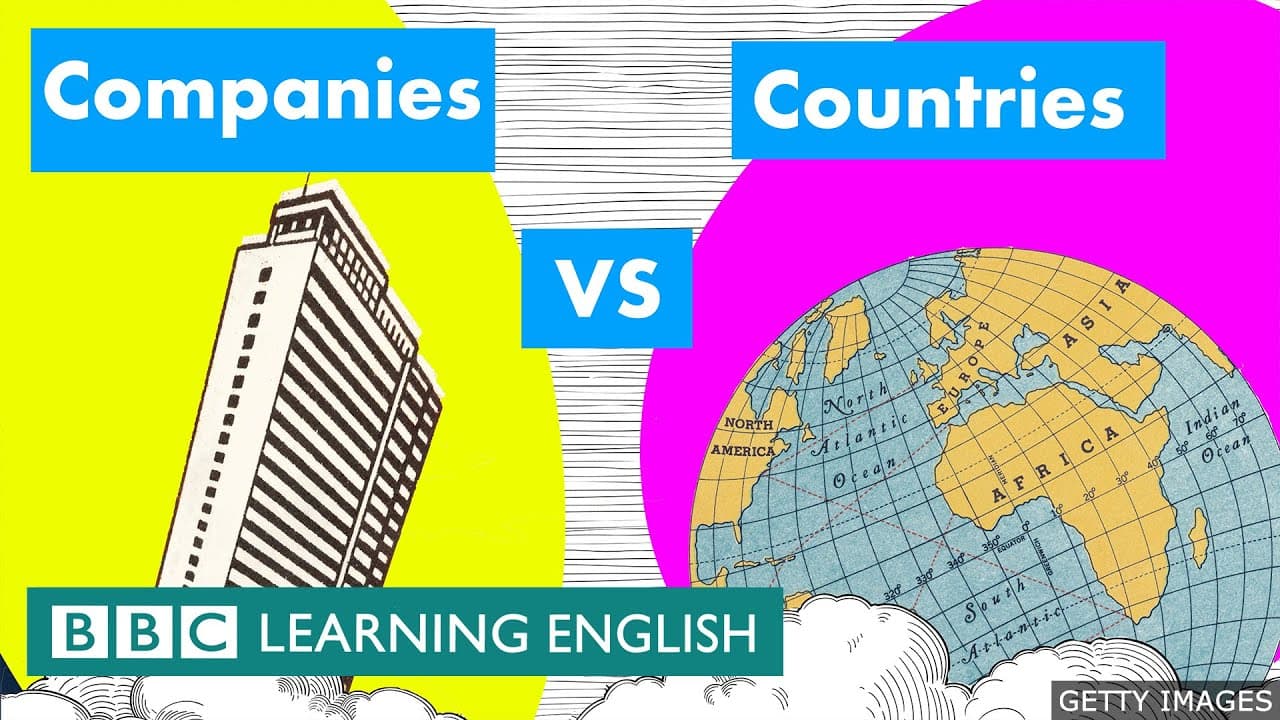
Do Multinational Companies Have More Power Than Countries?
TL;DR
Yes, multinational corporations often wield more power than countries due to their size and favorable legal structures, especially from trade agreements like NAFTA. While historically these corporations have evaded accountability, courts are increasingly recognizing parent company liability and challenging corporate impunity, signaling a shift towards greater corporate accountability.
Transcript
Multinational corporations can be really big – bigger even than some countries. But does that mean they're more powerful than a country? We'll show you how the law keeps things balanced. How can countries stop multinational companies if they break the law? And why do they end up fighting each other in court? And... let's find out how companies stru... Read More
Key Insights
- Multinational corporations can be larger than some countries, raising questions about their power relative to nations.
- Trade agreements like NAFTA have historically allowed companies to sue countries, leading to changes in national laws.
- The United States-Mexico-Canada Agreement replaced NAFTA, limiting the power of companies to sue governments.
- Maude Barlow believes companies use their global structure to influence and avoid legal constraints.
- Corporations gain power through numerous bilateral investment agreements, allowing them to sue governments across borders.
- The legal structure of companies, such as subsidiaries, often protects parent companies from legal liabilities.
- Courts, particularly the UK Supreme Court, are increasingly holding parent companies accountable for subsidiary actions.
- The legal landscape is changing, with more lawyers willing to challenge corporate impunity and protect human rights.
Install to Summarize YouTube Videos and Get Transcripts
Explore YouTube Video Summarizer or Get YouTube Transcript Extractor
Questions & Answers
Q: How do multinational corporations compare in size to countries?
Multinational corporations can be larger than some countries, not just in terms of economic influence but also in their ability to affect international laws and policies. Their vast resources and global presence allow them to exert significant power, sometimes surpassing that of smaller nations.
Q: What role did NAFTA play in corporate legal power?
NAFTA allowed companies to sue governments if they believed trade agreements were violated, leading to legal claims against countries like Canada. This empowered corporations to influence national policies and laws, often to the detriment of the countries involved, prompting a re-evaluation of such agreements.
Q: What changes were made with the United States-Mexico-Canada Agreement?
The United States-Mexico-Canada Agreement replaced NAFTA and aimed to limit the ability of multinational corporations to sue governments. This change was intended to reduce corporate influence over national laws and policies, addressing concerns about the imbalance of power between companies and countries.
Q: How do companies use their structure to avoid legal responsibility?
Companies often use a network of subsidiaries in different countries to shield the parent company from liability. This structure makes it difficult to hold the main company accountable for the actions of its subsidiaries, as legal responsibility is often limited to the local entities involved.
Q: What is the 'corporate veil' and how is it changing?
The 'corporate veil' refers to the legal separation between a parent company and its subsidiaries, traditionally protecting the parent from liability. However, courts are increasingly willing to pierce this veil, holding parent companies accountable for the actions of their subsidiaries, especially when they are involved in harmful activities.
Q: How are courts addressing corporate accountability?
Courts, particularly in jurisdictions like the UK, are increasingly holding parent companies accountable for the actions of their subsidiaries. This shift reflects a growing recognition of the need to address corporate impunity and ensure that companies adhere to human rights and environmental standards.
Q: What impact do bilateral investment agreements have on corporate power?
Bilateral investment agreements allow corporations to sue governments, enhancing their power across borders. These agreements have contributed to the gradual increase in corporate influence over national policies, often leading to changes in domestic laws to accommodate corporate interests.
Q: What changes are occurring in the legal landscape regarding corporate behavior?
The legal landscape is shifting towards greater corporate accountability, with more lawyers and organizations challenging corporate impunity. This change is driven by a growing awareness of the need to protect human rights and the environment, ensuring that companies cannot operate without regard for legal and ethical standards.
Summary & Key Takeaways
-
Multinational corporations often have more power than countries due to their size and legal advantages. Trade agreements have historically favored corporations, but recent changes aim to limit this power. The legal structure of companies can shield them from accountability, but courts are increasingly challenging this.
-
Maude Barlow highlights the influence of corporations on national and international laws, suggesting they often evade legal constraints. The UK Supreme Court has expanded parent company liability, indicating a shift towards greater corporate accountability.
-
Historically, companies have used the 'corporate veil' to avoid liability for subsidiary actions. However, legal attitudes are changing, with more lawyers and organizations willing to hold companies accountable and ensure compliance with human rights and environmental standards.
Read in Other Languages (beta)
Share This Summary 📚
Summarize YouTube Videos and Get Video Transcripts with 1-Click
Try YouTube Summary with ChatGPT & Claude or YouTube Transcript Generator
Explore More Summaries from BBC Learning English 📚
Summarize YouTube Videos and Get Video Transcripts with 1-Click
Try YouTube Summary with ChatGPT & Claude or YouTube Transcript Generator