How Does Adultification Impact Black Girls in Society?
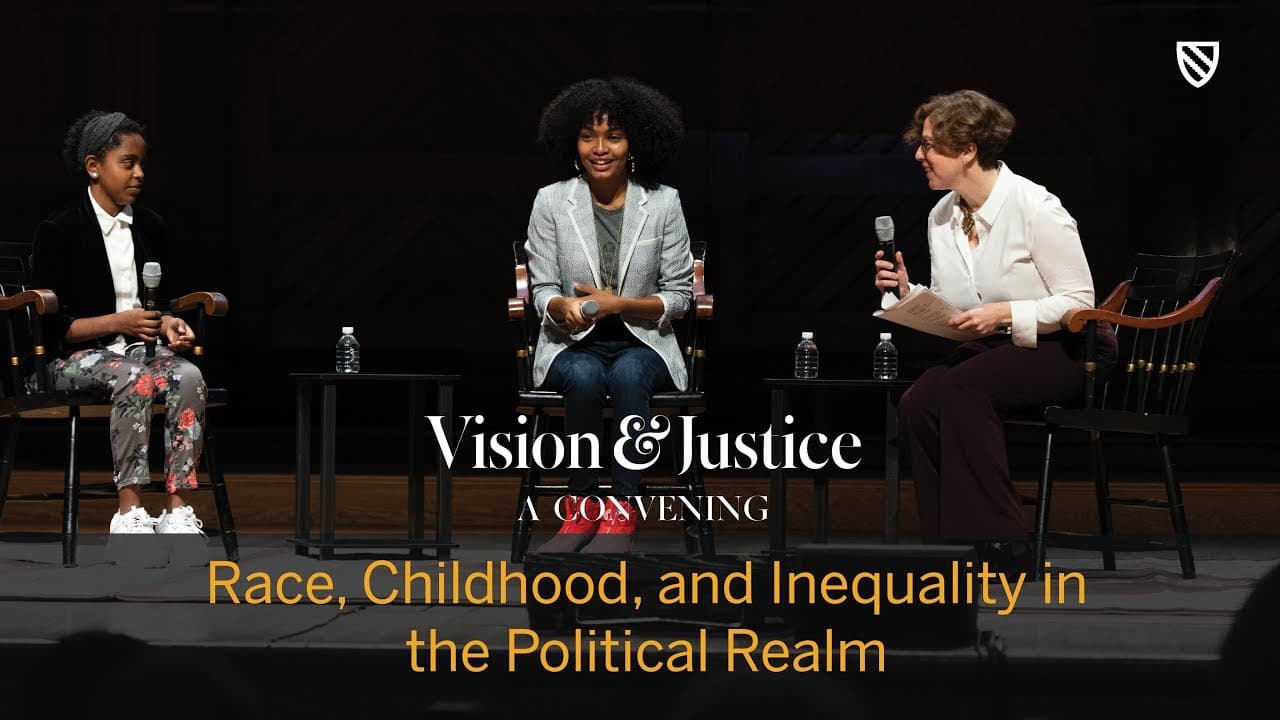
TL;DR
Adultification leads society to perceive black girls as less innocent and more adult-like, resulting in harsher discipline and criminalization of normal childhood behaviors. Activists emphasize the need for increased representation, education, and support to empower black girls, helping them share their stories and achieve justice.
Transcript
- Black girls need less nurturing, less protection, less support, less comfort. The research shows that these beliefs are widely held by adults in the United States. A recent report from the Georgetown Law Center on Poverty and Inequality finds that adults view black girls as less innocent and more adult like than their white peers. And black girls... Read More
Key Insights
- 🖤 Adultification and harsher discipline of black girls perpetuate racial inequalities and deny them their childhood.
- 🖤 Education, both in and outside of traditional settings, can empower black girls to understand their history, challenge biases, and seek justice.
- 🖤 Representation in media and the arts is crucial to combatting stereotypes and providing positive role models for black girls.
- 🖤 Support from mentorship networks and the broader community can help young black girls become confident activists and advocates for justice.
Install to Summarize YouTube Videos and Get Transcripts
Explore YouTube Video Summarizer or Get YouTube Transcript Extractor
Questions & Answers
Q: How does adultification affect black girls' experiences and activism?
Adultification places unfair expectations on black girls, leading to harsh discipline and a denial of their innocence. This can influence their activism and inspire them to advocate for the rights and experiences of black girls.
Q: How can black girls' voices be amplified better in society?
Society needs to recognize and understand the struggles faced by black girls. It is essential to listen, learn, and acknowledge that black girls' experiences are valid and unique. Black girls should be given platforms to tell their own stories.
Q: How can adults support young black activists?
Adults should provide guidance, mentorship, and create spaces for young black activists to grow and thrive. Adults can also educate themselves about the experiences of black girls and actively work towards dismantling racial biases and discrimination.
Q: How can the arts contribute to seeking justice for black girls?
The arts, including visual representations, literature, and performances, can challenge stereotypes and offer diverse narratives that counter adultification and racial inequality. Representation and storytelling play a vital role in empowering black girls and creating positive change.
Summary & Key Takeaways
-
Black girls are often adultified, seen as less innocent, and disciplined more harshly than white children.
-
Representation and education are crucial in amplifying the voices and experiences of black girls and challenging unfair perceptions.
-
Support and mentorship networks play a vital role in empowering black girls to become activists and advocates for justice.
Read in Other Languages (beta)
Share This Summary 📚
Summarize YouTube Videos and Get Video Transcripts with 1-Click
Try YouTube Summary with ChatGPT & Claude or YouTube Transcript Generator
Explore More Summaries from Harvard University 📚






Summarize YouTube Videos and Get Video Transcripts with 1-Click
Try YouTube Summary with ChatGPT & Claude or YouTube Transcript Generator