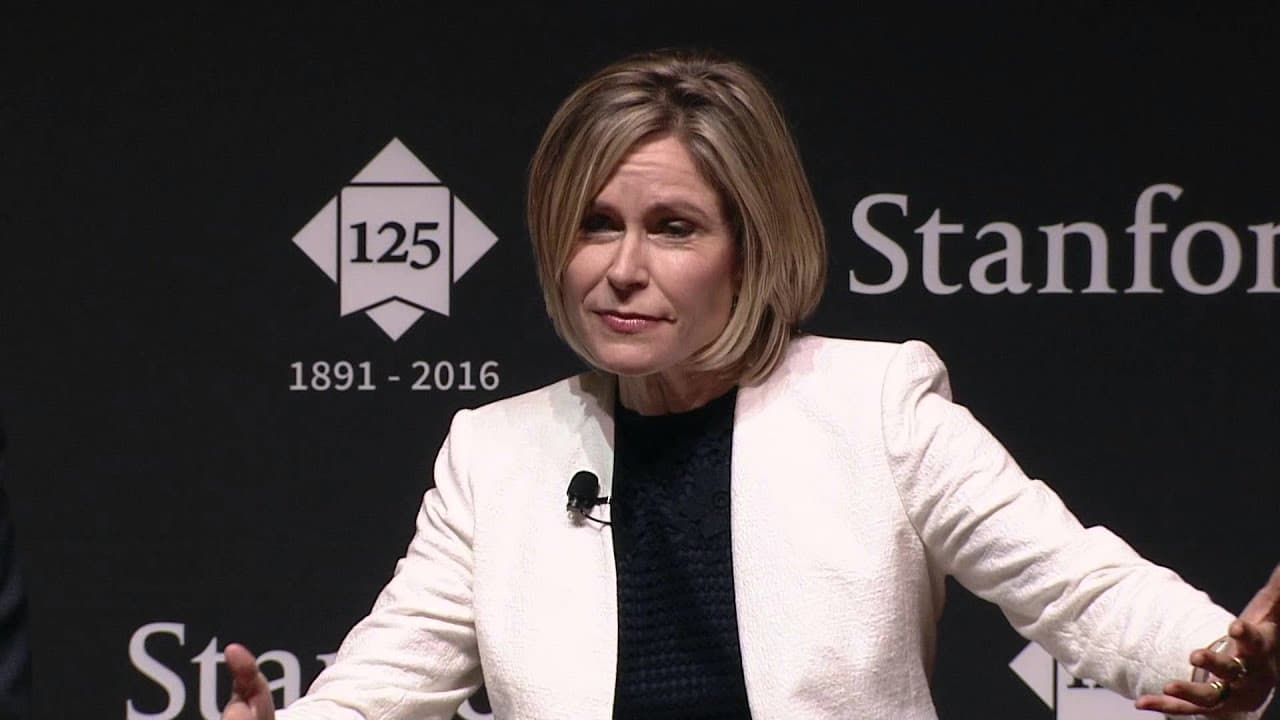
Thinking Big About Learning - John Etchemendy, John Mitchell, Daniel Schwartz and Caroline Winterer
TL;DR
Experts from Stanford University discuss the importance of innovations in teaching and learning and the future of education.
Transcript
Stanford University good afternoon and welcome I'm John animi as the voice said and I am Stanford's proost it's a pleasure to welcome you all here both those of you who are in sex Auditorium and those of you who are watching remotely this is a symposium thinking big about learning I understand that uh Bay Area Teachers constitute more than half of ... Read More
Key Insights
- 🌉 Collaborative efforts between universities and K-12 educators are essential for bridging the gap and sharing knowledge.
- 🤗 The revolution of digital humanities has made knowledge universally accessible, but hands-on, small-group teaching remains crucial for critical thinking development.
- ⚖️ Integrating technology in teaching can enhance the learning experience, but it must be balanced with traditional teaching methods.
Install to Summarize YouTube Videos and Get Transcripts
Explore YouTube Video Summarizer or Get YouTube Transcript Extractor
Questions & Answers
Q: How are universities bridging the gap between higher education and K-12 education?
Universities are actively collaborating with K-12 educators to share research, innovations, and teaching methods to enhance learning at all levels. Initiatives, such as discipline-based education, are being implemented to cater to different disciplines in education.
Q: How do digital humanities revolutionize education?
Digital humanities have democratized knowledge by making the human experience universally accessible online. However, it is still essential to have personalized, engaging teaching methods to cultivate critical thinking skills and enhance the learning experience.
Q: What are some examples of integrating technology in teaching?
Stanford University has released numerous free online courses and utilized virtual reality and other technologies to enhance learning. However, it is crucial to balance technology with small, tactile teaching experiences to ensure effective learning.
Q: How will education change in the next 25 years?
Education will likely see advancements in teaching complex concepts and an increase in opportunities for lifelong learning outside of traditional school settings, potentially through platforms like YouTube.
Summary & Key Takeaways
-
John Mitchell discusses the Renaissance-like period in education, with various experts in different fields coming together to improve teaching and learning.
-
Carolyn Winterer highlights the revolution of digital humanities, making knowledge universally accessible, while emphasizing the importance of small, engaged teaching methods.
-
Dan Schwarz discusses the application of higher education innovations in K-12 education and the need for discipline-based education.
Read in Other Languages (beta)
Share This Summary 📚
Summarize YouTube Videos and Get Video Transcripts with 1-Click
Try YouTube Summary with ChatGPT & Claude or YouTube Transcript Generator
Explore More Summaries from Stanford 📚


Summarize YouTube Videos and Get Video Transcripts with 1-Click
Try YouTube Summary with ChatGPT & Claude or YouTube Transcript Generator