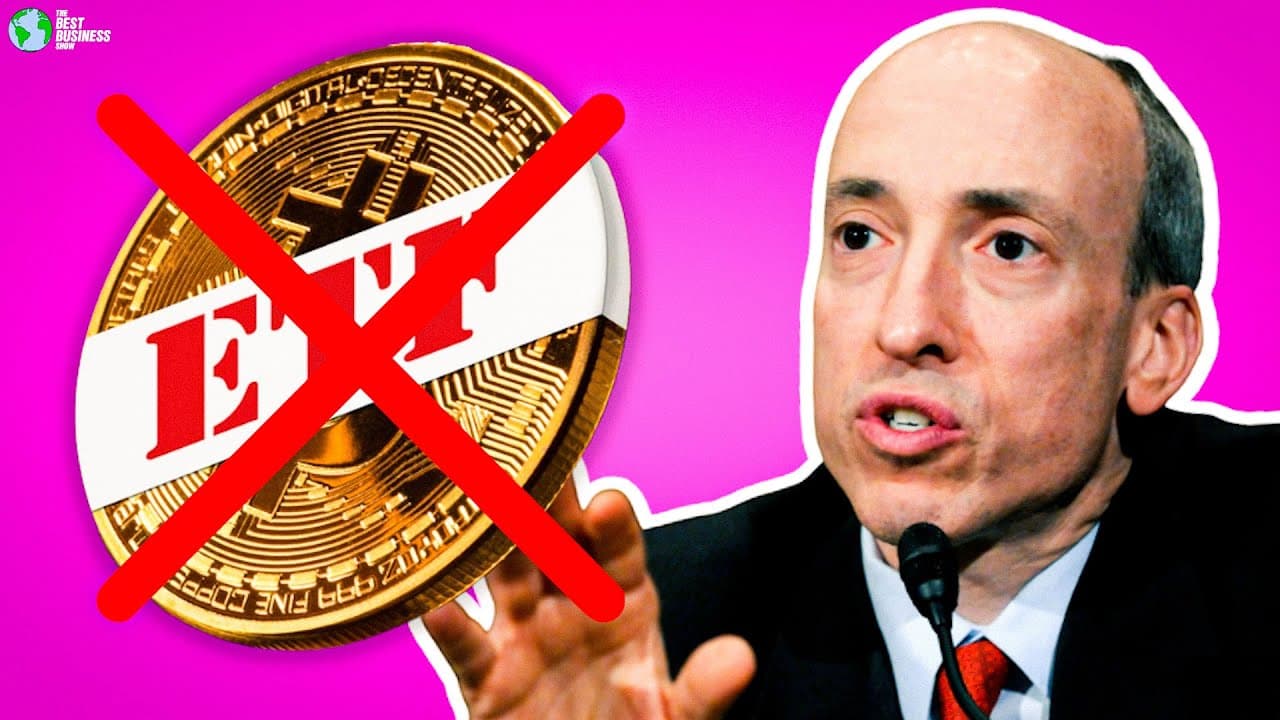
Investors NEED A Bitcoin ETF!
TL;DR
Bitcoin futures ETFs have launched, but spot ETFs face approval delays due to regulatory concerns.
Transcript
the bitcoin futures etf got approved a couple of weeks ago it went out into the market and it has received the first one over a billion dollars of capital inflows the second one went out it's also received hundreds of millions of dollars of capital inflows but everyone is still asking why the hell is there not a bitcoin spot etf the bitcoin futures... Read More
Key Insights
- 🙈 Bitcoin futures ETFs have seen unprecedented success with rapid capital inflows, emphasizing investor interest in Bitcoin-related investment vehicles.
- 💐 Regulatory hurdles complicate the introduction of Bitcoin spot ETFs, with the SEC prioritizing investor safety and market stability over expedited approvals.
- 💐 Grayscale’s strategy to convert its Bitcoin Trust into an ETF underlines the demand for more accessible cryptocurrency investment options by traditional finance.
- 📈 The SEC's insistence on stringent oversight for Bitcoin trading exchanges reflects broader trends in regulatory practices across complex financial instruments.
- 📼 Immediate market responses suggest that investors are primed for a Bitcoin spot ETF, expecting massive participation and asset growth upon its approval.
- 💗 The current standoff regarding spot ETF approvals may contribute to growing frustration among investors seeking legitimate avenues for cryptocurrency investments.
- 👾 Institutional investors' compliance challenges highlight a tension between regulatory frameworks and market innovation in the rapidly evolving cryptocurrency space.
Install to Summarize YouTube Videos and Get Transcripts
Explore YouTube Video Summarizer or Get YouTube Transcript Extractor
Questions & Answers
Q: Why are Bitcoin futures ETFs gaining popularity while spot ETFs are still pending approval?
Bitcoin futures ETFs are popular because they are already approved and actively trading, leading to considerable capital inflows. The appeal lies in providing a regulated way for investors to gain exposure to Bitcoin's market dynamics without directly holding the digital currency. However, spot ETFs face stricter regulatory scrutiny over potential market manipulation, delaying their approval.
Q: What are the main reasons for the SEC delaying the approval of Bitcoin spot ETFs?
The SEC has expressed concerns regarding market manipulation and insufficient surveillance capabilities among exchanges that trade Bitcoin. They require comprehensive surveillance agreements with regulated markets of significant size to ensure investor protection. Many current exchanges do not fulfill these requirements, stalling the approval processes for spot ETF applications.
Q: How might the launch of a Bitcoin spot ETF impact the market?
Analysts predict that the launch of a Bitcoin spot ETF could create substantial interest, potentially leading to rapid asset accumulation in a short period. If approved, the ETF could gather billions in assets within its first week, reflecting strong investor demand for direct Bitcoin exposure and possibly affecting the price of Bitcoin positively.
Q: What does Grayscale's situation with its Bitcoin Trust indicate about the market for cryptocurrencies?
Grayscale's attempt to convert its Bitcoin Trust into an ETF portrays a desire from institutional investors for more flexible, liquid investment options in cryptocurrencies. The lack of ETF status limits Grayscale's ability to offer redemption features, which could enhance trust and performance among investors, thereby reflecting a broader need for regulatory clarity in crypto markets.
Q: What parallels can be drawn between the approval process of Bitcoin ETFs and other financial instruments?
The rigorous and cautious approach the SEC takes with Bitcoin ETFs mirrors processes for other financial products deemed risky or complex, such as leveraged ETFs or exotic derivatives. The emphasis on investor protection and market stability is consistent across all financial regulatory environments, showcasing the SEC’s vigilance in safeguarding investor interests.
Q: Why is the Bitcoin futures ETF considered a safer investment compared to direct Bitcoin purchases?
Bitcoin futures ETFs are viewed as safer investments because they are regulated products, allowing investors to participate in the cryptocurrency market without the need to directly hold Bitcoin. These ETFs are subject to oversight and are designed to mitigate risks like market volatility and breaches, making them a more palatable option for risk-averse institutions.
Q: What implications does the delay in spot ETF approval have for institutional investors?
The delay ultimately restricts institutional investors from accessing a regulated, direct route to Bitcoin exposure, which can inhibit their ability to engage fully with the asset class. As regulatory paths remain unclear, institutions may fall behind in capitalizing on cryptocurrency opportunities compared to agile individual investors opting for direct purchases.
Summary & Key Takeaways
-
The recent approval of Bitcoin futures ETFs has led to over a billion dollars in capital inflows, highlighting strong investor interest, yet the absence of a Bitcoin spot ETF remains a pressing concern.
-
Grayscale's Bitcoin Trust has not achieved ETF status, limiting its redemption features, and recent spot ETF applications, such as Van Eck’s, have been denied due to regulatory concerns over market manipulation and oversight.
-
There is significant demand for a Bitcoin spot ETF from investors seeking direct exposure and better price alignment but regulatory hurdles persist, indicating a potential delay of 12 to 24 months before approvals could be granted.
Read in Other Languages (beta)
Share This Summary 📚
Summarize YouTube Videos and Get Video Transcripts with 1-Click
Try YouTube Summary with ChatGPT & Claude or YouTube Transcript Generator
Explore More Summaries from Anthony Pompliano 📚

Summarize YouTube Videos and Get Video Transcripts with 1-Click
Try YouTube Summary with ChatGPT & Claude or YouTube Transcript Generator