NASDAQ Mini Course: Episode 2
TL;DR
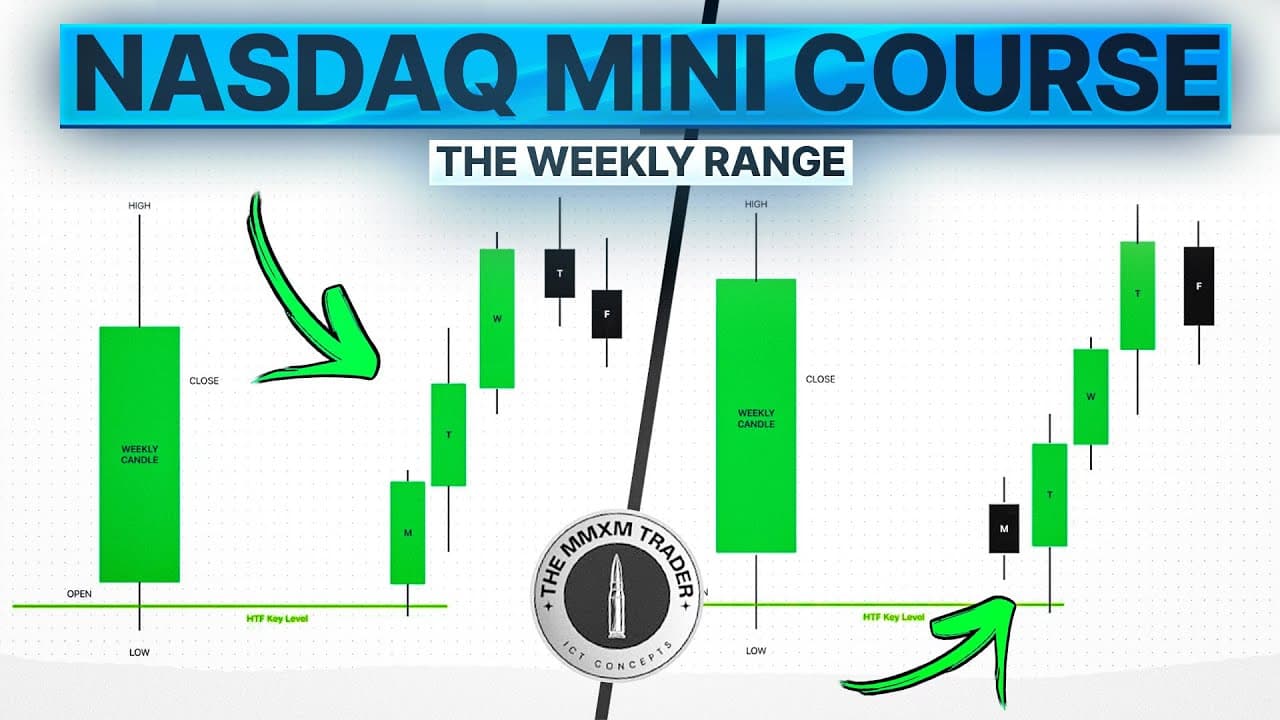
Learn to predict weekly candles using profiles and economic calendars.
Transcript
Read and summarize the transcript of this video on Glasp Reader (beta).
Key Insights
- Weekly profiles help traders anticipate market movements based on the economic calendar, identifying potential highs and lows of the week.
- Economic calendars are crucial for predicting days with significant volatility, allowing traders to prepare for potential market expansions.
- Understanding order pairing and changes in the state of delivery can signal when the market transitions from bearish to bullish or vice versa.
- Identifying key time frames, such as 4-hour and 1-hour charts, is essential for pinpointing changes in market delivery states.
- Weekly candle analysis involves looking for buy and sell stops to determine potential trading ranges and targets.
- Monday typically lacks high-impact news, making it a less favorable day for initiating trades, while subsequent days offer more opportunities.
- The change in the state of delivery is confirmed when the market closes above or below specific candle bodies, indicating a shift in market direction.
- Pairing time and price by matching economic events with market levels enhances the accuracy of predicting weekly market movements.
Install to Summarize YouTube Videos and Get Transcripts
Explore YouTube Video Summarizer or Get YouTube Transcript Extractor
Questions & Answers
Q: How do weekly profiles aid in predicting market movements?
Weekly profiles provide a framework for anticipating market movements by analyzing the economic calendar and identifying potential highs and lows. By understanding these profiles, traders can prepare for market expansions and contractions, aligning their strategies with expected volatility and key trading days.
Q: What role does the economic calendar play in trading?
The economic calendar is crucial in trading as it highlights days with significant news events that can impact market volatility. By aligning trading strategies with these events, traders can better anticipate market movements and position themselves to capitalize on potential expansions or contractions.
Q: How can traders identify changes in the state of delivery?
Traders can identify changes in the state of delivery by observing when the market closes above or below the bodies of specific candle collections. This closure signals a shift from bearish to bullish or vice versa, indicating a change in market direction and providing a cue for traders to adjust their strategies accordingly.
Q: Why is Monday often skipped for trading?
Monday is often skipped for trading because it typically lacks high-impact news events, resulting in insufficient data to anticipate the weekly profile accurately. Without significant market-moving news, Monday's trading can be less predictable, making it a less favorable day to initiate trades.
Q: What is the significance of order pairing in trading?
Order pairing is significant in trading as it involves identifying buy and sell stops to determine potential trading ranges and targets. By understanding the order flow and anticipating market movements, traders can strategically position themselves for profitable trades based on expected market expansions or contractions.
Q: How do time frames affect trading strategies?
Time frames, such as 4-hour and 1-hour charts, are crucial for identifying changes in market delivery states and pinpointing potential trading opportunities. By analyzing these time frames, traders can gain insights into market trends, helping them make informed decisions about entry and exit points for their trades.
Q: What is the importance of pairing time and price in trading?
Pairing time and price is important in trading as it involves aligning economic events with market levels to enhance prediction accuracy. By matching high-impact news events with key market levels, traders can better anticipate market movements and optimize their trading strategies for maximum profitability.
Q: How can traders use SMT in their strategies?
SMT, or Smart Money Techniques, involves analyzing market movements to identify potential trading opportunities. By understanding SMT, traders can recognize patterns and signals that indicate shifts in market direction, allowing them to strategically position themselves for profitable trades based on anticipated market trends.
Summary & Key Takeaways
-
This video explains how to use weekly profiles and economic calendars to predict the NASDAQ's weekly candle movements. By identifying key levels and understanding market delivery changes, traders can anticipate potential highs and lows for better trading strategies.
-
The content covers the importance of economic calendars in determining weekly profiles, emphasizing the significance of high-impact news days for predicting market expansions and contractions.
-
Key trading strategies are discussed, including using buy and sell stops, order pairing, and recognizing changes in the state of delivery to optimize weekly trading decisions.
Read in Other Languages (beta)
Share This Summary 📚
Summarize YouTube Videos and Get Video Transcripts with 1-Click
Try YouTube Summary with ChatGPT & Claude or YouTube Transcript Generator
Explore More Summaries from The MMXM Trader 📚
Summarize YouTube Videos and Get Video Transcripts with 1-Click
Try YouTube Summary with ChatGPT & Claude or YouTube Transcript Generator