airport lighting - you must know [atc for you]
TL;DR
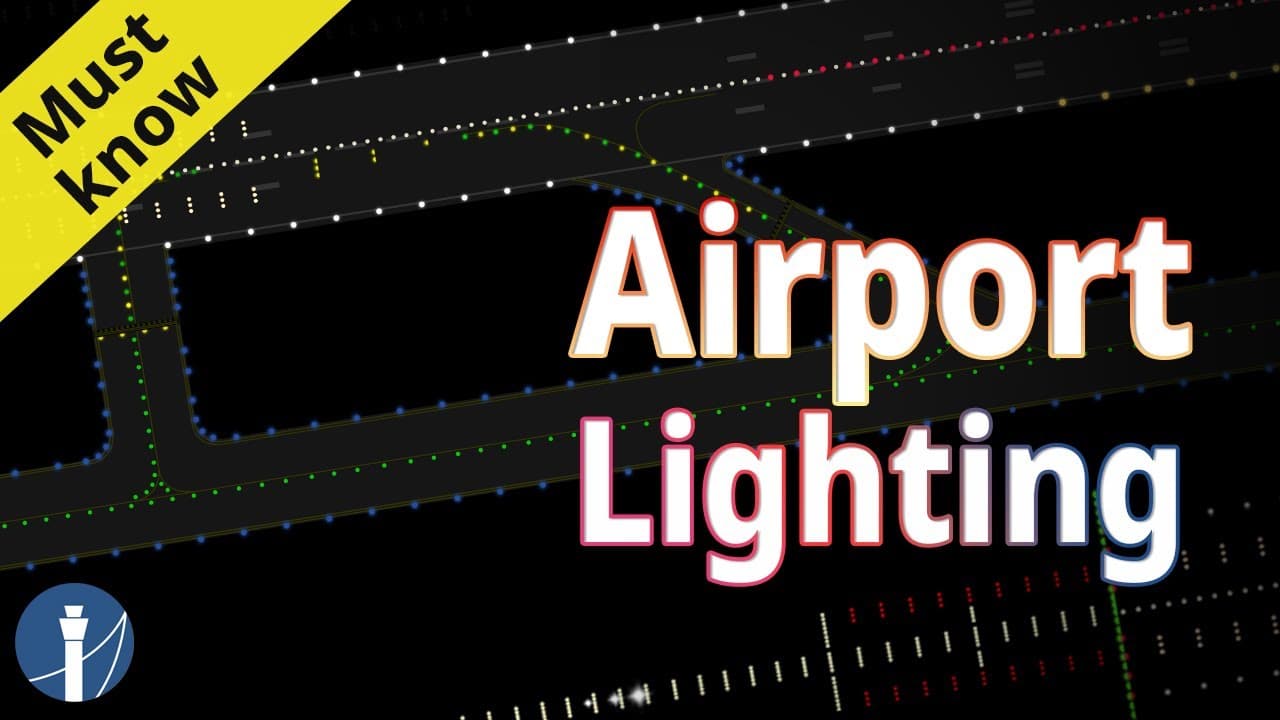
This video explains the various types of lighting systems used on runways, including edge lights, threshold lights, approach lighting systems, and in-pavement lights.
Transcript
The lighting system is the most helpful to the pilot in the dark of night, or in poor visibility due to fog, snow or rain. Today, let's look at the runway lighting system. Runway edge lights are used to outline the edges of runways. These lights shall be placed along the full length of the runway in two parallel rows equidistant from the centerline... Read More
Key Insights
- 🛫 The lighting system is crucial for pilots during dark or poor visibility conditions, such as fog or rain. It helps them navigate runways and taxiways safely.
- 🌙 Runway edge lights outline the edges of runways, with white lights along the full length. Caution zone lights are yellow, indicating caution during roll-out after landing.
- 🚧 Displaced runway areas have red and yellow lights to delineate the outline. Threshold lights emit green light outward to indicate the landing threshold to arriving aircraft, and red light inward for departing aircraft.
- 🚖 Taxiway edge lighting systems have blue lights to define the lateral limits of the taxiway or apron.
- ✈️ Precision Approach Path Indicator (PAPI) provides visual approach slope information with white and red lights. Landing pilots can determine their altitude relative to the ideal glide path.
- 🔦 Approach lighting systems assist pilots transitioning from instrument flight to visual flight for landing, with sequenced flashing lights and configurations installed at various lengths and shapes.
- 🛬 Runway End Identifier Lights (REIL) are synchronized flashing lights on each side of the runway threshold for rapid identification. Lead-In Lighting System provides guidance along challenging approach paths.
- 🚦 In-pavement lights are used for runway centerline, touchdown zone, taxiway center-line, runway guard lights, stop bar lights, and lead-on/off lights for visual guidance during different phases of operations.
Install to Summarize YouTube Videos and Get Transcripts
Explore YouTube Video Summarizer or Get YouTube Transcript Extractor
Questions & Answers
Q: What is the purpose of yellow lights in the caution zone of the runway?
In the caution zone, yellow lights replace white lights to indicate caution on roll-out after landing. This helps alert pilots to be careful during this phase of the landing process.
Q: How does the Precision Approach Path Indicator (PAPI) help pilots during landing?
The PAPI system provides visual approach slope information by projecting white and red lights along the desired descent path. Pilots can determine their altitude relative to the ideal glide path based on the number of white and red lights they see.
Q: What is the purpose of the approach lighting system?
The approach lighting system helps pilots transition from instrument flight to visual flight during landing. It provides a basic means of locating the runway and is especially important in low visibility conditions.
Q: What do Runway End Identifier Lights (REIL) do?
Runway End Identifier Lights are synchronized flashing lights located laterally on each side of the runway threshold. They provide rapid and positive identification of the runway's end, assisting pilots in identifying the correct landing location.
Q: What is the purpose of stop bar lights?
Stop bar lights provide a distinctive "stop" signal to anyone approaching a runway. They consist of unidirectional red lights on the taxiway pavement and elevated red lights on each side, serving as a visual indication to hold before entering the active runway.
Q: How do lead-on and off lights assist pilots?
Lead-on and off lights provide visual guidance to pilots entering or exiting the runway. Alternate green and yellow lights are installed from the taxiway center-line to runway center-line, helping pilots navigate this critical transition area.
Q: Why are rapid exit taxiway indicator lights installed?
Rapid exit taxiway indicator lights are installed to help pilots identify the location of these taxiways in low visibility conditions. They consist of unidirectional yellow lights and make it easier for pilots to locate and use rapid exit taxiways.
Summary & Key Takeaways
-
Runway edge lights are placed along the full length of the runway to outline its edges and provide visual guidance to pilots during takeoff and landing.
-
Threshold lights indicate the landing threshold to arriving aircraft and mark the end of the runway for departing aircraft.
-
Approach lighting systems help pilots transition from instrument flight to visual flight during landing, with sequenced flashing lights providing additional guidance.
Read in Other Languages (beta)
Share This Summary 📚
Summarize YouTube Videos and Get Video Transcripts with 1-Click
Try YouTube Summary with ChatGPT & Claude or YouTube Transcript Generator
Explore More Summaries from ATC FOR YOU 📚

Summarize YouTube Videos and Get Video Transcripts with 1-Click
Try YouTube Summary with ChatGPT & Claude or YouTube Transcript Generator