Health Benefits of Sauna Therapy & Cold Exposure with Dr. Rhonda Patrick
TL;DR
Sauna and cold exposure improve health, mood, and longevity.
Transcript
Read and summarize the transcript of this video on Glasp Reader (beta).
Key Insights
- Sauna therapy can significantly reduce stress and improve overall mood by enhancing the brain's sensitivity to endorphins through the release of dynorphin.
- Regular sauna use is linked to a lower risk of cardiovascular diseases and increased longevity, as demonstrated by a 20-year study on Finnish men.
- Heat shock proteins activated by sauna use help maintain protein structure, preventing diseases like Alzheimer's and cardiovascular issues.
- Foxo3, a gene activated by sauna and cold exposure, plays a key role in stress resistance, DNA repair, and overall longevity.
- Cold exposure significantly increases norepinephrine levels, enhancing mood, focus, and potentially aiding in the treatment of depression and ADHD.
- Cold exposure promotes mitochondrial biogenesis in adipose and muscle tissues, which aids in fat burning and improves aerobic capacity.
- There is no definitive evidence on whether transitioning from hot sauna to cold exposure negates health benefits, but norepinephrine levels increase synergistically.
- Cold exposure after endurance exercise may enhance performance, but it may hinder muscle hypertrophy if done after strength training.
Install to Summarize YouTube Videos and Get Transcripts
Explore YouTube Video Summarizer or Get YouTube Transcript Extractor
Questions & Answers
Q: What are the main health benefits of sauna therapy?
Sauna therapy offers several health benefits, including stress reduction, improved mood, and enhanced cardiovascular health. It activates heat shock proteins, which help maintain protein structure and prevent diseases. Regular sauna use is associated with lower cardiovascular disease risk and increased longevity, as shown in a Finnish study.
Q: How does cold exposure affect the brain and body?
Cold exposure significantly increases norepinephrine levels in the brain, which enhances mood, focus, and attention. It also promotes mitochondrial biogenesis in adipose and muscle tissues, aiding in fat burning and improving aerobic capacity. These effects make cold exposure beneficial for mental and physical health.
Q: What role do heat shock proteins play in longevity?
Heat shock proteins, activated by sauna use, play a critical role in longevity by maintaining the three-dimensional structure of proteins. This prevents protein aggregation, which is linked to neurodegenerative diseases. Heat shock proteins help repair damaged proteins, reducing the risk of diseases like Alzheimer's and cardiovascular issues.
Q: How does the Foxo3 gene contribute to aging and longevity?
The Foxo3 gene, activated by sauna and cold exposure, is a master regulator of genes involved in stress resistance, DNA repair, and cell death. It helps prevent mutations that could lead to cancer, clears senescent cells, and supports stem cell function, contributing to increased longevity and healthier aging.
Q: Can sauna and cold exposure be combined for better health effects?
While there's no definitive evidence on the combined effects of sauna and cold exposure, transitioning from hot to cold increases norepinephrine levels more than either alone. This suggests potential synergistic benefits, but more research is needed to fully understand the combined impact on health and longevity.
Q: What are the potential risks of sauna and cold exposure for people with heart conditions?
For individuals with pre-existing heart conditions, particularly those involving arterial plaque, transitioning from hot sauna to cold exposure may pose risks due to rapid vasodilation and vasoconstriction. It's important for such individuals to consult with healthcare professionals before engaging in these practices.
Q: How does cold exposure after exercise affect performance?
Cold exposure after endurance exercise can enhance performance by promoting mitochondrial biogenesis and reducing inflammation. However, it may hinder muscle hypertrophy if done immediately after strength training, as inflammation is crucial for muscle growth. Timing and type of exercise should be considered when using cold exposure.
Q: What are the effects of breathing techniques in the sauna?
While there's no specific research on breathing techniques in the sauna affecting hormone production, hyperventilation can influence epinephrine and norepinephrine release. These neurotransmitters affect mood and focus, suggesting that breathing techniques might enhance the sauna's stress response effects, though more research is needed.
Summary & Key Takeaways
-
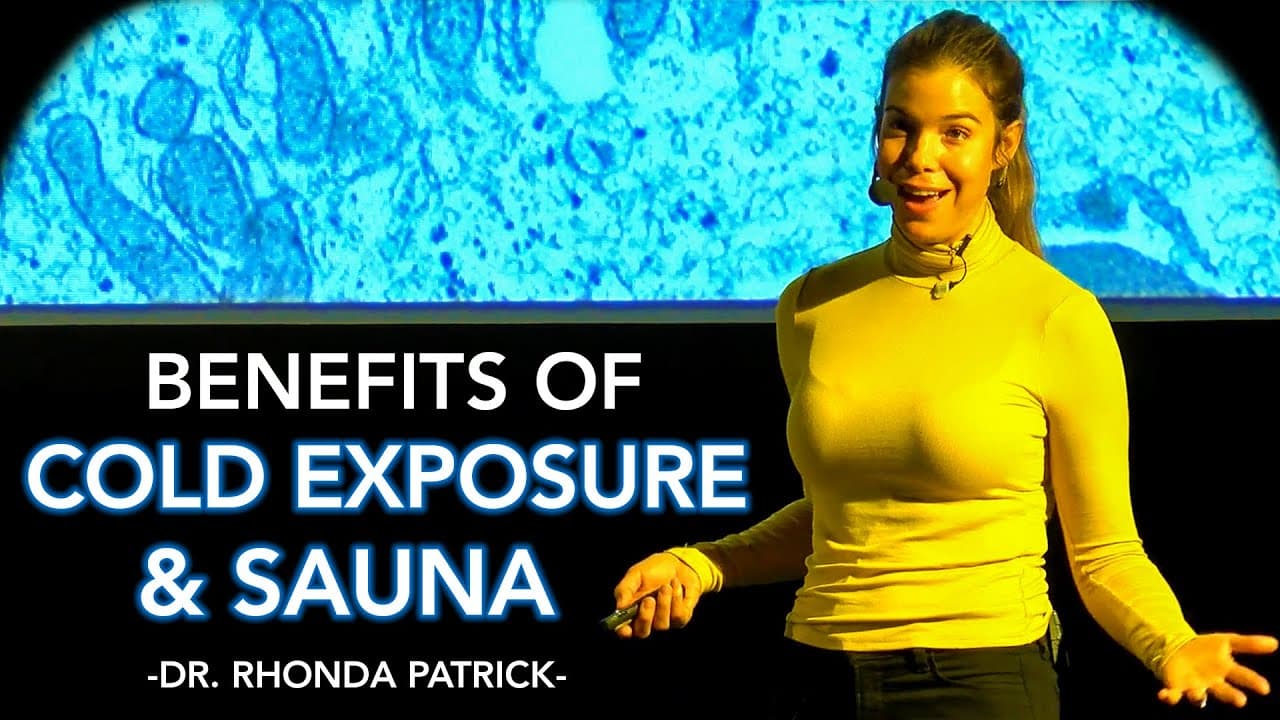
Dr. Rhonda Patrick discusses the health benefits of sauna and cold exposure, highlighting their roles in reducing stress, enhancing mood, and improving cardiovascular health. She explains how these practices activate genetic pathways that promote longevity and stress resistance.
-
Research indicates that regular sauna use can lower the risk of cardiovascular diseases and overall mortality. Heat shock proteins and the Foxo3 gene, activated by heat stress, play crucial roles in maintaining protein structure and enhancing longevity.
-
Cold exposure increases norepinephrine, improving mood and focus, and promotes mitochondrial biogenesis, aiding in fat burning and aerobic capacity. The combination of sauna and cold exposure may have synergistic effects, though more research is needed.
Read in Other Languages (beta)
Share This Summary 📚
Summarize YouTube Videos and Get Video Transcripts with 1-Click
Try YouTube Summary with ChatGPT & Claude or YouTube Transcript Generator