AI Hardware, Explained.
TL;DR
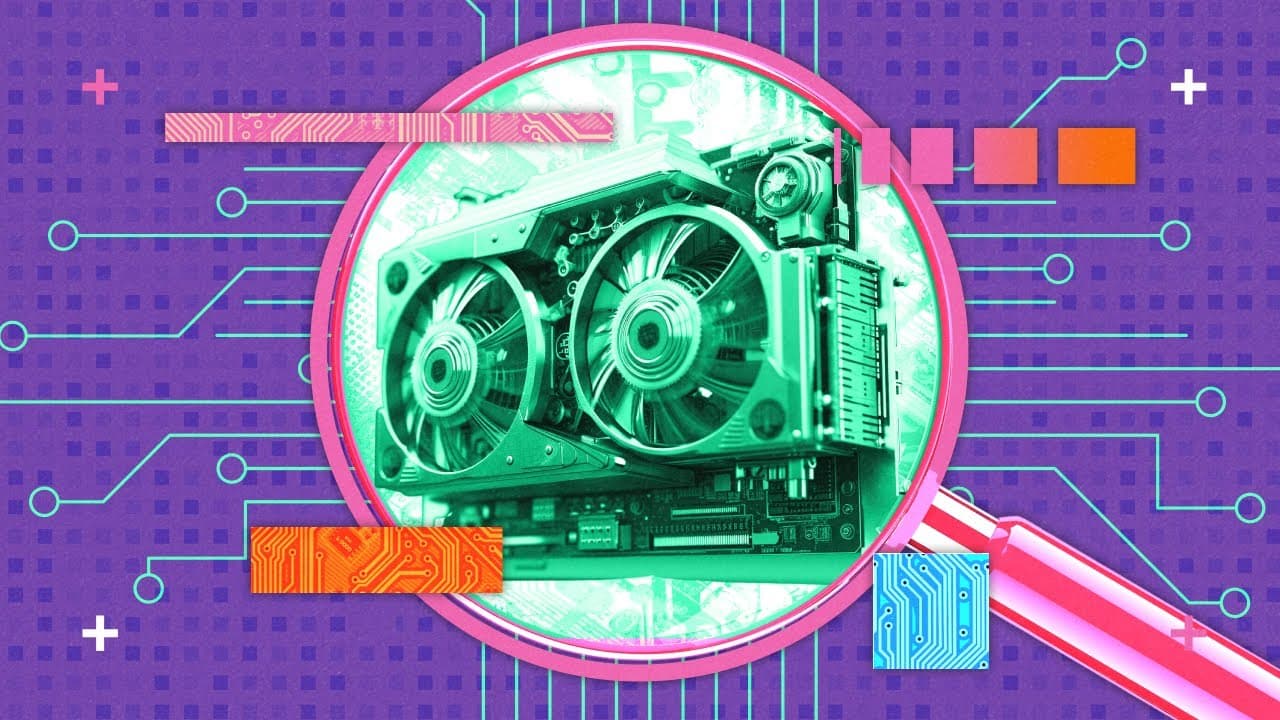
The demand for AI hardware is booming as software infiltrates every aspect of our lives, leading to a constant need for faster and more resilient hardware. This analysis explores the terminology, technology, and key players in the AI hardware industry.
Transcript
the most commonly used chips today are AI accelerators who would have thought that my gaming PC at my Bitcoin miner would eventually become a good AI engineer how do you see this industry moving forward that's a great question Moore's Law is actually still as of today Alive and Kicking right power is becoming an issue heat is becoming an issue and ... Read More
Key Insights
- 🏃 AI hardware, specifically AI accelerators like GPUs, is crucial for running AI algorithms efficiently.
- ❓ Nvidia currently dominates the AI hardware market due to its mature software ecosystem.
- 🥵 Power consumption and heat management are becoming critical issues in AI hardware design.
- 🐎 Moore's Law is still relevant, but the performance improvements are achieved through parallel processing rather than increased clock speeds.
- 🥺 Demand for AI hardware far exceeds supply, leading to constraints for even established AI companies.
- 🐿️ Other major players in the AI hardware market include Intel, Google, and Amazon, each with their own specialized chips.
- ❓ Optimization of AI models for specific hardware is essential for achieving optimal performance.
Install to Summarize YouTube Videos and Get Transcripts
Explore YouTube Video Summarizer or Get YouTube Transcript Extractor
Questions & Answers
Q: What are the most commonly used chips for AI applications?
The most commonly used chips for AI applications are AI accelerators, which are very similar to graphics chips. These chips, often referred to as GPUs, are designed to process a large number of math operations per cycle, making them highly performant for AI computations.
Q: How do GPUs differ from CPUs?
GPUs and CPUs can both perform parallel processing, but GPUs excel at it. Modern GPUs can perform over a hundred thousand instructions per cycle, whereas CPUs typically handle a few tens or thousands.
Q: Why does Nvidia have a strong position in the AI hardware market?
Nvidia has a strong position in the AI hardware market due to its mature software ecosystem. Developers can easily optimize their models for Nvidia chips, thanks to the well-established software tools and optimizations available.
Q: Is Moore's Law still relevant in the context of AI hardware?
Moore's Law, which states that the number of transistors in an integrated circuit doubles every two years, is still applicable to AI hardware. However, it is important to note that power consumption and heat management have become significant challenges as chips become more power-hungry and densely packed with transistors.
Summary
In this video, the speaker discusses the role of hardware in the AI industry. They explain how AI accelerators, such as GPUs, have become the most commonly used chips for AI algorithms. They explore the parallel processing capabilities of these chips and their importance in running large language and image models. The conversation also touches on the competition in the hardware ecosystem, with Nvidia currently leading the market. The speaker discusses the advancements in chip density and the impact of power consumption on hardware development. They also mention the ongoing relevance of Moore's Law in increasing chip density. The video concludes by highlighting the future challenges and opportunities in AI hardware, including the continued demand for high-performance chips and the relationship between compute capital and technological advancements.
Questions & Answers
Q: What are the most commonly used chips for AI algorithms today?
The most commonly used chips today for AI algorithms are AI accelerators, which are very similar to graphics chips. These accelerators, often referred to as GPUs (Graphics Processing Units), excel at parallel processing and can perform a large number of math operations per cycle.
Q: How do GPUs differ from CPUs in terms of parallelization?
While both CPUs and GPUs can perform parallel processing, GPUs are designed specifically for highly parallel workloads. CPUs can do tens or thousands of floating point operations per cycle, while modern AI GPUs can perform over a hundred thousand instructions per cycle.
Q: How are GPUs used in AI applications?
GPUs are used in AI applications as they are highly performant and can handle the intense computational requirements of AI models. These GPUs are installed in servers, which are large boxes that sit in data centers and perform the actual compute.
Q: What is the difference between a GPU and a TPU?
A GPU stands for Graphics Processing Unit, and it is very efficient at processing a large number of math operations per cycle. A TPU (Tensor Processing Unit), on the other hand, is a chip specifically designed for processing tensors and performing matrix multiplication. TPUs are often used for running large language and image models in generative AI.
Q: Who are the key players in the AI hardware space?
Nvidia is currently a dominant player in the AI hardware space, with their GPUs being widely used for AI applications. However, other companies like Intel, AMD, Google, and Amazon are also developing their own chips for AI. Nvidia has an advantage due to its mature software ecosystem, which is more optimized for AI models.
Q: How do different AI chips compare in terms of performance?
In terms of pure hardware statistics, there are chips competitive with Nvidia's offerings. However, Nvidia's advantage lies in its mature software ecosystem, which allows for easy optimization of AI models. Other chips may require more manual optimization, giving Nvidia a strategic advantage in the market.
Q: Is Moore's Law still relevant for chip density?
Yes, Moore's Law is still relevant as chip density continues to increase. However, there are additional challenges, such as increasing power consumption and heat generation. While chip density is still increasing, individual cores are not running faster. This necessitates the use of parallel processing to achieve higher performance.
Q: What challenges does increasing power consumption pose in AI hardware?
Increasing power consumption in AI hardware leads to higher energy densities and generates more heat. This trend requires novel cooling solutions to prevent overheating. Graphics cards, for example, may now require liquid cooling due to their high energy densities.
Q: How does the demand for AI hardware outstrip supply?
The demand for AI hardware, especially high-performance chips, currently exceeds the available supply. Many AI companies are facing hardware constraints, and some reputable sources indicate that the demand for AI hardware outstrips supply by a factor of 10.
Q: What factors impact competition and cost in the AI hardware industry?
Competition in the AI hardware industry is influenced by factors such as chip performance, software optimization, and the maturity of the hardware ecosystem. Nvidia currently holds a strong position due to its mature software ecosystem. Cost is also a significant consideration, and the relationship between compute capital and technological advancements plays a crucial role in determining the cost of AI hardware.
Takeaways
The AI industry heavily relies on hardware, with AI accelerators like GPUs serving as the most commonly used chips. These accelerators excel at parallel processing, which is crucial for running large AI models. Companies like Nvidia dominate the market due to their mature software ecosystem. While Moore's Law is still relevant for increasing chip density, power consumption and heat generation have become significant challenges. Increasing demand for AI hardware has led to supply constraints. The competition in the industry is influenced by factors like chip performance and software optimization. The cost of AI hardware is determined by the relationship between compute capital and technological advancements.
Summary & Key Takeaways
-
The software is becoming more important than ever, which increases the significance of hardware that runs the underlying computation.
-
The demand for AI hardware outstrips supply by a factor of 10, and even established AI companies are facing hardware constraints.
-
This mini-series aims to cover various aspects of AI hardware, including terminology, technology, supply and demand mechanics, ownership options, and costs.
Read in Other Languages (beta)
Share This Summary 📚
Summarize YouTube Videos and Get Video Transcripts with 1-Click
Try YouTube Summary with ChatGPT & Claude or YouTube Transcript Generator
Explore More Summaries from The a16z Podcast 📚






Summarize YouTube Videos and Get Video Transcripts with 1-Click
Try YouTube Summary with ChatGPT & Claude or YouTube Transcript Generator