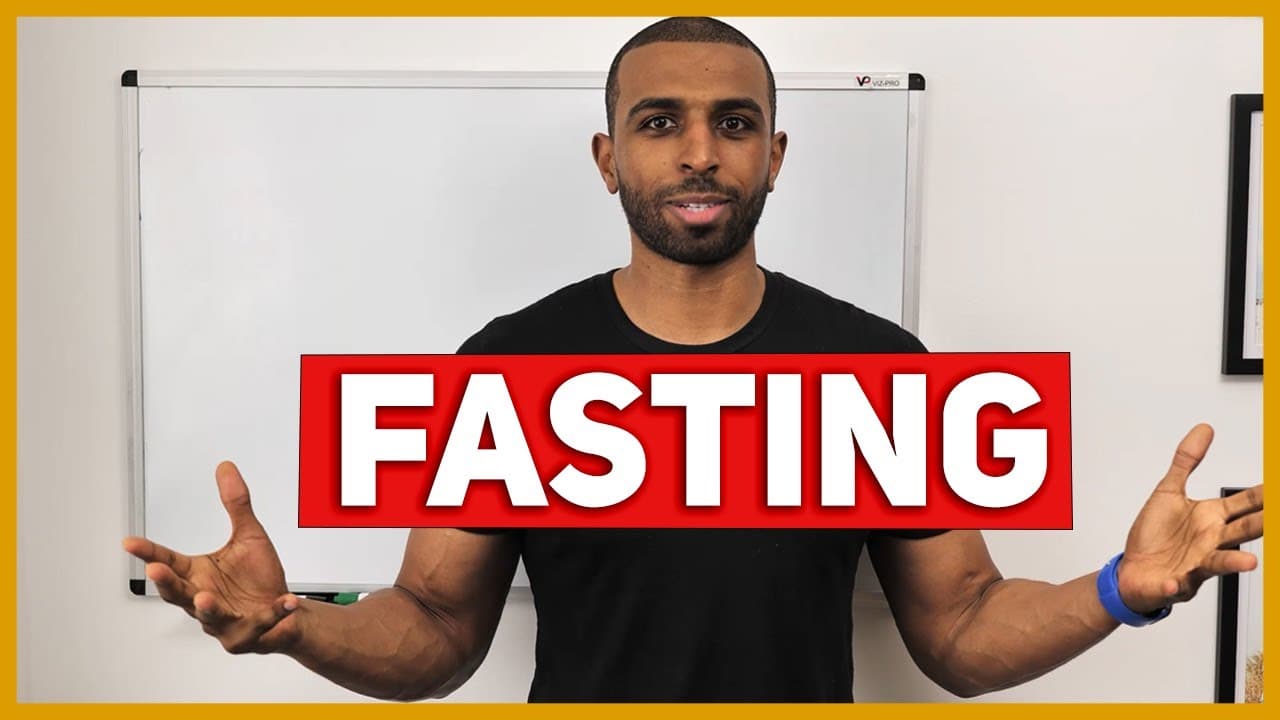
Fasting Skyrockets Your Gains? *STUDIES CITED*
TL;DR
Fasting can aid fat loss but has limitations for muscle building.
Transcript
what's up guys myron gaines here going to talk to you guys today about fasting i know you've heard a lot of things about it is it good is it bad well i'm going to tell you guys what the science says we're going to take an objective look at it all right so what is fasting fasting guys is basically a prolonged period where you're not consuming any ca... Read More
Key Insights
- 💨 Fasting is defined as a purposeful period of calorie abstention, with variations that serve different goals.
- 😅 Intermittent fasting can complicate muscle-building efforts due to challenges in protein intake during limited eating windows.
- 👨 Achieving a calorie deficit is paramount for fat loss, with multiple diets being effective as long as this principle is applied.
- 💨 Autophagy is a common goal among those fasting, but it can also be achieved through regular dieting paired with exercise.
- 🖐️ The psychological aspect of dieting plays a significant role in adherence, with intermittent fasting potentially reducing hunger perception.
- 🍉 There are numerous approaches to dieting, but no one-size-fits-all solution exists; personal preference is crucial for long-term success.
- 👻 The effectiveness of any dietary method is enhanced if it aligns with the individual's lifestyle and allows for consistent adherence.
Install to Summarize YouTube Videos and Get Transcripts
Explore YouTube Video Summarizer or Get YouTube Transcript Extractor
Questions & Answers
Q: What is the scientific definition of fasting?
Fasting is essentially a deliberate abstention from calorie consumption for a specified duration, which can range from several hours to days. This practice can be driven by various motivations, including health benefits, weight loss, or religious observances. Understanding the duration and intention behind fasting is crucial for discussing its benefits and limitations.
Q: Can intermittent fasting lead to muscle gain?
Yes, intermittent fasting can facilitate muscle gain, but it's generally more challenging. Research indicates that muscle-building, or anabolic signaling, is most effective with 3-5 protein-rich meals distributed throughout the day. In contrast, the restricted eating window of intermittent fasting can make it difficult to meet protein requirements for optimal muscle growth.
Q: Is human growth hormone (HGH) anabolic in relation to fasting?
Contrary to popular belief, human growth hormone (HGH) is not anabolic. While fasting can trigger an acute HGH response due to stress on the body, this does not equate to being anabolic. The notion that fasting leads to enhanced muscle gains through HGH is misleading since fasting alone does not promote muscle building.
Q: How does fasting relate to fat loss?
The effectiveness of fasting for fat loss primarily hinges on achieving a calorie deficit. Regardless of the method—be it intermittent fasting, keto, or otherwise—what truly impacts fat loss is the balance of calories consumed versus calories burned. This means individuals can derive benefits from fasting, but it is not uniquely superior to other dietary strategies.
Q: Does fasting promote autophagy more effectively than other diets?
No, autophagy can be induced through regular calorie restriction and exercise, not exclusively through fasting. While proponents of fasting often tout its autophagic benefits, evidence suggests that creating a calorie deficit, regardless of method, can achieve similar results. Therefore, fasting should not be considered a unique pathway to autophagy.
Q: Is there a "best" diet for everyone?
There is no singular "best" diet that suits everyone; the most effective diet is the one that an individual can consistently adhere to. Success with any dietary approach, including intermittent fasting or traditional calorie restriction, largely depends on personal preferences, lifestyle, and individual goals.
Q: What are the psychological benefits of intermittent fasting?
Intermittent fasting may suppress hunger, which in turn can facilitate better adherence to a caloric deficit. Studies suggest that limiting eating to specific windows can naturally regulate intake without the individual constantly having to monitor and track calories, making the dieting process potentially less stressful and easier to follow.
Summary & Key Takeaways
-
Fasting is defined as a deliberate period of not consuming calories, which can serve various purposes such as health or religious reasons.
-
While intermittent fasting can help with fat loss, it may hinder muscle building due to difficulties in achieving optimal protein intake within a limited eating window.
-
Key factors in fat loss are maintaining a calorie deficit and prioritizing protein intake regardless of the specific dietary method chosen.
Read in Other Languages (beta)
Share This Summary 📚
Summarize YouTube Videos and Get Video Transcripts with 1-Click
Try YouTube Summary with ChatGPT & Claude or YouTube Transcript Generator
Explore More Summaries from FreshandFit 📚

Summarize YouTube Videos and Get Video Transcripts with 1-Click
Try YouTube Summary with ChatGPT & Claude or YouTube Transcript Generator