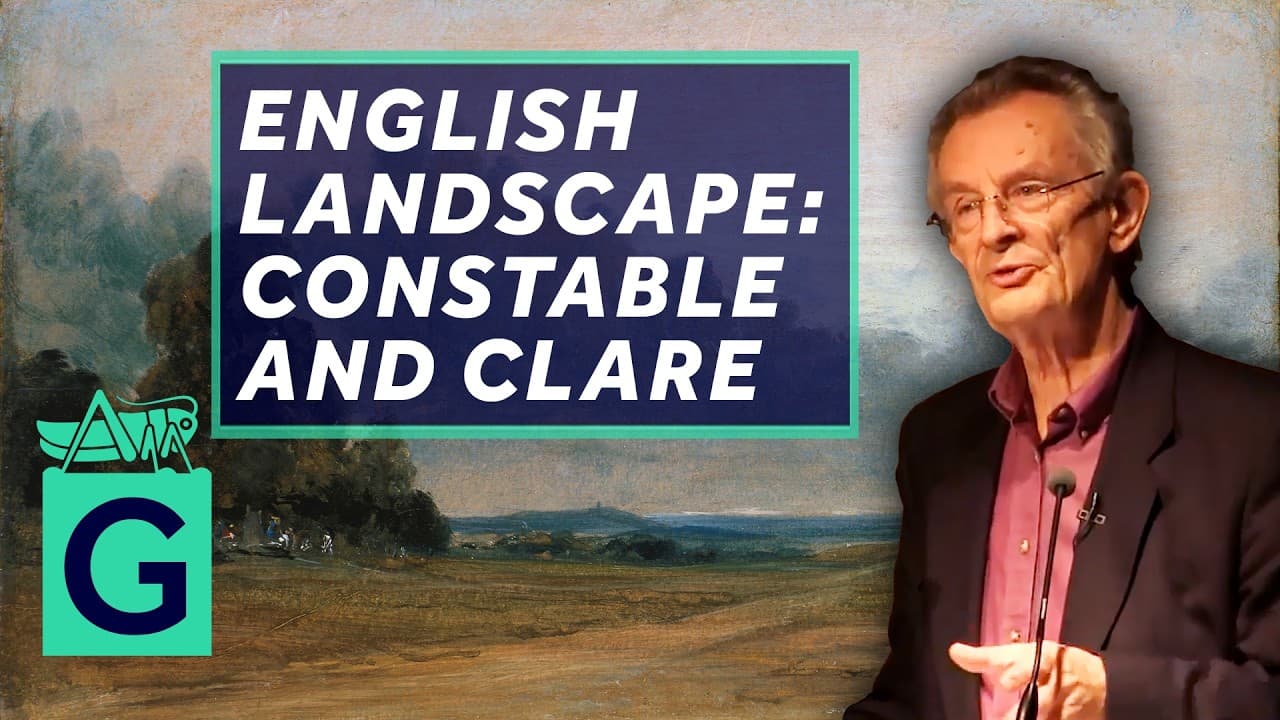
English Landscape: Constable and Clare - Professor Malcolm Andrews
TL;DR
This content explores the pioneering rethinking of English landscape in the early 19th century by painter John Constable and poet John Clare, highlighting their focus on local attachment and the incorporation of rough textures.
Transcript
we're now moving forward to concentrate on the period following the Napoleonic Wars the late teens the 1820s and the early 1830s and the theme for this lecture is the pioneering rethinking of English landscape and its relation to European models in the work of the painter John Constable and third John Clare back in 1770 Thomas Gainsborough remarked... Read More
Key Insights
- 💝 The Dutch and Flemish landscape traditions had a significant influence on English landscape painters in the late 18th and early 19th centuries.
- 🖐️ The concept of the picturesque, which celebrated rough textures and neglected scenes, played a crucial role in directing the artistic preferences of painters like Constable and poets like Clare.
- 💅 Both Constable and Clare sought to capture the distinctiveness and beauty of English landscape by prioritizing local attachment and personal associations.
Install to Summarize YouTube Videos and Get Transcripts
Explore YouTube Video Summarizer or Get YouTube Transcript Extractor
Questions & Answers
Q: What European landscape traditions influenced English painters and poets in the late 18th and early 19th centuries?
The Dutch and Flemish landscape traditions were particularly influential in shaping the work of English landscape artists during this period. Artists like Gainsborough, Constable, and the painters of the Norwich school drew inspiration from the textured, rugged scenery of the Low Countries.
Q: How did John Constable and John Clare incorporate the European landscape traditions into their work?
While neither Constable nor Clare traveled abroad to personally experience Mediterranean scenery, they were familiar with the landscape traditions that came from there. Constable aimed to capture the freshness and rough textures of English landscape in his paintings, while Clare celebrated the neglected and overlooked aspects of rural scenery.
Q: What is the significance of the concept of the picturesque in the work of Constable and Clare?
The picturesque, a term popularized in the late 18th century, refers to a preference for rough, textured landscapes and objects that evoke a sense of romantic decay. Constable and Clare both embraced this concept, emphasizing the beauty of neglected, everyday scenes in English landscape.
Q: How did Constable and Clare challenge the traditional hierarchy of landscape painting?
Constable and Clare prioritized local attachment and personal associations with the English countryside over the conventional standards of beauty set by Mediterranean painters. Their focus on depicting the rough textures and unique character of English landscape helped elevate the status of native scenery and challenge traditional notions of landscape painting.
Summary & Key Takeaways
-
The content discusses the influence of European landscape traditions on English painters and poets in the late 18th and early 19th centuries.
-
It emphasizes the importance of the Dutch and Flemish landscape traditions in shaping the work of influential English landscape artists like Gainsborough, Constable, and the painters of the Norwich school.
-
The content explores the concept of the picturesque and its significance in directing the artistic preferences of Constable and Clare.
Read in Other Languages (beta)
Share This Summary 📚
Summarize YouTube Videos and Get Video Transcripts with 1-Click
Try YouTube Summary with ChatGPT & Claude or YouTube Transcript Generator
Explore More Summaries from Gresham College 📚


Summarize YouTube Videos and Get Video Transcripts with 1-Click
Try YouTube Summary with ChatGPT & Claude or YouTube Transcript Generator