Quantum Computing Breakthrough
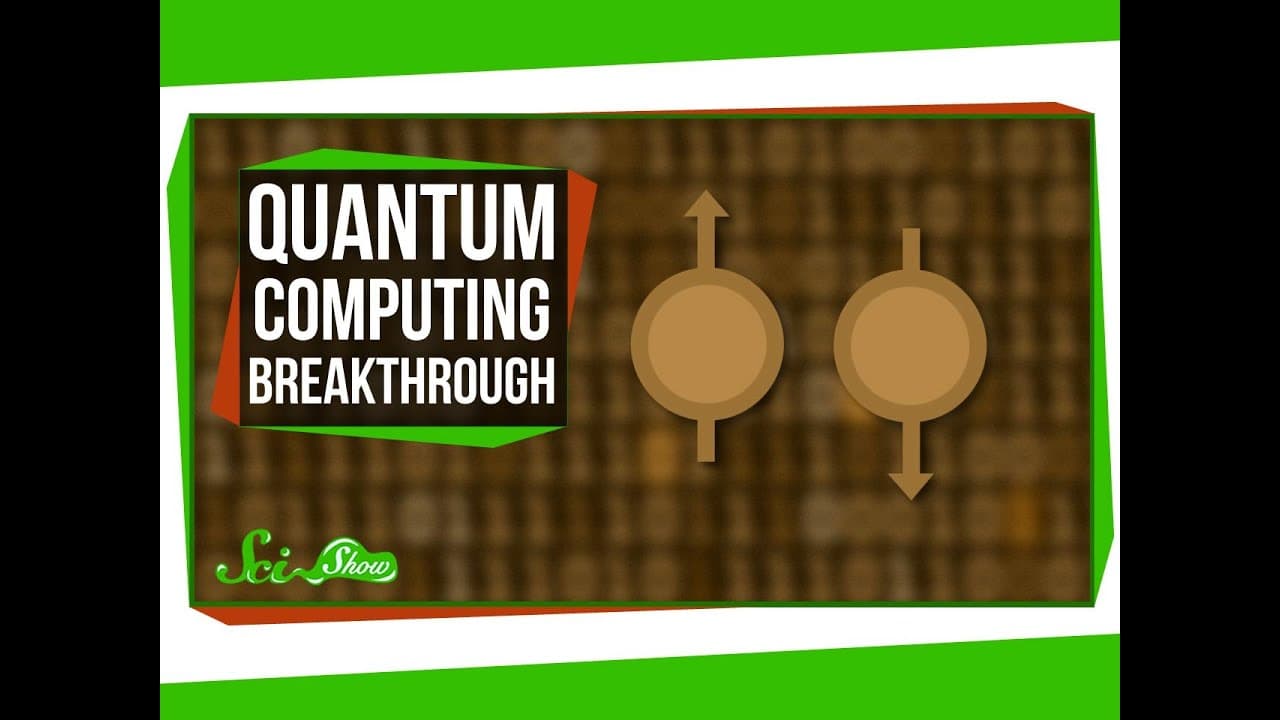
TL;DR
Researchers at the University of New South Wales have developed a quantum logic circuit using silicon, paving the way for the development of quantum computers that can perform multiple computations simultaneously.
Transcript
If you are among the group of people who either are really into quantum physics, or people who have used a computer, there's some big news this week. But it took place on a very small scale. researchers at the University of New South Wales in Sydney, have just created a kind of quantum logic circuit out of silicon, clearing the way for actual -were... Read More
Key Insights
- 👷 Researchers at the University of New South Wales have developed a quantum logic circuit using silicon, a breakthrough that could enable the construction of quantum computers.
- 🎭 Quantum computers have the potential to revolutionize industries such as drug discovery by performing multiple computations simultaneously.
- 🖱️ Quantum computers use qubits instead of bits, which can be in multiple states simultaneously due to quantum superposition.
- 💁 The quantum logic circuit created by the researchers involves trapping and manipulating single electrons to store and transfer information.
- 😤 The team has patented their design and plans to scale it up from two qubits to potentially millions.
- 🏛️ The technology for building actual circuits with qubits is currently challenging.
- 💻 Quantum computers have the capability to outperform classical computers in solving complex problems.
Install to Summarize YouTube Videos and Get Transcripts
Explore YouTube Video Summarizer or Get YouTube Transcript Extractor
Questions & Answers
Q: What is the significance of the quantum logic circuit developed by researchers at the University of New South Wales?
The quantum logic circuit made from silicon enables the development of quantum computers, which have the potential to revolutionize various industries by performing multiple computations simultaneously.
Q: How do quantum computers differ from classical computers?
Quantum computers use quantum bits (qubits) that can be in multiple states simultaneously, whereas classical computers use bits that can only be in one state (either 0 or 1) at a time.
Q: In what way can quantum computers accelerate drug discovery?
Quantum computers can simultaneously test all possible outcomes of different chemical combinations, making the discovery of new drug treatments much faster and more efficient.
Q: How do qubits work in a quantum computer?
Qubits can be in multiple states at once, thanks to a property called quantum superposition. They can have different values simultaneously, allowing for parallel processing and increased computational power.
Summary & Key Takeaways
-
Researchers at the University of New South Wales have created a quantum logic circuit using silicon, which allows for the construction of quantum computers.
-
Quantum computers have the potential to revolutionize industries such as drug discovery, as they can test multiple outcomes simultaneously.
-
Quantum computers use quantum bits (qubits) that can be in multiple states simultaneously, unlike traditional bits in a classical computer.
Read in Other Languages (beta)
Share This Summary 📚
Summarize YouTube Videos and Get Video Transcripts with 1-Click
Try YouTube Summary with ChatGPT & Claude or YouTube Transcript Generator
Explore More Summaries from SciShow 📚


Summarize YouTube Videos and Get Video Transcripts with 1-Click
Try YouTube Summary with ChatGPT & Claude or YouTube Transcript Generator