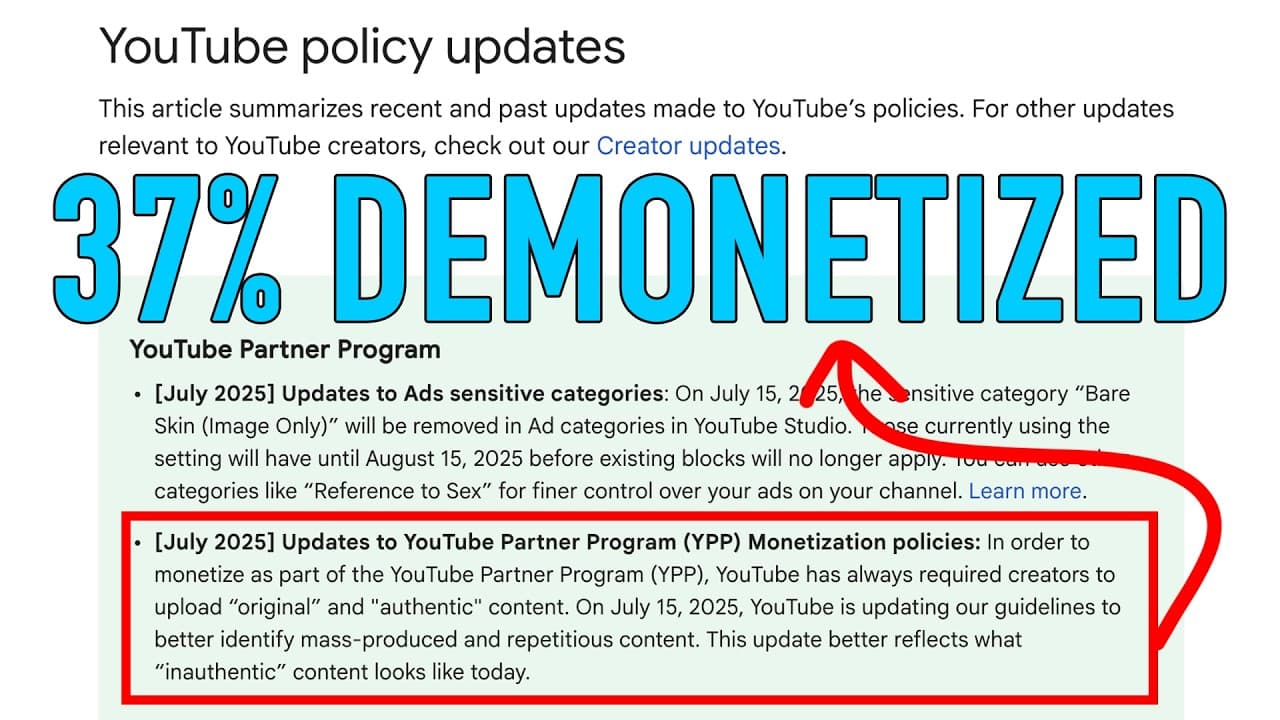
37% of Channels DEMONETIZED; Here's What You Should Do (July 2025)
TL;DR
YouTube updates guidelines to curb inauthentic and repetitious content.
Transcript
Read and summarize the transcript of this video on Glasp Reader (beta).
Key Insights
- YouTube's new policy, effective July 15, 2025, aims to better identify and manage mass-produced and repetitious content to ensure originality and authenticity.
- The policy emphasizes the need for transformative content, meaning creators must add new value or perspective rather than just reusing existing material.
- AI-generated content is not inherently problematic, but low-quality AI scripts that lack originality or are derivative of existing sources may face scrutiny.
- YouTube is likely to use AI technology to detect inauthentic content, focusing on repetitive structures, text-to-speech, and other easily identifiable patterns.
- Creators using one-image or black screen videos, particularly in the sleep content niche, may face demonetization unless they incorporate dynamic visual elements.
- Despite fears, the policy change presents new opportunities for high-quality content creators, as many low-quality channels may be removed from monetization.
- Gurus and content creators may exploit these changes to sell courses or tools, often exaggerating the impact to create a sense of urgency among viewers.
- The policy change is not expected to significantly impact long-form content or shorts that incorporate original commentary or voiceovers.
Install to Summarize YouTube Videos and Get Transcripts
Explore YouTube Video Summarizer or Get YouTube Transcript Extractor
Questions & Answers
Q: What is the main focus of YouTube's new content policy?
The main focus of YouTube's new content policy is to better identify and manage mass-produced and repetitious content, ensuring that content is original and transformative. This means creators must add new value or perspective to their content rather than merely reusing existing material.
Q: How will AI-generated content be affected by the new policy?
AI-generated content is not inherently problematic under the new policy, but low-quality AI scripts that lack originality or derive from existing sources may face scrutiny. YouTube is likely to use AI tools to detect inauthentic content, focusing on repetitive structures and easily identifiable patterns.
Q: What types of content are most at risk of demonetization?
Content most at risk of demonetization includes one-image or black screen videos, particularly in the sleep content niche, unless they incorporate dynamic visual elements. Additionally, low-quality AI-generated scripts and repetitious content that lack originality may also face demonetization.
Q: What opportunities does the policy change present for creators?
The policy change presents opportunities for high-quality content creators, as many low-quality channels may be removed from monetization. This creates a less saturated market for those who produce original and transformative content, allowing them to capture a larger audience share.
Q: How might some creators exploit the policy change?
Some creators, particularly those selling courses or tools, might exploit the policy change by exaggerating its impact to create a sense of urgency among viewers. This tactic is often used to scare viewers into purchasing solutions or mentorship programs that claim to navigate the policy changes.
Q: Will long-form content be affected by the new policy?
Long-form content is not expected to be significantly affected by the new policy, as long as it remains original and transformative. The focus is on ensuring content adds value and is not merely a repetition of existing material, which aligns with the principles of quality long-form content.
Q: What is the role of AI in YouTube's new content policy enforcement?
AI plays a crucial role in YouTube's new content policy enforcement by detecting inauthentic content. The platform is likely to use AI tools to identify repetitive structures, text-to-speech, and other patterns that signify low-quality or derivative content, ensuring compliance with the new guidelines.
Q: How can creators ensure their content remains monetized under the new policy?
Creators can ensure their content remains monetized by focusing on originality and transformation. This includes using high-quality scripts, incorporating dynamic visual elements, and ensuring content adds new value or perspective. Avoiding repetitive patterns and low-quality AI-generated content will also help maintain monetization.
Summary & Key Takeaways
-
YouTube is updating its content guidelines to address issues of mass-produced and repetitious content, effective July 15, 2025. The focus is on ensuring content is both original and transformative, discouraging the reuse of existing material without adding value.
-
AI-generated content is not banned, but creators must ensure scripts are high-quality and not derivative of existing sources. YouTube may use AI tools to detect inauthentic content, focusing on repetitive patterns and low-quality text-to-speech.
-
The policy presents opportunities for quality content creators as low-quality channels may be demonetized. Despite fears, the change is manageable with dynamic content strategies, and some may exploit the situation to sell courses or tools.
Read in Other Languages (beta)
Share This Summary 📚
Summarize YouTube Videos and Get Video Transcripts with 1-Click
Try YouTube Summary with ChatGPT & Claude or YouTube Transcript Generator
Explore More Summaries from Eddie Eizner Unfiltered 📚
![How to make $9,137/month with faceless YouTube Channels [2 HOUR COURSE] thumbnail](/_next/image?url=https%3A%2F%2Fi.ytimg.com%2Fvi%2FXqxZxodjs6A%2Fhqdefault.jpg&w=750&q=75)
Summarize YouTube Videos and Get Video Transcripts with 1-Click
Try YouTube Summary with ChatGPT & Claude or YouTube Transcript Generator