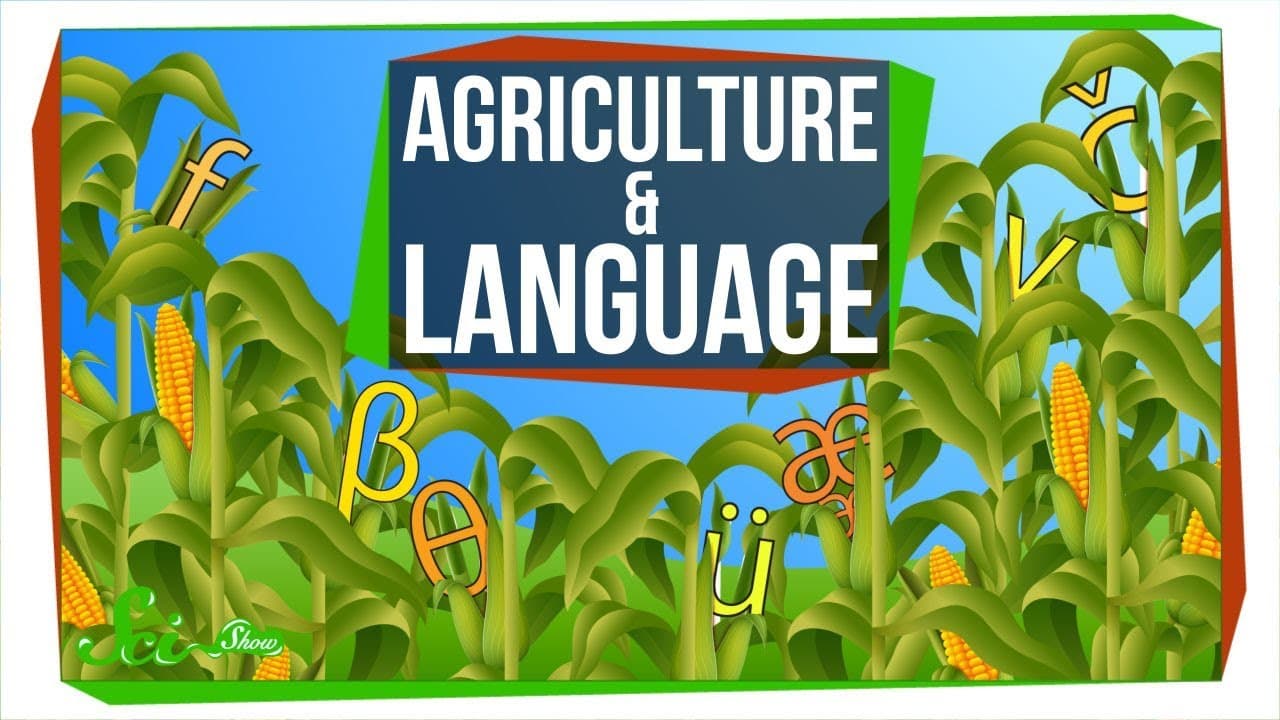
Agriculture May Have Changed How People Speak | SciShow News
TL;DR
A recent study suggests that the development of certain sounds in human language, such as "f" and "v," may be linked to changes in our diet.
Transcript
Thank you to Brilliant for sponsoring this whole week of SciShow! [ ♪ Intro ] Humans have been talking to each other for hundreds of thousands of years. And for the most part, researchers have assumed we’ve all been making the same basic sounds, no matter what language we’re speaking. We’re all working with the same equipment, after all. But a new ... Read More
Key Insights
- 👂 Humans have been assumed to share the same basic sounds in language, but new research suggests that certain sounds may have only developed in the last 10,000 years.
- 👂 Changes in bite, influenced by diet, may be responsible for the development of certain sounds, such as labiodentals.
- 😮 Archaeological evidence supports the idea that changes in bite have occurred after the rise of agriculture.
- 🔊 Statistical models show that societies with softer diets have a higher occurrence of labiodental sounds in their languages.
- 🧑🏭 The study highlights the importance of considering physiological factors, such as diet, in understanding language development.
- 🍻 However, caution is necessary to avoid perpetuating ethnocentrism or racism when linking language differences to physical differences.
- 💱 The study's findings provide further support for the hypothesis that changes in diet can impact language development.
Install to Summarize YouTube Videos and Get Transcripts
Explore YouTube Video Summarizer or Get YouTube Transcript Extractor
Questions & Answers
Q: How does a change in diet affect language development?
According to the new study, a change in diet, specifically the transition from tougher, fibrous foods to softer foods, can impact the development of certain sounds in human language. This is because the alignment of our teeth and jaws affects our ability to produce certain sounds, such as labiodentals like "f" and "v."
Q: Is there evidence to support the link between diet and language development?
Yes, the study used a 3D simulation of the human mouth and jaw to demonstrate that an overbite, which is more common in societies with softer diets, makes it easier to produce labiodental sounds. Additionally, statistical models showed that agricultural societies, with softer diets, had a significantly higher occurrence of labiodental sounds compared to hunter-gatherer societies.
Q: Was this hypothesis supported by previous research?
Initially, the hypothesis proposed by Charles Hockett in 1985 faced skepticism from the scientific community. However, later research has demonstrated that changes in bite as a result of wear from tougher foods are indeed possible, and the rise of overbites coincided with the rise of agriculture.
Q: Are there any potential criticisms of the study's findings?
Some criticisms include concerns about overstating the influence of diet on language development and the assumption that agriculture is a reliable indicator of a society's diet. Additionally, tracing language differences to physical differences can lead to ethnocentrism or racism if not approached with care.
Summary & Key Takeaways
-
Researchers have long assumed that all languages share the same basic sounds, but a new study suggests that some sounds may have only developed in the last 10,000 years as a result of changes in our diet.
-
Linguist Charles Hockett proposed the hypothesis that differences in language may be influenced by the way our food affects our bite, specifically the absence of labiodental sounds in hunter-gatherer languages.
-
Archaeological evidence now supports the idea that changes in our bite, as a result of softer foods from agriculture, have occurred, but further research is needed to fully establish a connection between changes in bite and language.
Read in Other Languages (beta)
Share This Summary 📚
Summarize YouTube Videos and Get Video Transcripts with 1-Click
Try YouTube Summary with ChatGPT & Claude or YouTube Transcript Generator
Explore More Summaries from SciShow 📚
Summarize YouTube Videos and Get Video Transcripts with 1-Click
Try YouTube Summary with ChatGPT & Claude or YouTube Transcript Generator