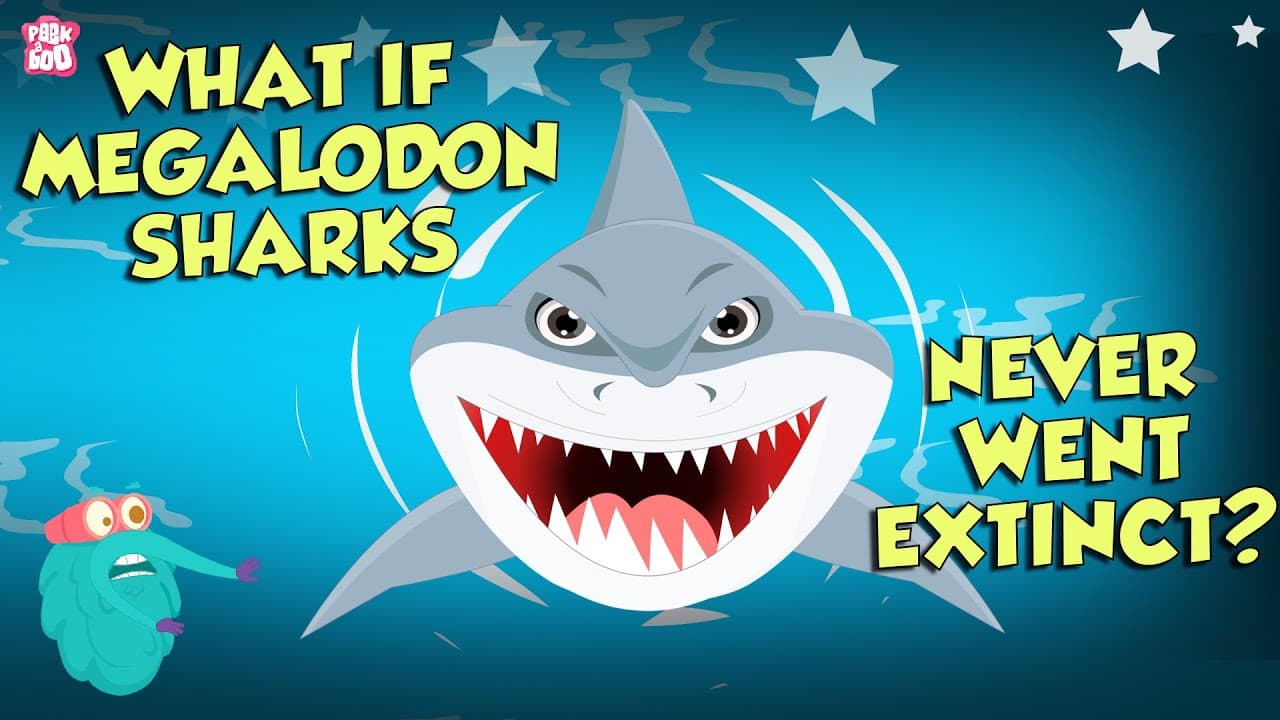
What If Megalodon Sharks Never Went Extinct? | The Megalodon | The Dr Binocs Show | Peekaboo Kidz
TL;DR
If megalodon sharks never went extinct, humans would be at risk of being attacked, the ocean's fish supply would be depleted, and megalodons would thrive and reproduce in the warming climate.
Transcript
papa hey friends as you can see this jaw does not belong to any ordinary shark but to the biggest predator that ever swam in the oceans that is none other than the megalodon that went extinct ages ago so in today's episode let us bring them back and explore a jaw-dropping question what if megalodon sharks never went extinct zoom in sharks have alwa... Read More
Key Insights
- 📺 The current versions of sharks are nowhere near the size and power of the megalodon, which was the largest predator to swim in the oceans.
- 🦈 Megalodons had a diverse diet, including dolphins, other sharks, and humpback whales, and needed to eat a large amount of food to sustain their size.
- 🌡️ Megalodons went extinct 3.6 million years ago, and the exact reasons behind their extinction are still unclear, but theories suggest changing temperatures and food sources may have played a role.
- 🔍 Despite claims of megalodon sightings, there is no evidence to confirm their continued presence, apart from prehistoric teeth.
- 🏖️ If megalodons had never gone extinct, swimming in the ocean would have been extremely dangerous due to their large size and appetite.
- 🐠 The increase in megalodon population would have resulted in a decrease in fish populations, impacting the ecosystem.
- 🌡️ The warming of ocean temperatures would have created an ideal environment for megalodons to thrive and reproduce.
- 👑 Female megalodons may have been twice as large as males, highlighting the size disparity within the species.
Install to Summarize YouTube Videos and Get Transcripts
Explore YouTube Video Summarizer or Get YouTube Transcript Extractor
Questions & Answers
Q: What are the theories behind the extinction of megalodon sharks?
Scientists have suggested that megalodons went extinct due to either an inability to adapt to changing temperatures or a lack of food sources and increased competition. However, the exact reason remains uncertain.
Q: Why haven't we found any evidence of megalodons if they never went extinct?
Despite claims of sightings, there has been no conclusive evidence of living megalodons. The absence of skeletons or evidence of their presence in the form of bite marks on other marine species suggests that they did, in fact, go extinct.
Q: How would humans be affected if megalodons never went extinct?
If megalodons were still alive, humans entering the ocean would be at risk of being attacked by these giant creatures. The daily food requirements of megalodon sharks would also deplete the fish population in the ocean, impacting marine ecosystems.
Q: What would happen to megalodon populations in a warming climate?
In a warming climate, megalodons would thrive and reproduce, leading to a significant increase in their population. This would result in megalodons once again dominating the oceans, as they did in the past.
Summary & Key Takeaways
-
Megalodon sharks, with their large teeth and three times the size of great white sharks, were the largest predators to ever swim in the oceans.
-
Theories suggest that they went extinct due to changing temperatures and decreasing food sources, but sightings of megalodons have persisted.
-
If megalodons never went extinct, humans would be in danger of attacks, the fish population would decline, and megalodons would dominate the oceans.
Read in Other Languages (beta)
Share This Summary 📚
Summarize YouTube Videos and Get Video Transcripts with 1-Click
Try YouTube Summary with ChatGPT & Claude or YouTube Transcript Generator
Explore More Summaries from Peekaboo Kidz 📚





Summarize YouTube Videos and Get Video Transcripts with 1-Click
Try YouTube Summary with ChatGPT & Claude or YouTube Transcript Generator