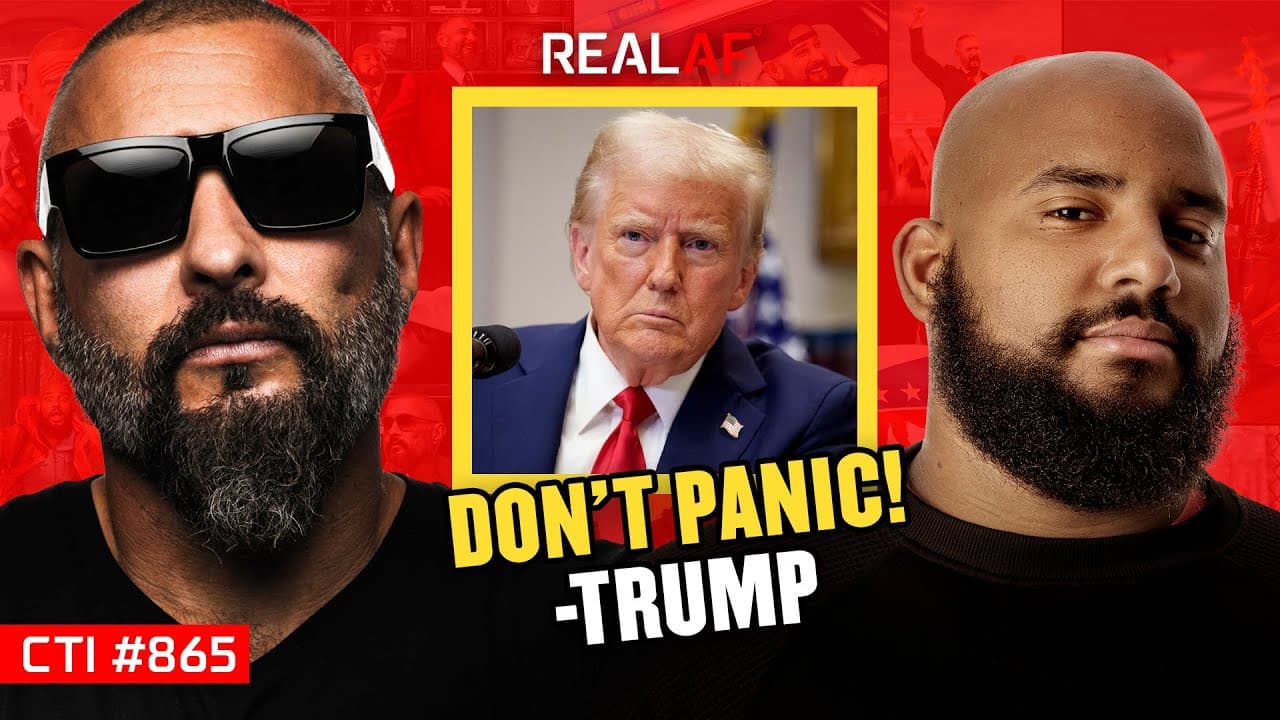
This Is Why The Stock Market Doesn’t Matter To You - Ep 865 CTI
TL;DR
The stock market and the economy are not the same.
Transcript
um Trump had to put out a message on Truth Social telling Americans uh don't be a panickin most people don't even understand that the stock market and the economy are two different things okay the stock market is for extremely wealthy people and generally right okay most Americans don't have any money in it the economy of this country is not dictat... Read More
Key Insights
- The stock market is often confused with the economy, but they serve different groups; the stock market benefits the wealthy, while the economy affects everyday people.
- Michelle Obama's podcast faced challenges despite initial fanfare, highlighting that popularity doesn't guarantee success, even for high-profile individuals.
- There's a growing awareness of manipulation and misinformation in media and politics, with the public becoming more skeptical of mainstream narratives.
- Protests against Trump and Musk appear orchestrated, with evidence of paid participants and staged events, raising questions about genuine grassroots movements.
- The U.S. faces complex geopolitical challenges, including tariffs and trade wars, with significant implications for global economic stability.
- Legacy media is slowly acknowledging issues previously highlighted by conservatives, suggesting a shift in narrative as more information becomes undeniable.
- Public sentiment is increasingly critical of perceived double standards in justice and media, particularly regarding race and political bias.
- The culture of victimhood and entitlement is being challenged as more people call for personal accountability and integrity in society.
Install to Summarize YouTube Videos and Get Transcripts
Explore YouTube Video Summarizer or Get YouTube Transcript Extractor
Questions & Answers
Q: What is the main difference between the stock market and the economy?
The stock market and the economy are distinct entities; the stock market primarily benefits wealthy investors and reflects the performance of publicly traded companies, while the economy encompasses the broader financial system affecting everyday people, including jobs, wages, and cost of living.
Q: Why did Michelle Obama's podcast face challenges despite her high profile?
Michelle Obama's podcast struggled due to a combination of factors, including potential overreliance on her fame without engaging content or genuine public interest. Success in media requires more than celebrity status; it demands consistent, relatable, and compelling content to attract and retain an audience.
Q: How are protests against Trump and Musk perceived in the podcast?
The protests against Trump and Musk are viewed as orchestrated events, with evidence suggesting paid participants and pre-made signs. This raises questions about the authenticity of grassroots movements and highlights the manipulation tactics used to create the illusion of widespread public dissent.
Q: What are the implications of tariffs and trade wars discussed in the podcast?
Tariffs and trade wars, particularly with countries like China, have significant implications for global economic stability. They can lead to increased costs for consumers, disrupt international trade relationships, and affect domestic industries, highlighting the complexity of geopolitical economic strategies.
Q: What shift is occurring in legacy media according to the podcast?
Legacy media is beginning to acknowledge issues that conservatives have long highlighted, such as political scandals and misinformation. This shift suggests a growing public skepticism of mainstream narratives and a demand for more accurate and transparent reporting as more information becomes undeniable.
Q: How is the culture of victimhood and entitlement addressed in the podcast?
The podcast critiques the culture of victimhood and entitlement by calling for personal accountability and integrity. It emphasizes the need for individuals to take responsibility for their actions and contribute positively to society, challenging the narrative that external factors solely dictate personal outcomes.
Q: What role does public sentiment play in media and justice according to the podcast?
Public sentiment is increasingly critical of perceived double standards in media and justice, particularly concerning race and political bias. The podcast highlights the need for consistent application of laws and unbiased reporting to maintain public trust and ensure fairness in societal institutions.
Q: What is the podcast's stance on economic literacy among the public?
The podcast advocates for improved economic literacy among the public, emphasizing the importance of understanding basic economic principles to make informed decisions and engage in meaningful discussions about financial policies and their impact on everyday life.
Summary & Key Takeaways
-
The podcast discusses the misconception that the stock market is synonymous with the economy, emphasizing that the stock market primarily serves the wealthy, while the economy impacts everyone. It highlights the need for public understanding of basic economics.
-
The conversation touches on Michelle Obama's podcast struggles, illustrating that even high-profile figures face challenges in media success without genuine public engagement and interest.
-
The episode critiques the manipulation in media and politics, pointing out orchestrated protests and the slow acknowledgment by legacy media of issues conservatives have long highlighted, indicating a shift in public awareness.
Read in Other Languages (beta)
Share This Summary 📚
Summarize YouTube Videos and Get Video Transcripts with 1-Click
Try YouTube Summary with ChatGPT & Claude or YouTube Transcript Generator
Explore More Summaries from Andy Frisella 📚
Summarize YouTube Videos and Get Video Transcripts with 1-Click
Try YouTube Summary with ChatGPT & Claude or YouTube Transcript Generator