What Is the Importance of a Spotless Reputation?
TL;DR
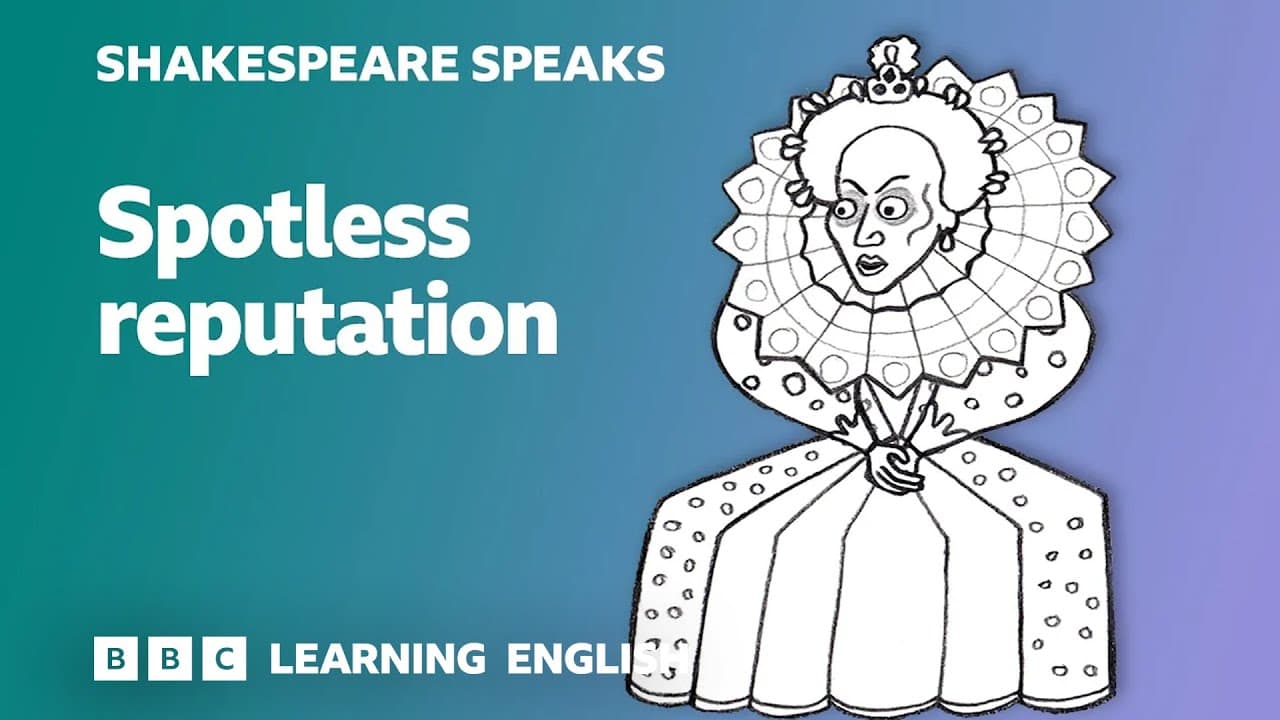
A spotless reputation is crucial for maintaining power and respect, as highlighted by Queen Elizabeth I in her discussion with Shakespeare. She argues that enemies must fear and subjects should love her, reinforcing the timeless value of character in leadership, as illustrated in Shakespeare's 'Richard II'.
Transcript
It was a spring morning in 1601. William Shakespeare is visiting Queen Elizabeth I of England. She's not very happy today... I will not allow my enemies to live. Tomorrow that ill-faced, murderous coward the Earl of Essex will die, and the people will know that I commanded it. Very good, your Majesty. Your players will perform Richard II for me tom... Read More
Key Insights
- Queen Elizabeth I values her reputation highly and believes it is essential for maintaining power and respect. She emphasizes the need for enemies to fear and people to love her.
- Shakespeare's play 'Richard II' is highlighted, where the character Thomas Mowbray discusses the importance of a spotless reputation, reflecting societal values of the time.
- The concept of a spotless reputation is timeless, still relevant today in contexts such as the Volkswagen emissions scandal and athletes' doping cases.
- Queen Elizabeth I shows mercy to Shakespeare and his players despite her anger, showcasing her ability to balance justice with leniency.
- The phrase 'spotless reputation' describes a person or organization known for good character and honest behavior, a concept still significant in modern times.
- Shakespeare’s reputation was so esteemed that other writers' works were falsely attributed to him, indicating his high standing in society.
- The video offers educational resources for teachers, including a lesson plan and worksheet to help students understand and use the idiom 'spotless reputation.'
- The narrative uses humor and historical context to engage viewers, making Shakespeare's works and idioms accessible and relevant to a modern audience.
Install to Summarize YouTube Videos and Get Transcripts
Explore YouTube Video Summarizer or Get YouTube Transcript Extractor
Questions & Answers
Q: Why does Queen Elizabeth I emphasize the importance of a spotless reputation?
Queen Elizabeth I values a spotless reputation as it is crucial for maintaining her authority and respect as a ruler. She believes that her enemies must fear her, and her subjects must love her. By ensuring her reputation is untarnished, she can effectively silence gossips and punish traitors, thus securing her position and legacy.
Q: How does Shakespeare's play 'Richard II' relate to the concept of a spotless reputation?
In 'Richard II,' the character Thomas Mowbray speaks about the importance of a spotless reputation, describing it as the purest treasure mortal times afford. This reflects the societal values of Shakespeare's time, where reputation was paramount. The play underscores the idea that a person's character and the perception of it are critical to their success and legacy.
Q: What modern examples are used to illustrate the concept of a spotless reputation?
The video mentions the Volkswagen emissions scandal and an athlete caught doping as modern examples where the concept of a spotless reputation is relevant. These cases highlight how organizations and individuals can suffer significant damage to their credibility and trustworthiness when their reputations are tarnished, demonstrating the enduring importance of maintaining a good character.
Q: How does Queen Elizabeth I demonstrate a balance between justice and mercy?
Queen Elizabeth I expresses her anger towards Shakespeare and his players for performing 'Richard II' for the Earl of Essex, who plotted against her. Despite this, she chooses to show mercy by not punishing them severely. This balance between justice and mercy illustrates her wisdom and strategic thinking, aiming to maintain control without appearing weak.
Q: What does the phrase 'spotless reputation' mean in today's context?
Today, a 'spotless reputation' refers to a person or organization known for their integrity, honesty, and good character. It signifies trustworthiness and reliability, qualities that are highly valued in both personal and professional settings. Maintaining a spotless reputation can lead to greater success and opportunities, while a tarnished reputation can have lasting negative effects.
Q: How was Shakespeare's reputation perceived during his lifetime?
During his lifetime, Shakespeare's reputation as a writer was so esteemed that other writers' works were often falsely attributed to him. This indicates the high regard in which he was held and the recognition of his talent and influence. His reputation allowed his works to endure and remain significant many centuries later, influencing literature and language.
Q: What educational resources does the video offer for understanding the idiom 'spotless reputation'?
The video provides a free lesson plan and worksheet for teachers to help students understand and use the idiom 'spotless reputation.' These resources aim to make learning engaging and interactive, allowing students to explore the historical context and modern relevance of the idiom. The materials are designed to enhance comprehension and application of English vocabulary and idioms.
Q: How does the video use humor to engage viewers?
The video uses humor by incorporating playful dialogue and historical context, such as Shakespeare's interactions with Queen Elizabeth I and the humorous reference to the Tower of London. This approach makes the content more relatable and entertaining, helping viewers connect with Shakespeare's works and the idioms discussed, thereby enhancing their learning experience.
Summary & Key Takeaways
-
Queen Elizabeth I discusses her need for a spotless reputation to maintain her power and respect, highlighting the importance of character in leadership.
-
Shakespeare's play 'Richard II' is referenced to illustrate the timeless value of a spotless reputation, both in historical and modern contexts.
-
The video provides educational resources and uses humor to make Shakespeare's idioms engaging and relevant, emphasizing the continued significance of reputation.
Read in Other Languages (beta)
Share This Summary 📚
Summarize YouTube Videos and Get Video Transcripts with 1-Click
Try YouTube Summary with ChatGPT & Claude or YouTube Transcript Generator
Explore More Summaries from BBC Learning English 📚

Summarize YouTube Videos and Get Video Transcripts with 1-Click
Try YouTube Summary with ChatGPT & Claude or YouTube Transcript Generator