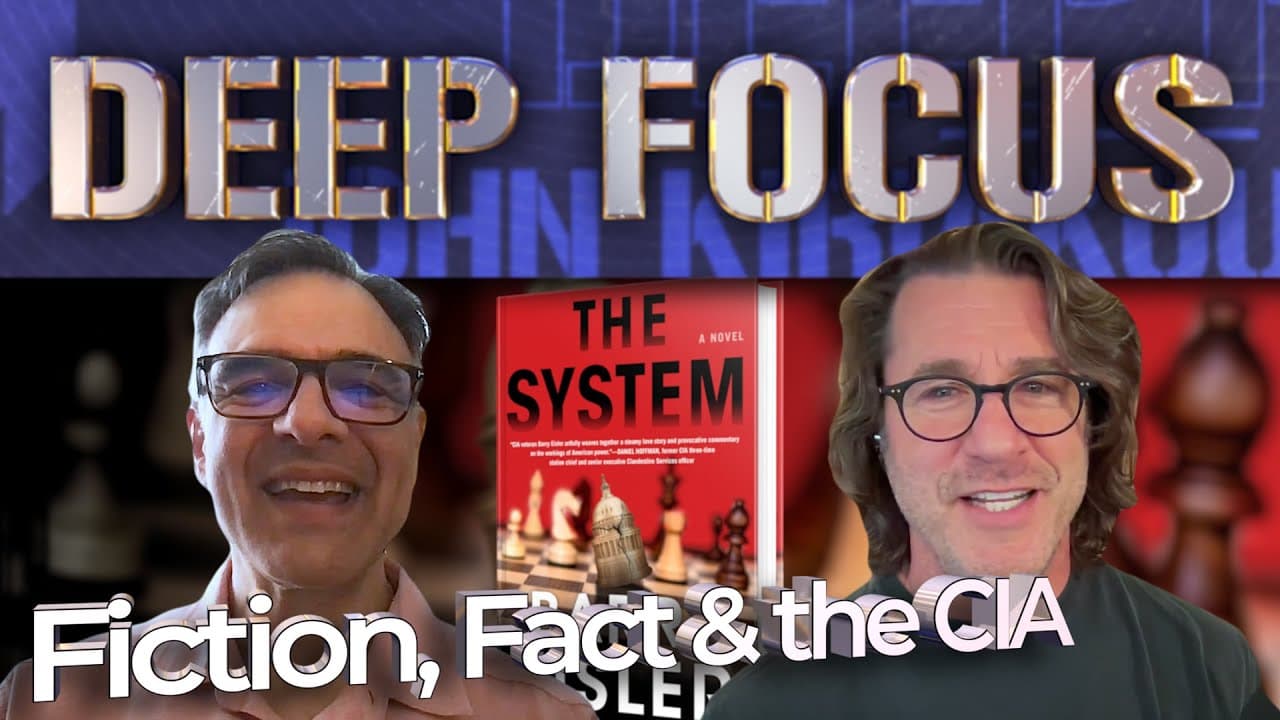
Fact, Fiction and the CIA with Bestselling Novelist Barry Eisler | DEEP FOCUS with John Kiriakou
TL;DR
Barry Eisler discusses his transition from CIA to bestselling novelist.
Transcript
Read and summarize the transcript of this video on Glasp Reader (beta).
Key Insights
- Barry Eisler transitioned from a career in the CIA to becoming a successful novelist, emphasizing the importance of perseverance and adaptability in achieving his goals.
- Eisler's novels often draw from his real-life experiences in the CIA, providing authenticity and depth to his fictional narratives.
- The advent of digital publishing has significantly altered the landscape of book publishing, allowing authors like Eisler to self-publish and reach audiences directly.
- Eisler emphasizes the importance of character-driven stories, believing that strong characters can make any plot engaging and relatable.
- His latest book, 'The System,' explores themes of political power and the military-industrial complex, reflecting Eisler's interest in geopolitics and national security.
- Eisler's writing process involves extensive research and a methodical approach to developing storylines, often inspired by current events and personal experiences.
- He believes in the power of incremental progress, advising aspiring writers to focus on small, consistent steps to achieve their writing goals.
- Eisler's success in self-publishing demonstrates the potential for authors to thrive outside traditional publishing models, provided they understand the market and leverage digital platforms effectively.
Install to Summarize YouTube Videos and Get Transcripts
Explore YouTube Video Summarizer or Get YouTube Transcript Extractor
Questions & Answers
Q: What inspired Barry Eisler to transition from the CIA to writing novels?
Barry Eisler's transition from the CIA to writing novels was not a meticulously planned endeavor. His interest in geopolitics and world history during college led to his CIA career. However, after leaving the agency, he explored various professions, including law and technology, before settling into writing. The decision was driven by a passion for storytelling and a desire to create narratives inspired by his real-life experiences.
Q: How does Barry Eisler approach the creative process of writing fiction?
Barry Eisler's creative process involves a combination of real-world stimuli and imaginative 'what-if' scenarios. He often starts with questions inspired by current events or personal experiences, which evolve into complex storylines. Eisler emphasizes the importance of character development, ensuring that his characters are relatable and drive the narrative. He also stresses the value of incremental progress, encouraging writers to break down their work into manageable tasks.
Q: What role does digital publishing play in Barry Eisler's career?
Digital publishing has played a significant role in Barry Eisler's career, allowing him to self-publish and reach audiences directly without relying on traditional publishers. This shift in the publishing landscape enabled Eisler to have greater control over his work and earn higher royalties from digital sales. He views digital platforms as a democratizing force in the industry, providing authors with new opportunities to connect with readers.
Q: What are the central themes of Eisler's latest novel, 'The System'?
Eisler's latest novel, 'The System,' explores themes of political power, the military-industrial complex, and the challenges of maintaining integrity within a corrupt system. The protagonist, Valyriia, faces dilemmas that mirror real-world political struggles, highlighting the complexities of navigating power structures. The book delves into the tension between personal ideals and the compromises necessary to effect change within established systems.
Q: How does Barry Eisler view the relationship between fiction and non-fiction writing?
Barry Eisler sees fiction and non-fiction writing as distinct yet complementary forms of storytelling. While non-fiction involves organizing existing information into a compelling narrative, fiction requires creating raw material from imagination and real-world inspiration. Eisler believes that both forms require creativity and a keen understanding of narrative structure, but fiction offers more freedom to explore hypothetical scenarios and character development.
Q: What advice does Barry Eisler offer to aspiring writers?
Barry Eisler advises aspiring writers to focus on small, consistent steps rather than being overwhelmed by the scale of writing a novel. He emphasizes the importance of perseverance, self-belief, and the willingness to learn from rejection. Eisler encourages writers to develop strong, relatable characters and to draw inspiration from real-world events and personal experiences to enrich their narratives.
Q: How does Barry Eisler's background influence his writing?
Barry Eisler's background in the CIA and his experiences in geopolitics and technology heavily influence his writing, providing authenticity and depth to his thrillers. His novels often incorporate themes of espionage, political intrigue, and national security, reflecting his real-life experiences and interests. Eisler's unique perspective allows him to create compelling narratives that resonate with readers seeking realistic and engaging stories.
Q: What challenges did Barry Eisler face when deciding to self-publish?
Barry Eisler faced significant challenges when deciding to self-publish, including the uncertainty of income without the safety net of a traditional publishing advance. He had to carefully analyze market trends and his sales data to determine the viability of self-publishing. Despite the risks, Eisler chose to bet on himself, leveraging digital platforms to reach a broader audience and ultimately achieving substantial success in the self-publishing arena.
Summary & Key Takeaways
-
Barry Eisler shares his journey from working in the CIA to becoming a renowned novelist, highlighting the role of his real-life experiences in shaping his fictional works. He discusses the challenges and opportunities presented by digital publishing and the importance of character-driven storytelling.
-
In the interview with John Kiriakou, Eisler delves into his writing process, emphasizing the significance of perseverance and incremental progress in completing large-scale writing projects. He also touches on the geopolitical themes present in his latest novel, 'The System.'
-
Eisler's decision to self-publish some of his works is explored, illustrating the changing dynamics of the publishing industry. The interview concludes with insights into Eisler's creative process and advice for aspiring writers on overcoming challenges in the writing journey.
Read in Other Languages (beta)
Share This Summary 📚
Summarize YouTube Videos and Get Video Transcripts with 1-Click
Try YouTube Summary with ChatGPT & Claude or YouTube Transcript Generator
Explore More Summaries from Deep Focus with John Kiriakou 📚



Summarize YouTube Videos and Get Video Transcripts with 1-Click
Try YouTube Summary with ChatGPT & Claude or YouTube Transcript Generator