Aston Martin Valkyrie - Part 2 - Beginning and Aerodynamics
TL;DR
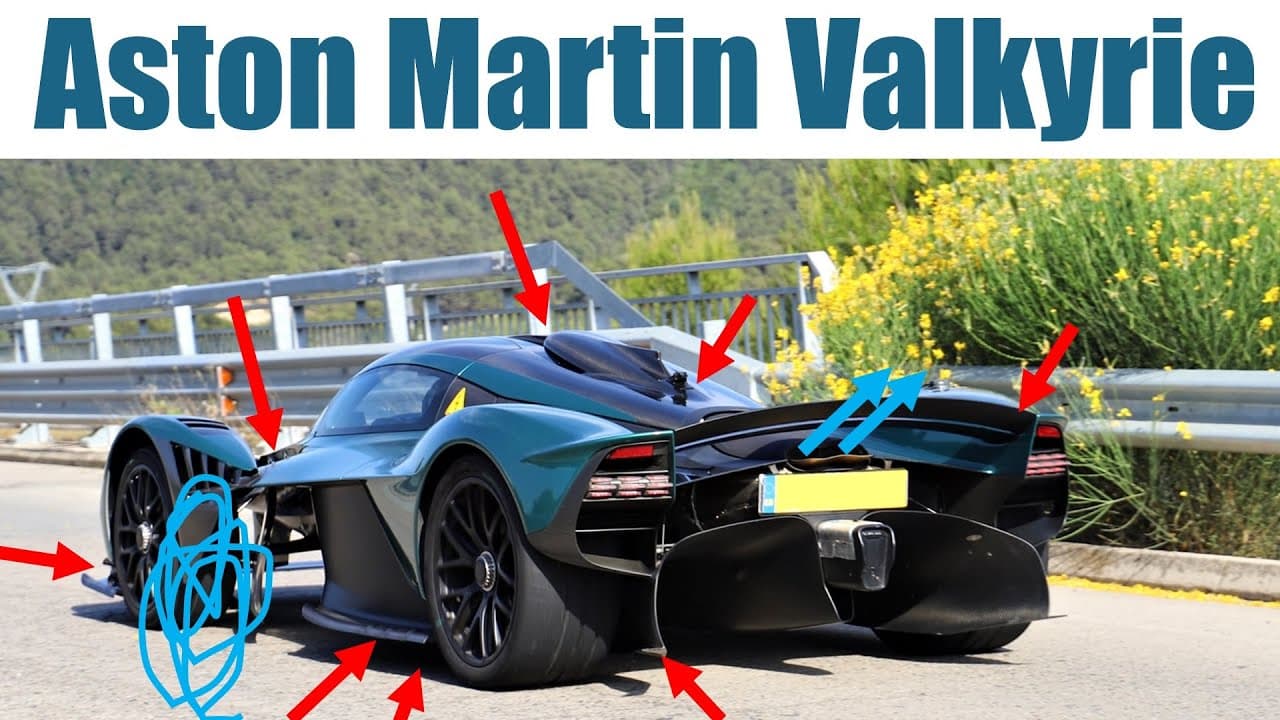
Exploration of Adrian Newey's design innovations in the Aston Martin Valkyrie.
Transcript
let's continue in our series about the aston martin valkyrie if you want to know more about the background and politics of a project check out my other video in the description if you want to support the channel please consider becoming a b-sport club member which will also give you early access to the videos after winning four world champi... Read More
Key Insights
- Adrian Newey, renowned for his F1 expertise, sought a new challenge due to Red Bull's engine limitations, leading to the creation of Red Bull Advanced Technologies.
- The Aston Martin Valkyrie was designed to be both aesthetically pleasing and the fastest road car on track, emphasizing aerodynamics and comfort.
- Newey's design incorporates a mid-engine layout with the engine and gearbox as structural components, optimizing for aerodynamics and performance.
- The Valkyrie's aerodynamics focus on ground effect, with a unique seating position and vehicle shape to minimize frontal area and enhance airflow.
- The car's design features a high slim nose to reduce front wing disturbance and utilizes complex underbody aerodynamics for increased downforce.
- Innovative elements like a V-shaped monocoque, extreme gearbox design, and advanced suspension systems contribute to the Valkyrie's performance.
- The rear aerodynamics include a blown rear wing, enhancing cooling and diffuser efficiency, inspired by F1 technology.
- The Valkyrie's roof scoop design is engineered to maximize clean air intake without increasing frontal area, demonstrating efficient packaging and airflow management.
Install to Summarize YouTube Videos and Get Transcripts
Explore YouTube Video Summarizer or Get YouTube Transcript Extractor
Questions & Answers
Q: What motivated Adrian Newey to design the Aston Martin Valkyrie?
Adrian Newey was motivated to design the Aston Martin Valkyrie due to a desire for a new challenge after Red Bull's engine limitations in F1. His long-standing interest in road car design, combined with the opportunity through Red Bull Advanced Technologies, allowed him to pursue creating the ultimate road car.
Q: How does the Valkyrie's aerodynamic design enhance its performance?
The Valkyrie's aerodynamic design enhances performance through ground effect principles, a high slim nose to minimize disturbance, and a unique seating position to reduce frontal area. These elements, combined with advanced underbody aerodynamics and a V-shaped monocoque, increase downforce and streamline airflow.
Q: What role does the engine layout play in the Valkyrie's design?
The engine layout in the Valkyrie is crucial, as it serves as a structural component directly connected to the monocoque, optimizing weight distribution and aerodynamics. This mid-engine configuration allows for a low center of gravity and efficient packaging, contributing to the car's superior track performance.
Q: How does the Valkyrie's suspension system contribute to its aerodynamics?
The Valkyrie's suspension system is fully aero-shaped, designed to minimize airflow disturbance. The push rod suspension and its connections are crafted to streamline airflow, ensuring that the aerodynamic efficiency is maintained, contributing to the car's overall performance and handling.
Q: What innovative features are included in the Valkyrie's rear aerodynamics?
The Valkyrie's rear aerodynamics include a two-element rear wing that is blown from underneath by the exhaust, enhancing rear-wing performance and diffuser efficiency. This design, akin to a beam wing in F1, improves cooling and increases downforce, showcasing advanced engineering.
Q: How does the Valkyrie's roof scoop design improve air intake?
The Valkyrie's roof scoop design improves air intake by incorporating a complex shape that maximizes clean air flow without increasing frontal area. The scoop's design helps to drag more clean air towards the intake, reducing pressure drop through filters and enhancing engine performance.
Q: What is the significance of the Valkyrie's ground effect design?
The ground effect design in the Valkyrie is significant as it accelerates air underneath the car, creating lower pressure and increased downforce. This principle, combined with a high expansion ratio and efficient mass flow, allows the Valkyrie to achieve superior track performance and handling.
Q: How does the Valkyrie's design reflect Adrian Newey's F1 expertise?
The Valkyrie's design reflects Adrian Newey's F1 expertise through its use of advanced aerodynamics, structural components like the engine and gearbox, and innovative elements such as a V-shaped monocoque and blown rear wing. These features, inspired by F1 technology, optimize the car's performance and efficiency.
Summary & Key Takeaways
-
The Aston Martin Valkyrie, designed by Adrian Newey, merges F1 technology with road car aesthetics, focusing on aerodynamics and performance. It features a mid-engine layout and complex airflow management to achieve unprecedented speed and comfort.
-
Newey's design for the Valkyrie emphasizes ground effect aerodynamics, with innovative solutions like a high slim nose, V-shaped monocoque, and advanced suspension systems to optimize performance and downforce.
-
The Valkyrie's rear aerodynamics, including a blown rear wing and efficient roof scoop design, demonstrate advanced engineering to enhance cooling, airflow, and overall vehicle efficiency, setting new standards in automotive design.
Read in Other Languages (beta)
Share This Summary 📚
Summarize YouTube Videos and Get Video Transcripts with 1-Click
Try YouTube Summary with ChatGPT & Claude or YouTube Transcript Generator
Explore More Summaries from B Sport 📚

Summarize YouTube Videos and Get Video Transcripts with 1-Click
Try YouTube Summary with ChatGPT & Claude or YouTube Transcript Generator