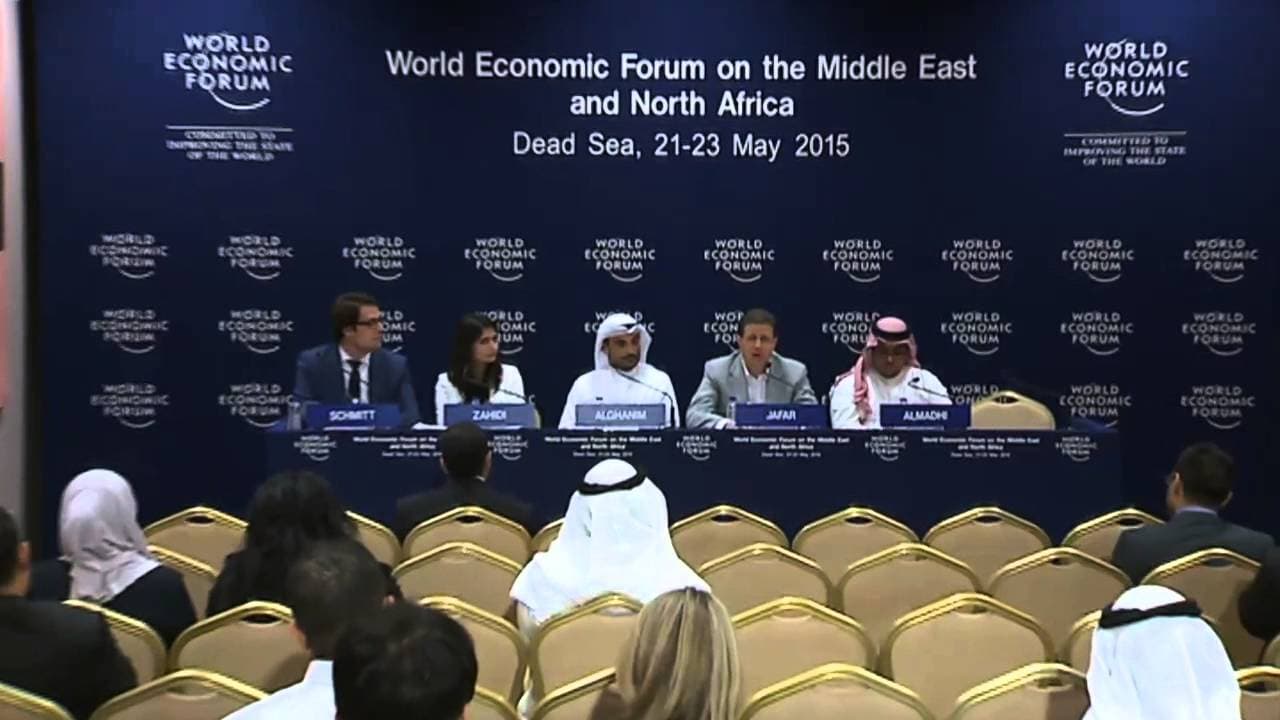
JORDAN 2015 - Opening Press Conference with Co chairs
TL;DR
The World Economic Forum discusses the challenges of unemployment and skill gaps in the Middle East and North Africa region and highlights the need for investment in human capital.
Transcript
good evening everybody and welcome to this press conference and also a warm welcome to our audience on the live stream um this is the last press conference on the first day of the world economic forum on the middle east and north africa and the title of the press conference i'm sure you're all aware because you're here is the new vision for arab em... Read More
Key Insights
- 😀 The Middle East and North Africa region faces significant skill gaps and high rates of youth unemployment.
- 🤔 The quality of education and training needs improvement, particularly in terms of critical thinking skills.
- 🔒 Technology and automation will impact the job market, creating opportunities for those with data analytics, IT security, and managerial skills.
- 🔒 The private sector has a vital role in addressing human capital development challenges through employment opportunities and partnerships with non-profit organizations.
- 🌐 English language proficiency is crucial for global employability.
- 🤔 Young people should focus on developing critical thinking skills and the ability to sell themselves to employers.
- 🎓 The skills mismatch between university education and labor market demands must be addressed.
Install to Summarize YouTube Videos and Get Transcripts
Explore YouTube Video Summarizer or Get YouTube Transcript Extractor
Questions & Answers
Q: What are the key findings of the Human Capital Report in relation to the Middle East and North Africa region?
The report shows that there is a significant gap between the skills acquired by individuals in the region and the skills demanded by the labor market. Despite high rates of tertiary enrollment, many young people are not going to university, and there is a mismatch between the skills taught in universities and the skills required in the workplace. This leads to high youth unemployment and a talent shortage for businesses.
Q: How do technology and automation impact the job market in the Middle East and North Africa region?
Technology is expected to create more jobs than it disrupts in the region according to the heads of strategy and HR surveyed. However, this positive outlook is dependent on having a skilled workforce. Jobs in industries like healthcare, financial services, and consumer retail will require data analysts, IT security analysts, and managers with the ability to manage complexity. Without investing in training and skilling, unemployment rates will worsen, and businesses will struggle to find the talent they need.
Q: What is the role of the private sector in addressing the challenges of human capital development?
The private sector plays a crucial role in addressing the challenges of human capital development. The Regional Business Council, consisting of corporate members from the Middle East and North Africa region, has made a commitment to positively impact youth employment by affecting the lives of 100,000 young people. Private sector companies can contribute by providing employment opportunities, supporting entrepreneurship programs, and partnering with non-profit organizations and global institutions to tackle the skills gap.
Q: What recommendations do the panelists have for young people in the region who are seeking employment opportunities?
The panelists emphasize the importance of critical thinking skills and the ability to think differently. While technical skills like sciences and engineering are in demand, the focus should be on developing problem-solving abilities and a mindset suited for the rapidly changing globalized economy. They also recommend gaining work experience through internships, summer jobs, and volunteering, as this can significantly enhance employability.
Summary & Key Takeaways
-
The World Economic Forum launched the Human Capital Report, which reveals significant skill gaps in the Middle East and North Africa region despite investments in education and training.
-
The human capital index indicates that only two countries in the region, UAE and Qatar, rank in the top half globally, while others struggle with education quality and high rates of youth unemployment.
-
The report emphasizes the importance of addressing the skills mismatch between university education and labor market demands, as well as the need for investment in training and skilling.
Read in Other Languages (beta)
Share This Summary 📚
Summarize YouTube Videos and Get Video Transcripts with 1-Click
Try YouTube Summary with ChatGPT & Claude or YouTube Transcript Generator
Explore More Summaries from World Economic Forum 📚
Summarize YouTube Videos and Get Video Transcripts with 1-Click
Try YouTube Summary with ChatGPT & Claude or YouTube Transcript Generator