How to Use Vietnamese Romantic Phrases
TL;DR
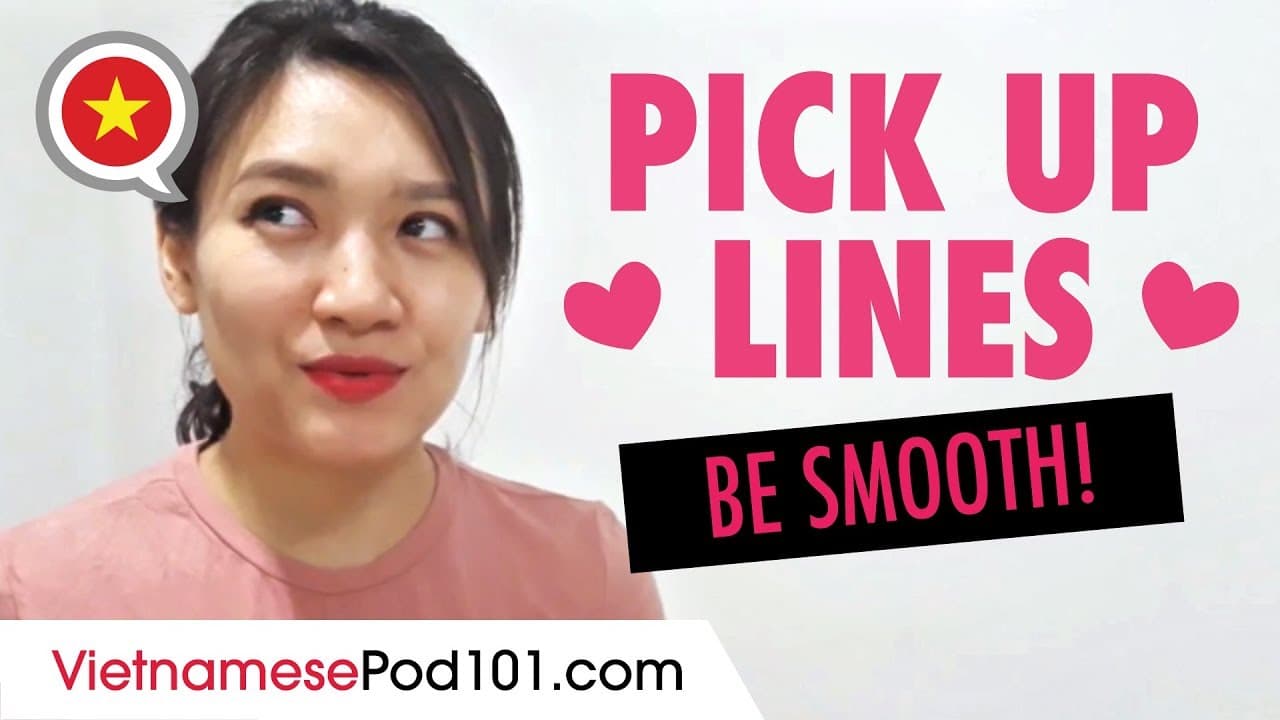
To express romantic interest in Vietnamese, start with compliments like 'Em đẹp lắm' (You are very beautiful) or 'Anh thích nụ cười của em' (I like your smile). Use playful phrases from popular culture, such as 'Nhà em ở đâu?' (Where is your house?), which can imply deeper affection. These expressions can help in making connections or expressing feelings subtly.
Transcript
want to speak real vietnamese from your first lesson sign up for your free lifetime account at vietnamesepod101.com hello everyone welcome back to vietnamese sport 101 my name is um okay so uh i don't know but a lot of people asked me to do a video about um how to flirt someone in vietnamese i wouldn't say flirt because it sounds so a little bit ov... Read More
Key Insights
- Vietnamese language offers diverse ways to express romantic interest, often influenced by popular culture.
- Compliments are a great way to start a conversation; 'Em đẹp lắm' is a common phrase meaning 'You are very beautiful'.
- Indirect compliments, like 'Anh thích nụ cười của em', can indicate deeper interest and attention to detail.
- The phrase 'Nhà em ở đâu?' has a playful double meaning, asking both about one's location and hinting at affection.
- Vietnamese uses tone marks that significantly affect pronunciation and meaning, crucial for accurate communication.
- Social media can be a subtle platform to express feelings using phrases like 'Em say đôi mắt ấy' (I'm drunk on those eyes).
- Cultural expressions, such as poems or song lyrics, are often used to convey emotions in a charming manner.
- Understanding context is important; some expressions may be more suitable for written communication than spoken.
Install to Summarize YouTube Videos and Get Transcripts
Explore YouTube Video Summarizer or Get YouTube Transcript Extractor
Questions & Answers
Q: How to compliment someone in Vietnamese?
To compliment someone in Vietnamese, you can use phrases like 'Em đẹp lắm' which means 'You are very beautiful'. This is a straightforward compliment that can be used to express admiration for someone's appearance. Another way is to use 'Anh thích nụ cười của em', meaning 'I like your smile', which shows attention to detail and personal interest.
Q: What does 'Nhà em ở đâu?' imply in Vietnamese?
In Vietnamese, 'Nhà em ở đâu?' literally translates to 'Where is your house?', but it carries a playful double meaning. It can imply a deeper affection by suggesting a desire to know more about the person. This phrase is popular due to its usage in songs and cultural references, making it a charming way to hint at romantic interest.
Q: Why are tone marks important in Vietnamese?
Tone marks in Vietnamese are crucial because they significantly affect the pronunciation and meaning of words. Vietnamese is a tonal language, and the same word can have different meanings depending on the tone used. Therefore, mastering tone marks is essential for clear communication and to avoid misunderstandings when speaking Vietnamese.
Q: How can social media be used to express feelings in Vietnamese?
Social media can be a subtle platform for expressing feelings in Vietnamese by using indirect phrases or cultural expressions. For example, posting 'Em say đôi mắt ấy' (I'm drunk on those eyes) can imply admiration without directly naming the person. Such expressions allow for playful and indirect communication of emotions, often prompting curiosity and engagement.
Q: What are some cultural expressions used in Vietnamese romance?
Cultural expressions in Vietnamese romance often include poems, song lyrics, and popular sayings. These expressions carry emotional weight and charm, making them effective in conveying affection. For instance, phrases from popular songs or poems can be used to express love subtly and artistically, resonating well with the cultural context and adding a romantic flair.
Q: When should certain Vietnamese expressions be used?
The use of Vietnamese expressions depends on the context and the relationship between the speakers. Direct compliments like 'Em đẹp lắm' are suitable for face-to-face interactions, while more playful or indirect phrases, such as 'Nhà em ở đâu?', might be better suited for less formal settings or written communication. Understanding the social context is key to choosing the appropriate expression.
Q: How can tone and context affect Vietnamese communication?
In Vietnamese communication, tone and context are critical. The tone of voice can change the meaning of words, while context determines the appropriateness of expressions. For example, a phrase that is charming in a casual setting might be inappropriate in a formal context. Therefore, understanding both tone and social context is essential for effective communication in Vietnamese.
Q: What is a playful way to express interest in Vietnamese?
A playful way to express interest in Vietnamese is by using phrases with double meanings or cultural references. For example, 'Nhà em ở đâu?' not only asks about someone's location but also hints at romantic interest. Such phrases, often popularized by songs or media, provide a charming and indirect way to show affection, making them ideal for light-hearted interactions.
Summary & Key Takeaways
-
Expressing romantic interest in Vietnamese involves using compliments and playful phrases. Compliments like 'Em đẹp lắm' (You are very beautiful) are a good starting point. Indirect compliments, such as 'Anh thích nụ cười của em' (I like your smile), show deeper interest.
-
Vietnamese expressions often draw from popular culture, like 'Nhà em ở đâu?' (Where is your house?), which can imply affection. Tone marks are crucial in Vietnamese, affecting pronunciation and meaning, so careful attention is needed.
-
Social media is a subtle platform to express feelings using phrases like 'Em say đôi mắt ấy' (I'm drunk on those eyes). Cultural expressions, such as poems or song lyrics, are charming ways to convey emotions. Context determines the appropriateness of expressions.
Read in Other Languages (beta)
Share This Summary 📚
Summarize YouTube Videos and Get Video Transcripts with 1-Click
Try YouTube Summary with ChatGPT & Claude or YouTube Transcript Generator
Explore More Summaries from Learn Vietnamese with VietnamesePod101.com 📚





Summarize YouTube Videos and Get Video Transcripts with 1-Click
Try YouTube Summary with ChatGPT & Claude or YouTube Transcript Generator